

Email Pro - Configuring your email address in Outlook for Android
3172 Views
 18.08.2025
  Web / Email Pro
Objective
You can configure Email Pro accounts on email clients, if they are compatible. This allows you to use your email address from the device of your choice. The Outlook app from Microsoft on Android is available for free from the Google Play Store.
Find out how to configure an Email Pro account on Android with the Microsoft Outlook application.
OVHcloud provides services that you are responsible for with regard to their configuration and management. It is therefore your responsibility to ensure that they function properly.
This guide is designed to help you with common tasks. Nevertheless, we recommend contacting a specialist provider and/or the service’s software publisher if you encounter any difficulties. We will not be able to assist you. You can find more information in the “Go further” section of this guide.
Requirements
- An Email Pro solution.
- You need to have the Outlook app on your mobile device Android.
- You must have the login details for the email address you would like to configure.
OVHcloud Control Panel Access
- Direct link: Email Pro
- Navigation path:
Web Cloud>Email Pro> Select your platform
Instructions
Add the account
In our examples, we use the server hint: pro?.mail.ovh.net. You will need to replace the “?” with the number designating the server of your Email Pro service.
Click this link to access the Email Pro section. The server name is visible in the Connection box in the General information tab.
- When you start the application for the first time: A configuration wizard will appear. Tap
Add account.
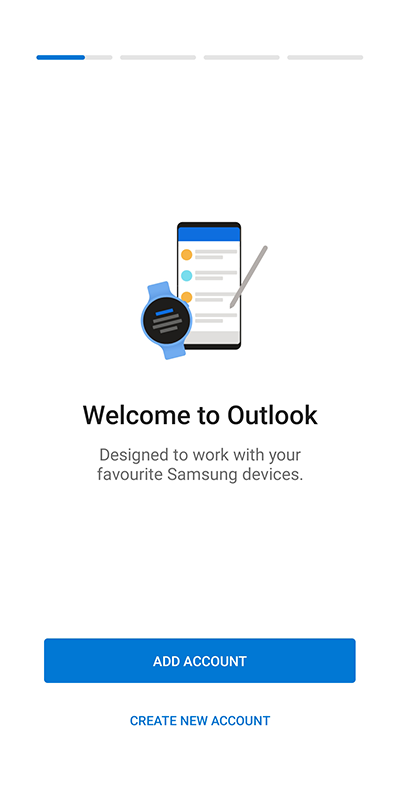
- If an account has already been set up:
- Tap the envelope "✉" at the top left of your screen.
- Then tap the
+' button in the left-hand vertical bar. - Tap
Add Account.
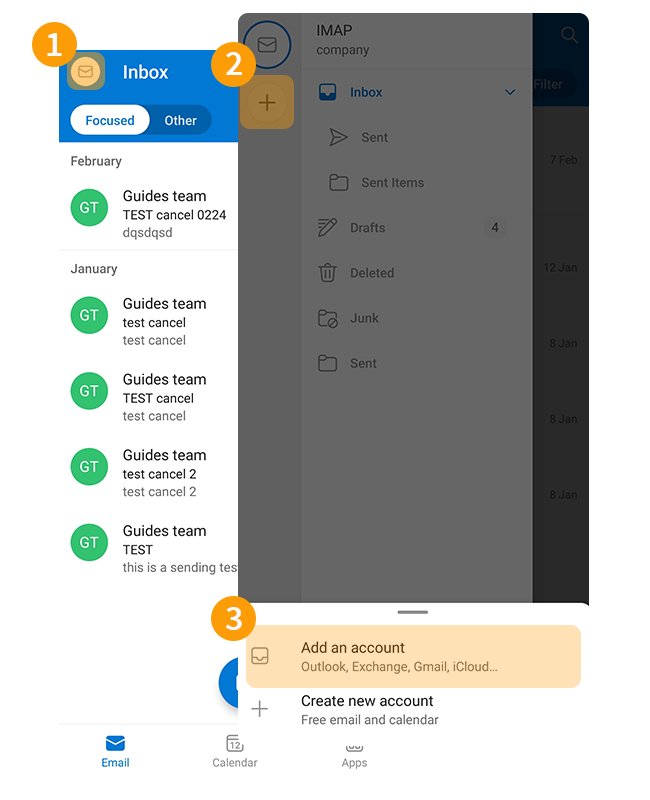
Follow the installation steps by clicking on the tabs below:
Enter your email address and tap Continue.
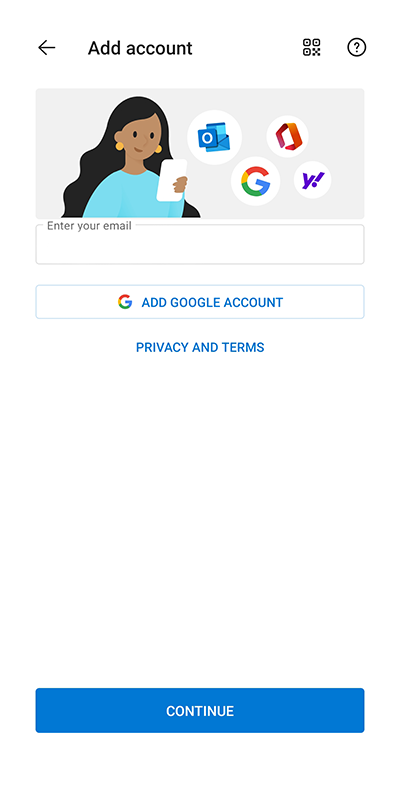
Select the receive protocol, IMAP(recommended) or POP3.
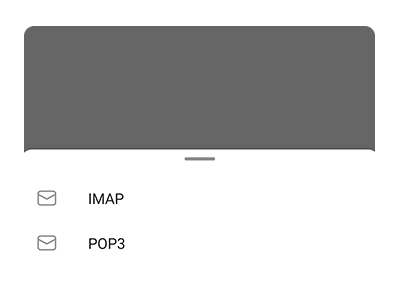
If the protocol selection window does not appear, tap the ? button in the top right-hand corner of the screen, then choose Change account provider. Then select IMAP(recommended) or POP3.
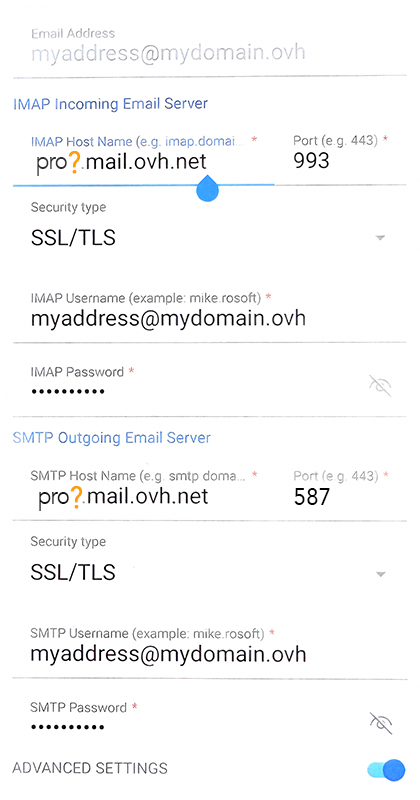
In the next window, tick Advanced settings and enter the following information:
- Email address
- Full name: Enter your full email address
- Description
- IMAP Incoming Mail Server:
- IMAP Hostname: Type pro?.mail.ovh.net (replace "?" with your server number).
- Port: 993
- Security Type: SSL/TLS
- IMAP Username: Your full email address
- IMAP password: Your email address - SMTP Outgoing Mail Server:
- SMTP Hostname: Type pro?.mail.ovh.net (replace "?" with your server number).
- Port: 587
- Security Type: STARTTLS
- SMTP Username: Your full email address
- SMTP password: Your email address
To finalize the configuration, click the “✓” button.
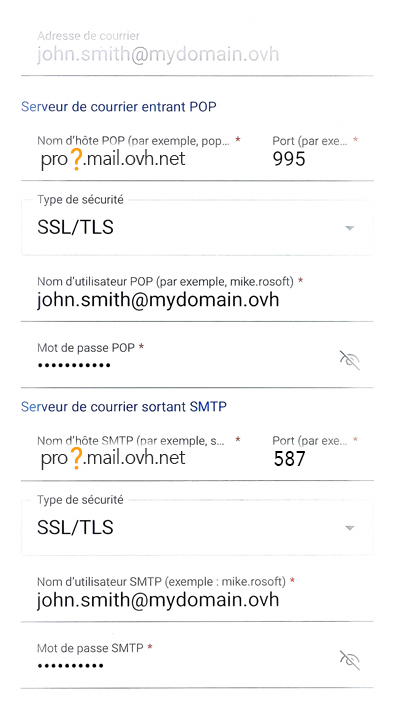
In the next window, tick Advanced settings and enter the following information:
- Email address
- Full name: Enter your full email address
- Description
- POP3 Incoming Mail Server:
- POP3 Hostname: Type pro?.mail.ovh.net (replace "?" with your server number).
- Port: 995
- Security Type: SSL/TLS
- POP3 User Name: Your full email address
- POP3 Password: Your email address - SMTP Outgoing Mail Server:
- SMTP Hostname: Type pro?.mail.ovh.net (replace "?" with your server number).
- Port: 587
- Security Type: STARTTLS
- SMTP Username: Your full email address
- SMTP password: Your email address
To finalize the configuration, click the “✓” button.
After following the configuration steps above, if you encounter a sending or receiving error, please refer to the topic “Modify existing settings”.
Use the email address
Once you have configured your email address, you can start using it! You can now send and receive messages.
OVHcloud also offers a web application that can be used to access your email address from a web browser. You can access it here: Webmail. You can log in using your email credentials. If you have any questions on how to use it, please refer to our guide View your account via the OWA interface.
Modify existing settings
The Outlook application does not allow you to modify the server settings of your email account.
If your email account is already set up and you want to set it up again, you will need to delete and recreate it:
- Tap the envelope "✉" at the top left of your screen.
- Tap the "⛭" adjustment icon at the bottom of the left column.
- In the "General" section, tap
Accountsto view all of the email addresses configured on the application.
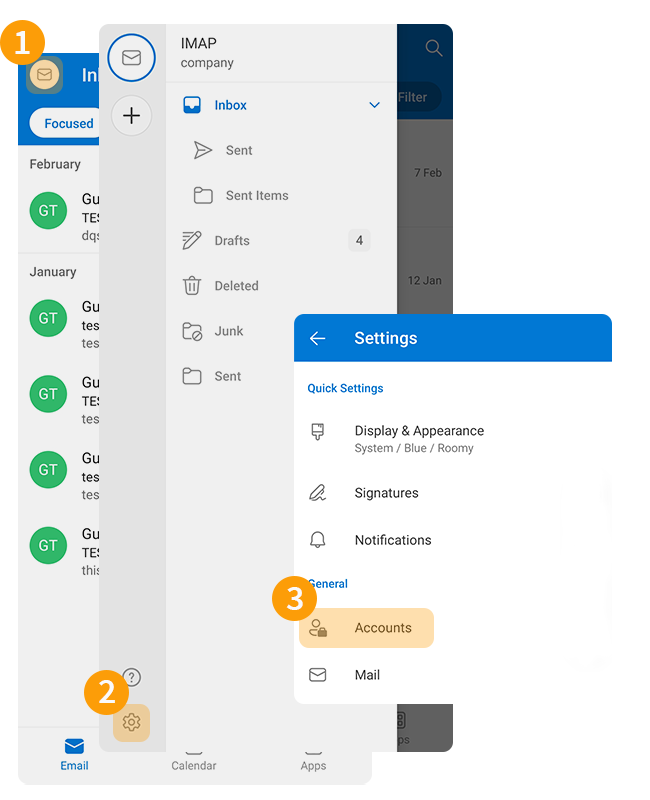
- Select the email account concerned.
- Tap
Delete account. - Tap
Deleteat the question “Do you want to delete the account?”.
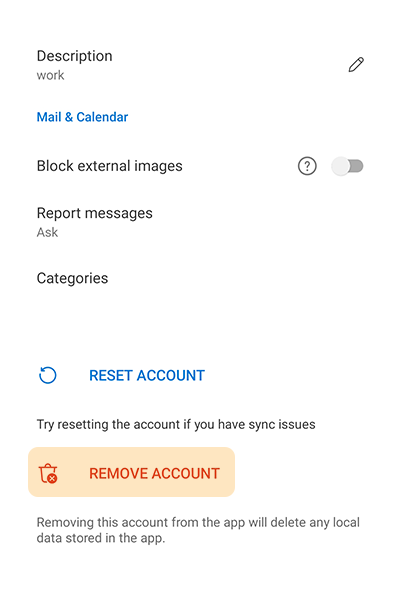
Once you have deleted your email account, follow the instructions in the “Add account” section of this guide.
Reminder of POP, IMAP and SMTP settings
IMAP and POP Receive Settings
When you choose your account type, we recommend using IMAP to receive emails. However, you can select POP.
Click on the tab corresponding to your receive protocol:
- Username: Enter the full email address
- Password: Enter the password for the email address
- Server (incoming): pro?.mail.ovh.net
- Port: 993
- Security type: SSL/TLS
- Username: Enter the full email address
- Password: Enter the password for the email address
- Server (incoming): pro?.mail.ovh.net
- Port: 995
- Security type: SSL/TLS
SMTP Send Settings
For sending emails, if you have to enter the SMTP settings manually in your account preferences, you will find the settings below:
SMTP configuration
- Username: Enter the full email address
- Password: Enter the password for the email address
- Server (outgoing): pro?.mail.ovh.net
- Port: 587
- Security type: STARTTLS
Change your configuration
If your email address is configured in IMAP and you want to change this configuration to POP, you will need to delete the account, then recreate it in POP. Refer to the “Modify existing settings” chapter of this guide.
Go further
For more information on configuring an email address from the Outlook app on Android, see Microsoft Help Center.
For specialised services (SEO, development, etc.), contact OVHcloud partners.
If you would like assistance using and configuring your OVHcloud solutions, please refer to our support offers.
Join our community of users.


 Email Pro - Configure your email account on Mail for iPhone and iPad
 4339
4339