

Configuring HYCU Backup
945 Views
 14.05.2025
  Cloud / Nutanix on OVHcloud
Objective
HYCU for Nutanix is a backup software available for Nutanix.
Find out how to install, configure and use HYCU on a Nutanix cluster with Object Storage storage provided by OVHcloud.
OVHcloud provides services for which you are responsible, with regard to their configuration and management. It is therefore your responsibility to ensure that they work properly.
This guide is designed to assist you as much as possible with common tasks. However, we recommend reaching out to the OVHcloud Professional Services team or a specialized provider if you encounter difficulties or have doubts regarding the administration, use, or setup of a service on a server.>
Requirements
- A valid HYCU for OVHcloud license in your OVHcloud account (the first step of this guide will detail the procedure to follow) or a HYCU license purchased from a third-party provider.
- A Nutanix on OVHcloud cluster in your OVHcloud account.
- Access to the cluster via Prism Central.
- A Public Cloud project with a High Performance Object Storage type storage bucket, with a user with read and write permissions for this bucket. You can find more information on how to create a Public Cloud project and how to use the High Performance Object Storage service on the following pages:
- 60 GB of storage, 8 GB of memory, and 8 cores on your Nutanix Cluster for the HYCU Instance/Appliance.
OVHcloud Control Panel Access
- Direct link: Load Balancer
- Navigation path:
Network>Load Balancer> Select your service
Instructions
Content Overview
- Order a HYCU for OVHcloud license
- Install and configure HYCU
- HYCU update
- Configure backups in HYCU
- Check the backup status
- Restore from HYCU
Order a HYCU for OVHcloud license
We offer different license packs based on the number of virtual machines (VMs) used by your Nutanix workloads.
For more information, visit our HYCU for OVHcloud page.
You already have a HYCU license?
Continue reading this guide at the Install and configure HYCU step.
Navigate to Hosted Private Cloud and Storage and Backup.
Click on HYCU then All My Licenses.
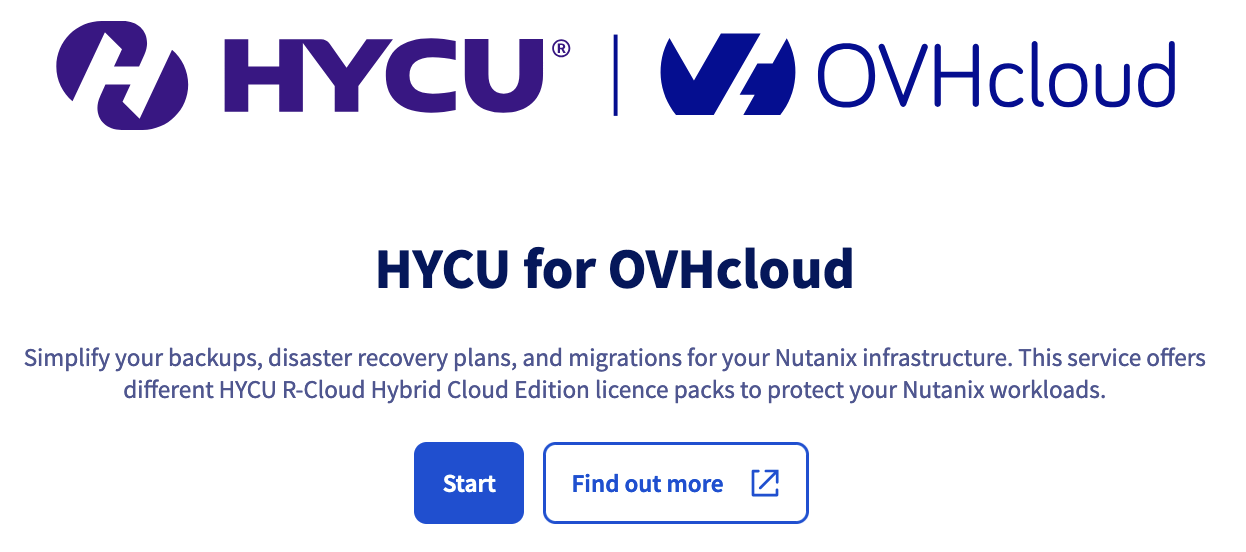
Click the Get Started button to choose and order a HYCU for OVHcloud pack.
Once your order is complete, you will receive a confirmation email and your subscription will appear in the All My Licenses dashboard.
Click on your license to proceed with activation.
Activate the license
This step requires that you have the HYCU software already installed and configured on your Nutanix cluster.
If you have not already done so, please read the Install and configure HYCU step of this guide before following the HYCU license activation step below.
Activate the HYCU license
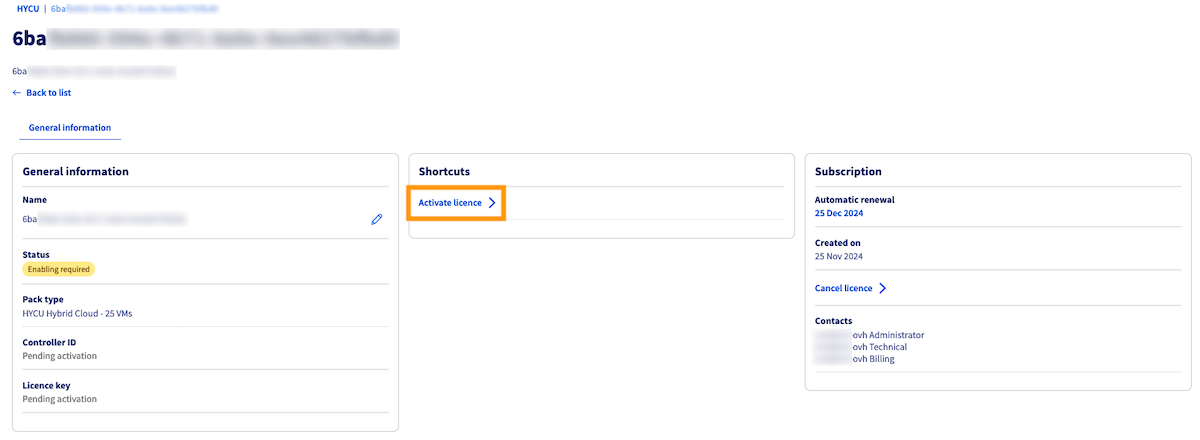
When you click on a license in your dashboard, a menu will appear allowing you to rename, activate, renew, or cancel your HYCU for OVHcloud license.
Click the Activate License button (in the Shortcuts box).
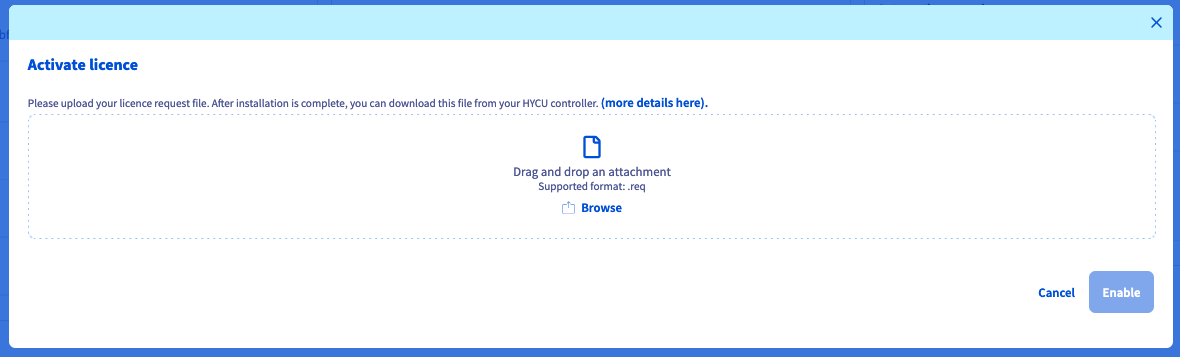
A window will open to upload the license request file.
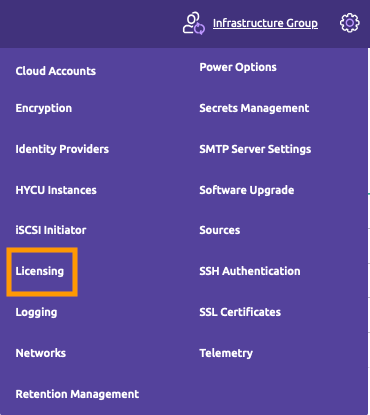
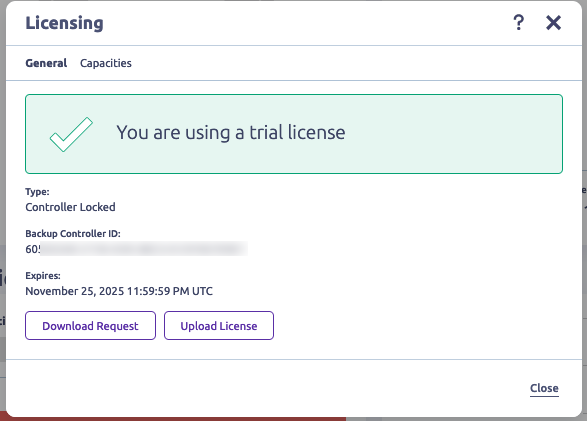
To obtain your license request file, log in to your Hybrid Cloud HYCU instance/appliance and go to the Licensing menu.
Click Download Request and download the file.
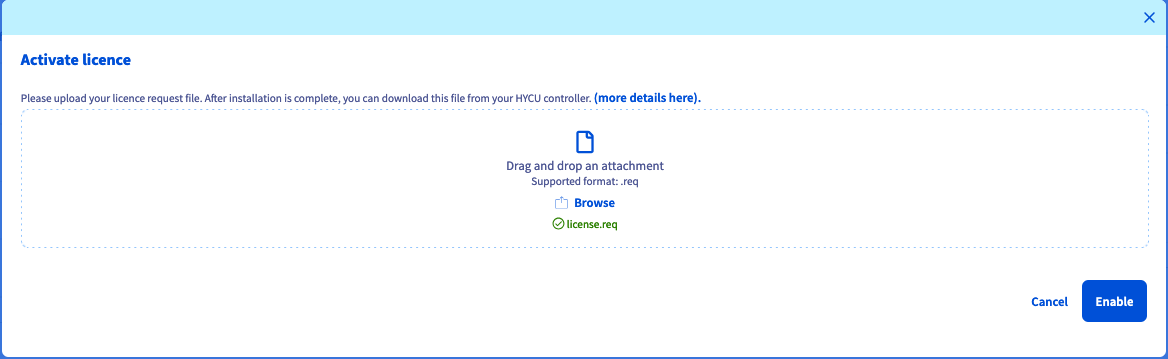
Back in the OVHcloud Control Panel, drag and drop the downloaded file into the open window, then click Activate.
After verification, the status of your license will change to Active.
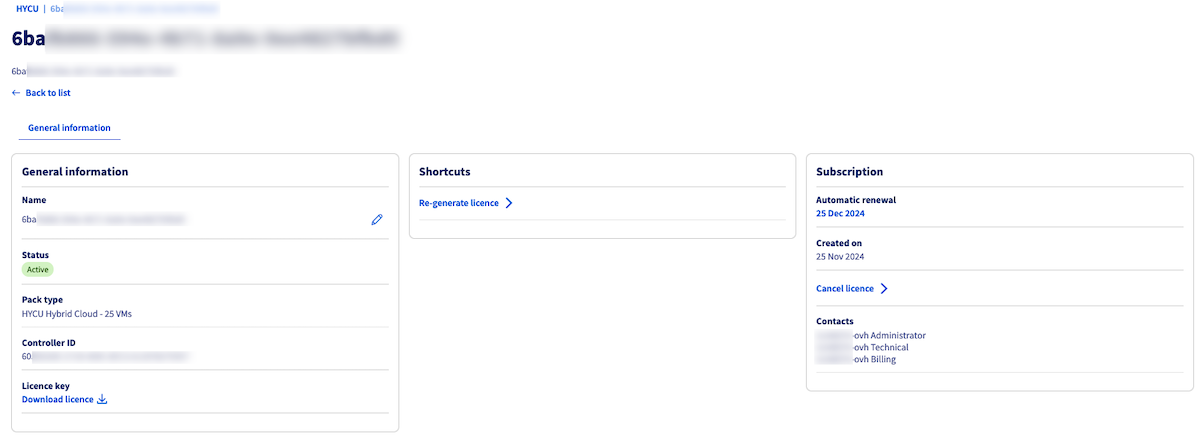
Once the license is active, click the Download License button (at the bottom of the General Information box).
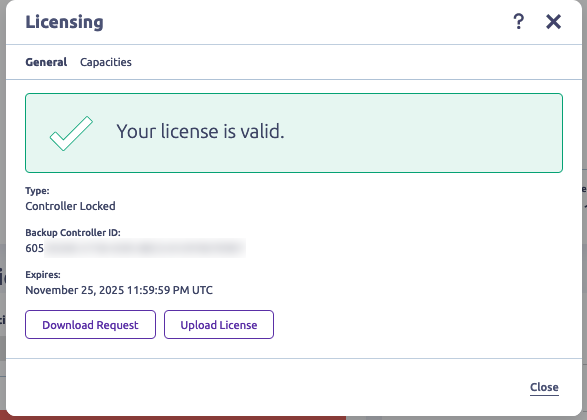
Return to the Licensing menu of your Hybrid Cloud HYCU instance/appliance and upload the license you just downloaded from the OVHcloud Control Panel.
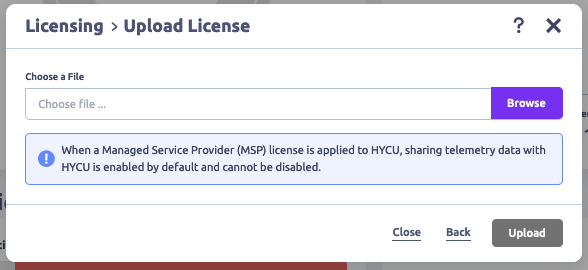
A window will inform you that your license has been validated.
Regenerate a HYCU for OVHcloud license
If your HYCU technical configuration has changed, you will need to make a new request to obtain a new license file compatible with your HYCU controller.
Regenerate a HYCU for OVHcloud license
Navigate to Hosted Private Cloud and Storage and Backup. Click on HYCU.
Once in your license dashboard, click the Regenerate License button (in the Shortcuts box).
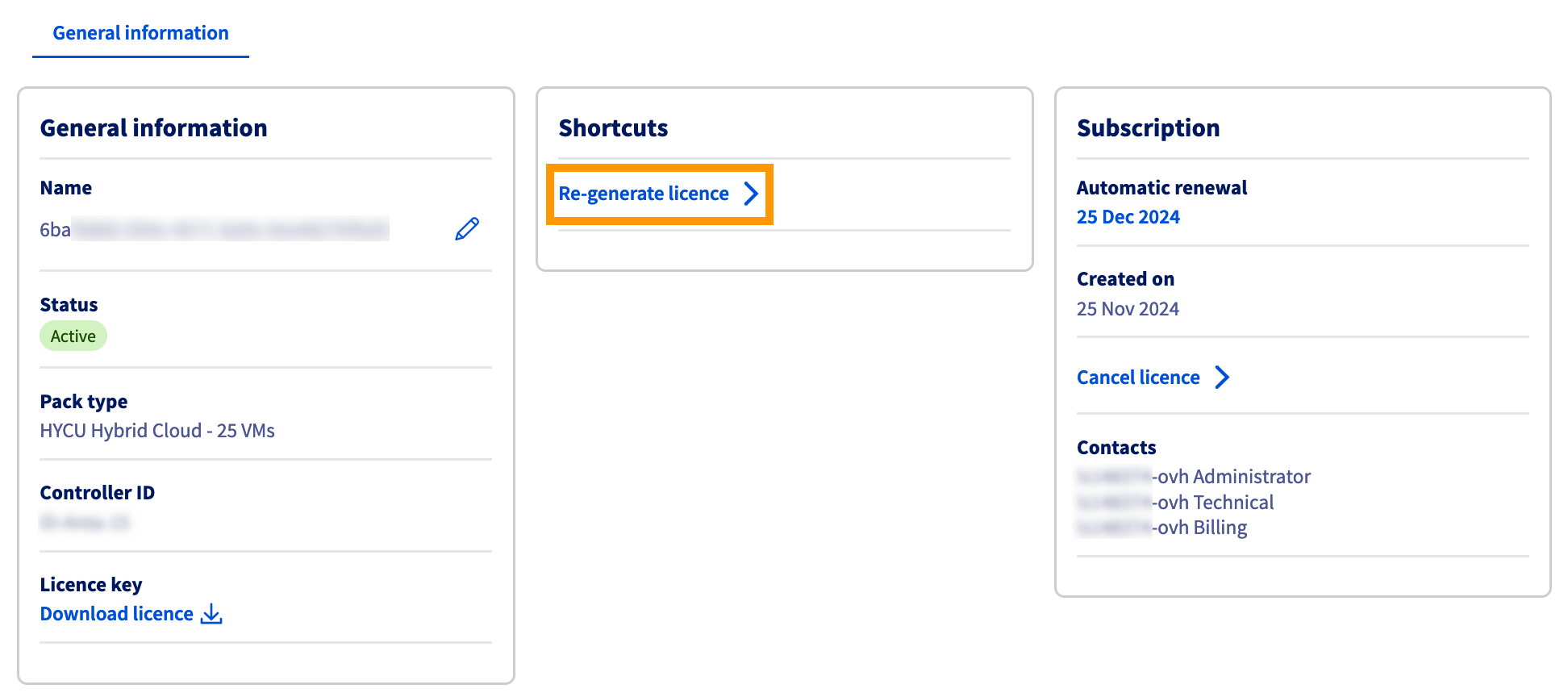
As with the activation of your license, download and upload your license request.
Then follow the same process as for license activation:
- Download the license key.
- Upload the license key to your Hybrid Cloud instance/appliance.
Cancel a HYCU for OVHcloud subscription (and its associated license)
How to cancel a HYCU for OVHcloud subscription
Navigate to Hosted Private Cloud and Storage and Backup. Click on HYCU.
Once in your license dashboard, click Cancel License in the Subscription box.
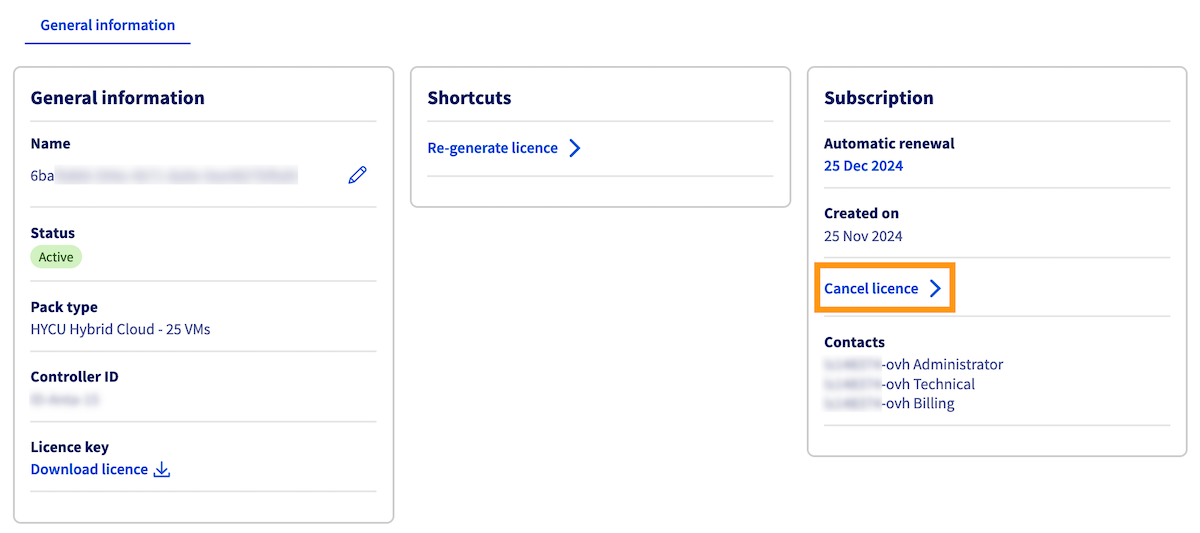
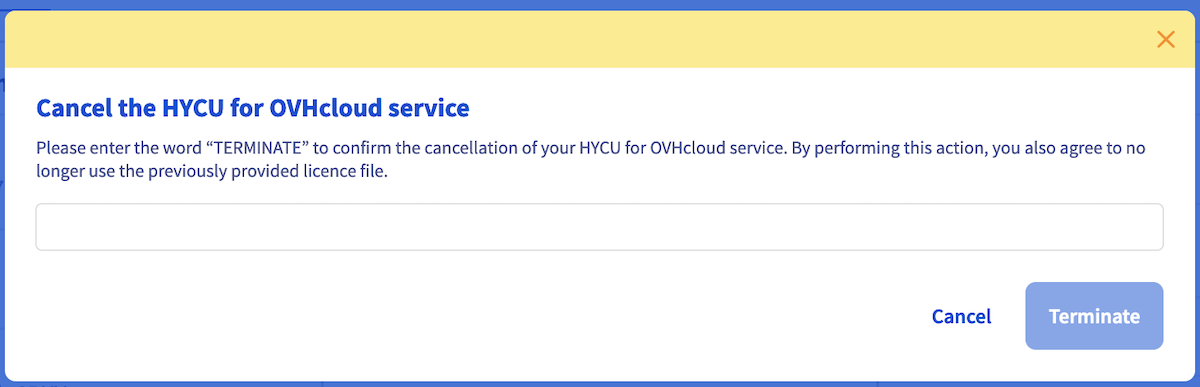
Then confirm the cancellation by typing TERMINATE in the provided box, then click Cancel.
Upgrade a HYCU for OVHcloud license
To upgrade your offer, you must first cancel your current HYCU for OVHcloud subscription (see above) and then order a new subscription with the required virtual machines pack.
Install and Configure HYCU
Add the HYCU installation image
Log in to Prism Central.
For more information on how to connect to the cluster, refer to the Go further section of this guide.
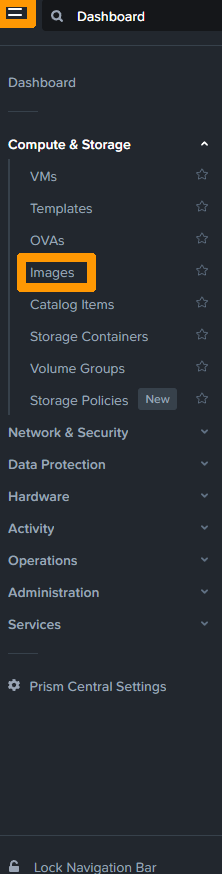
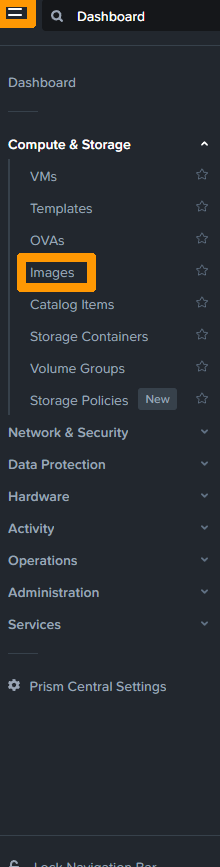
From the main menu, click Images from the Compute & Storage menu.
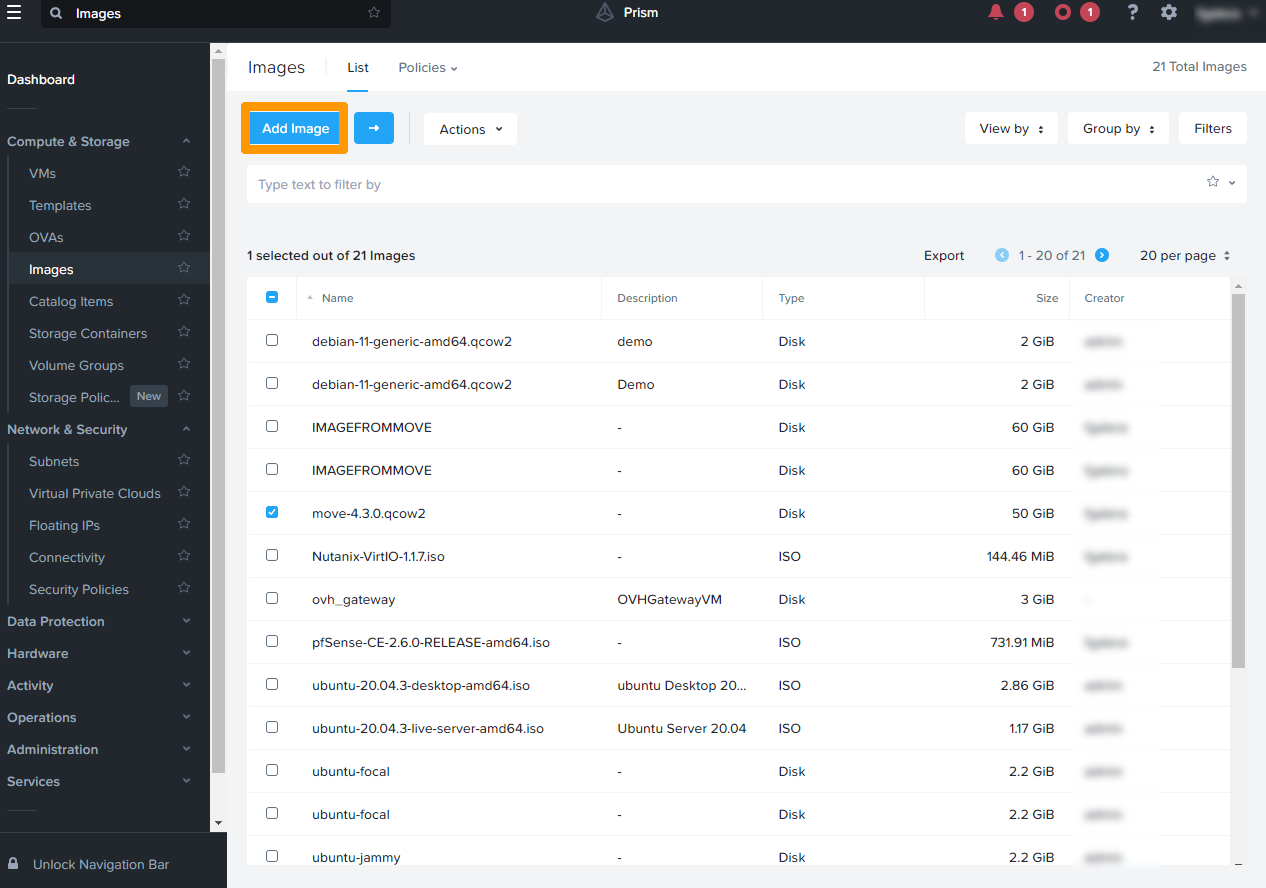
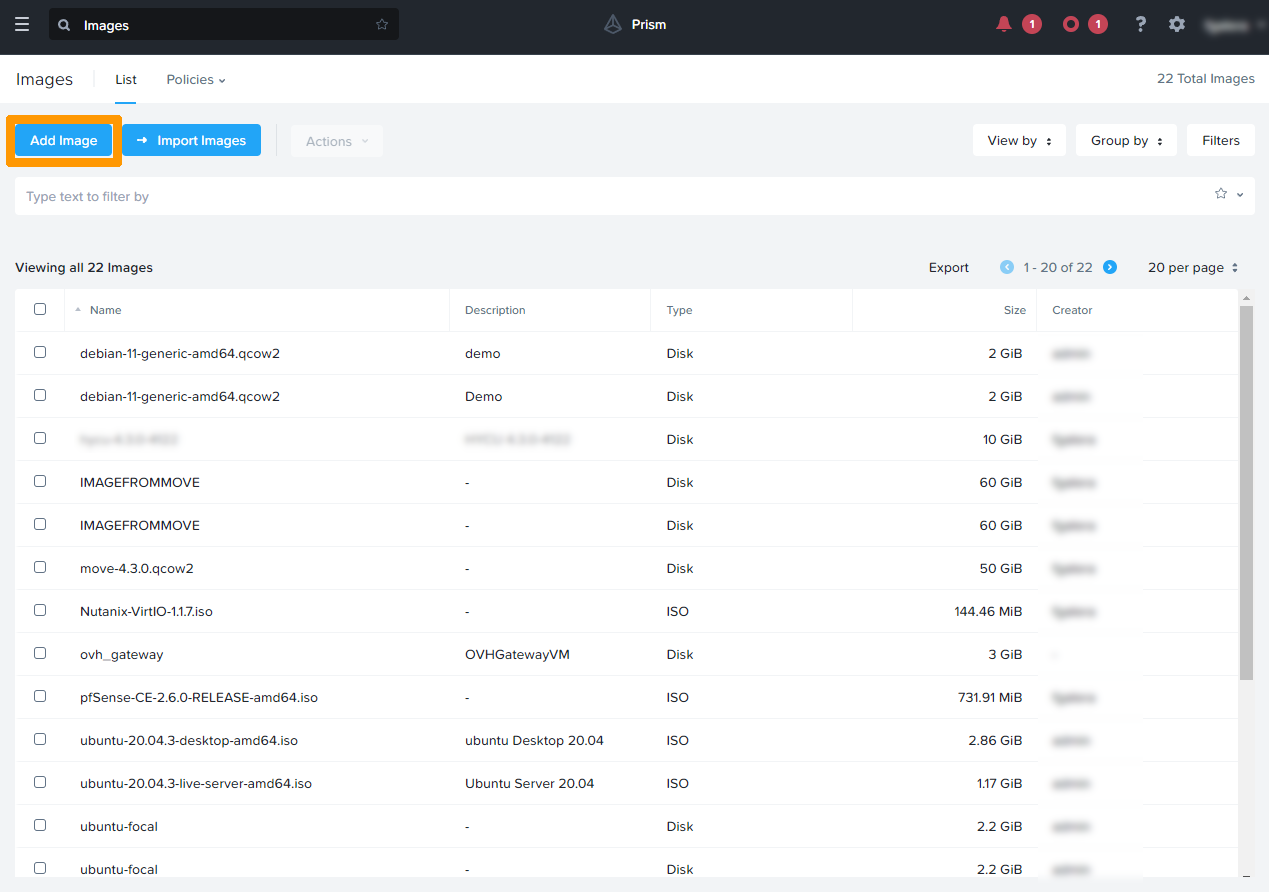
Click Add Image.
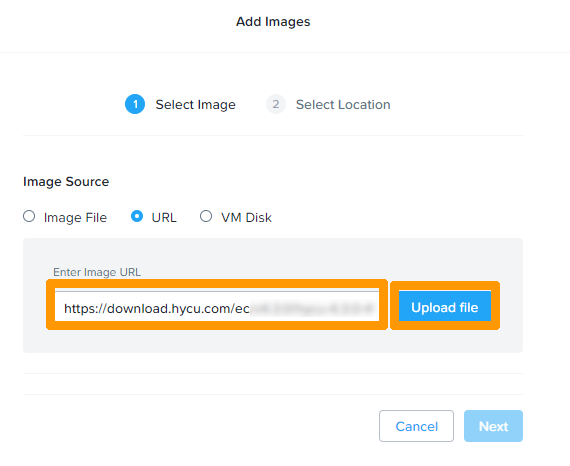
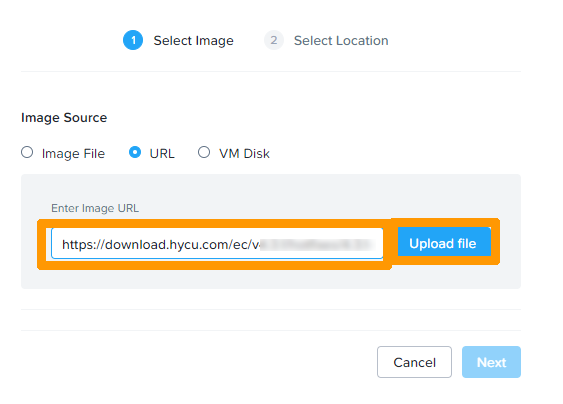
Choose URL as the source type, enter the URL https://download.hycu.com/ec/v4.X.X/hycu-4.X.X-XXXX.qcow2 in Enter Image URL, and click Upload file.
The URL used for the download is the latest version available on the HYCU website.
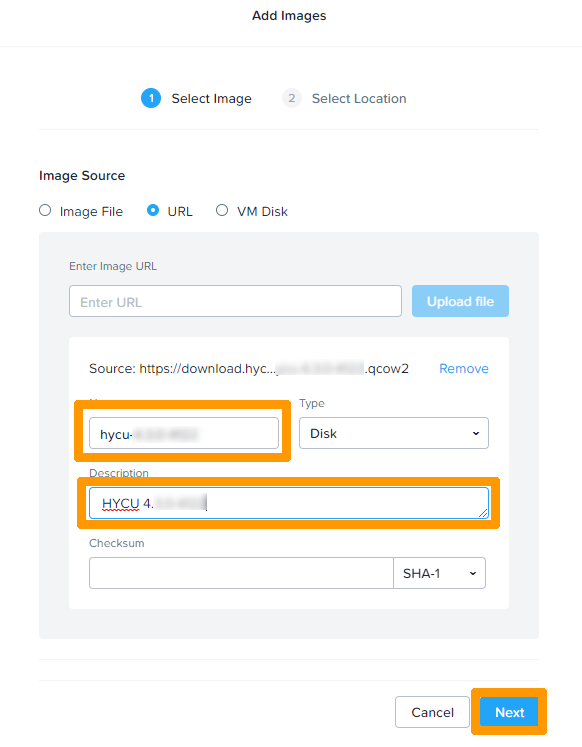
Remove the .qcow2 extension behind the name and leave hycu-4.X.X-XXXX. Enter a description and click Next.
It is important to remove the extension in the name to facilitate the HYCU configuration process.
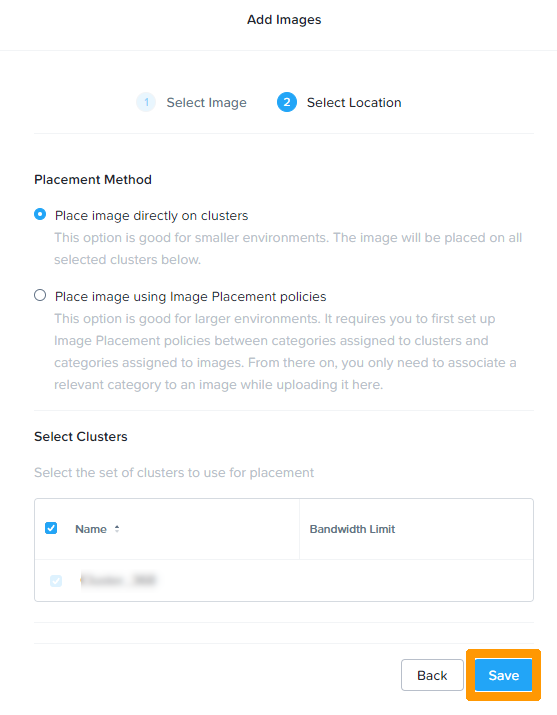
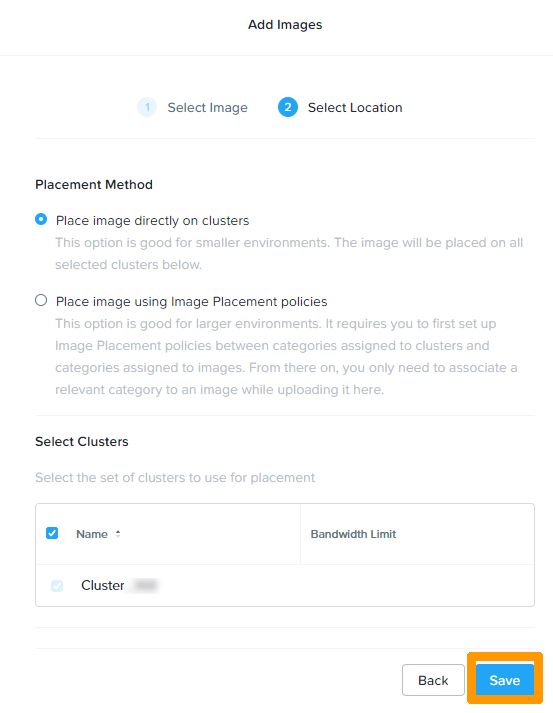
Click Save to import the image.
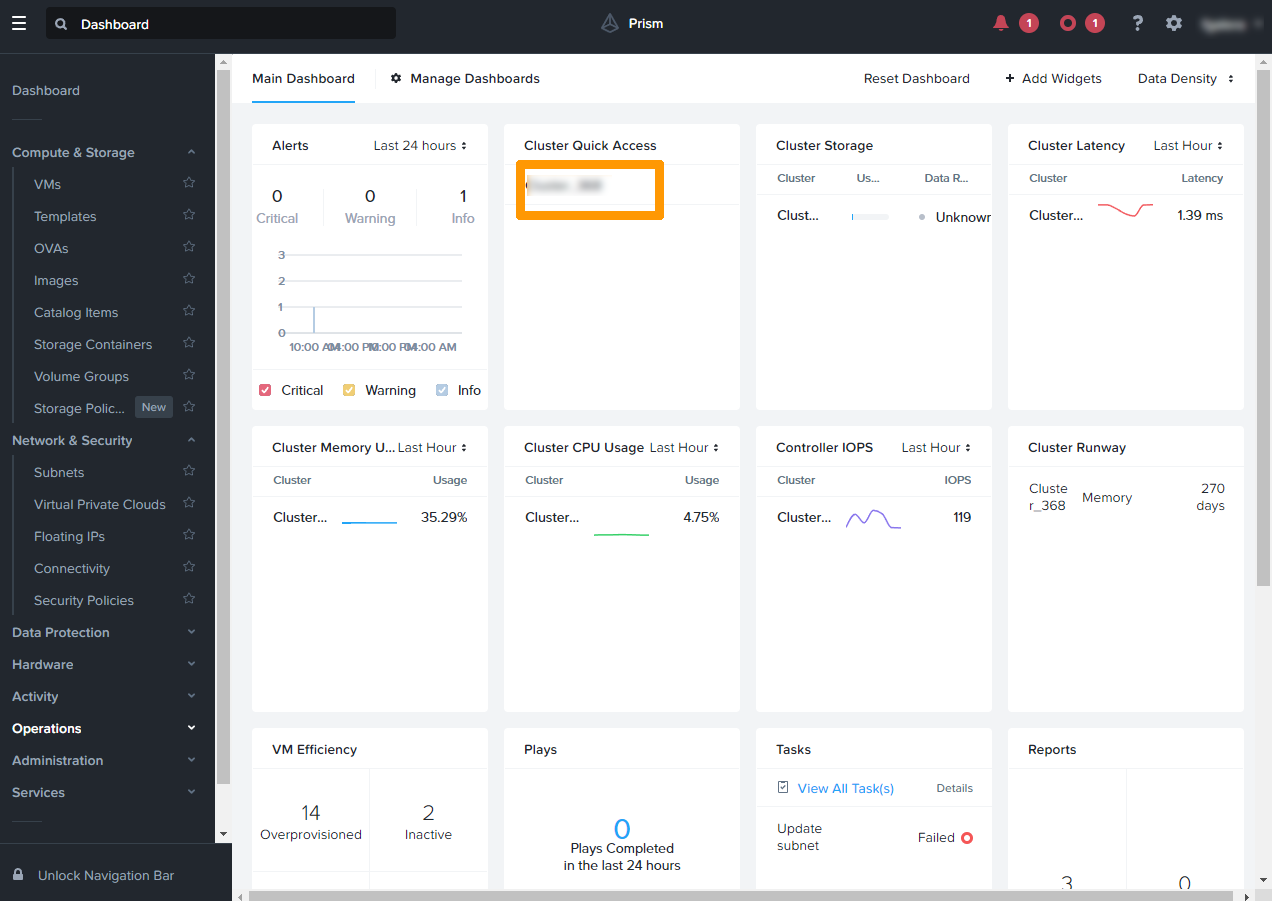
On the Prism Central dashboard, click the cluster name in the Cluster Quick Access section to go to the Prism Element.
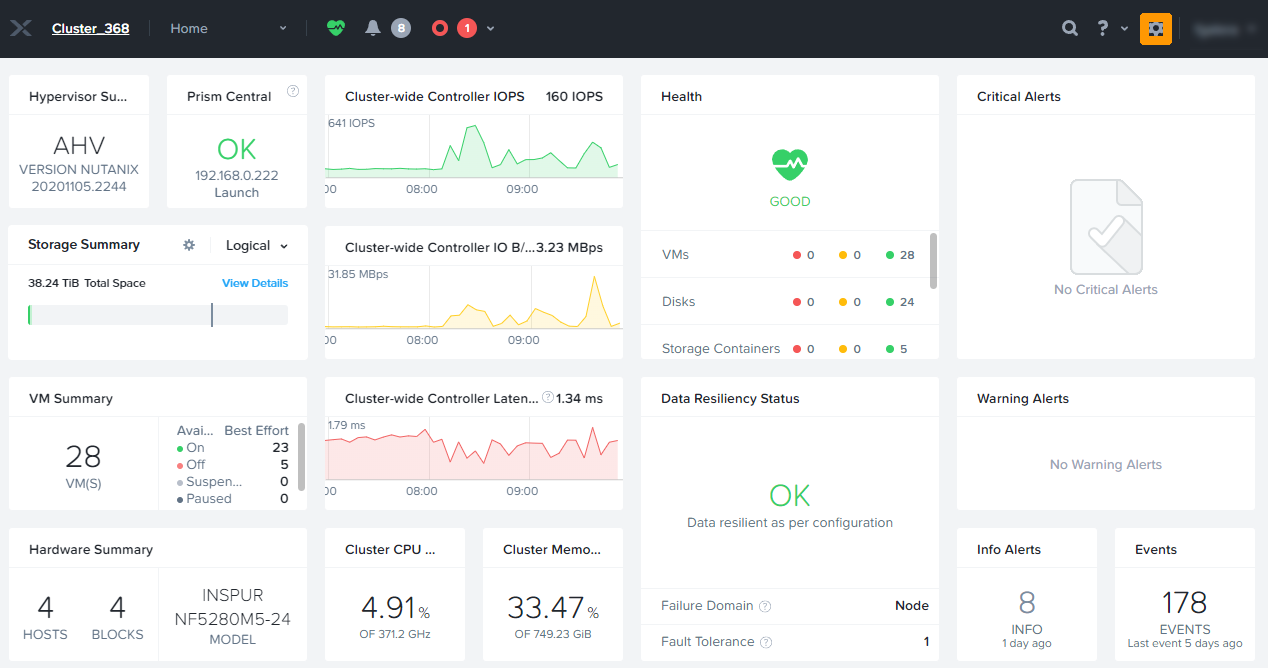
Configuring the IP address for ISCSI
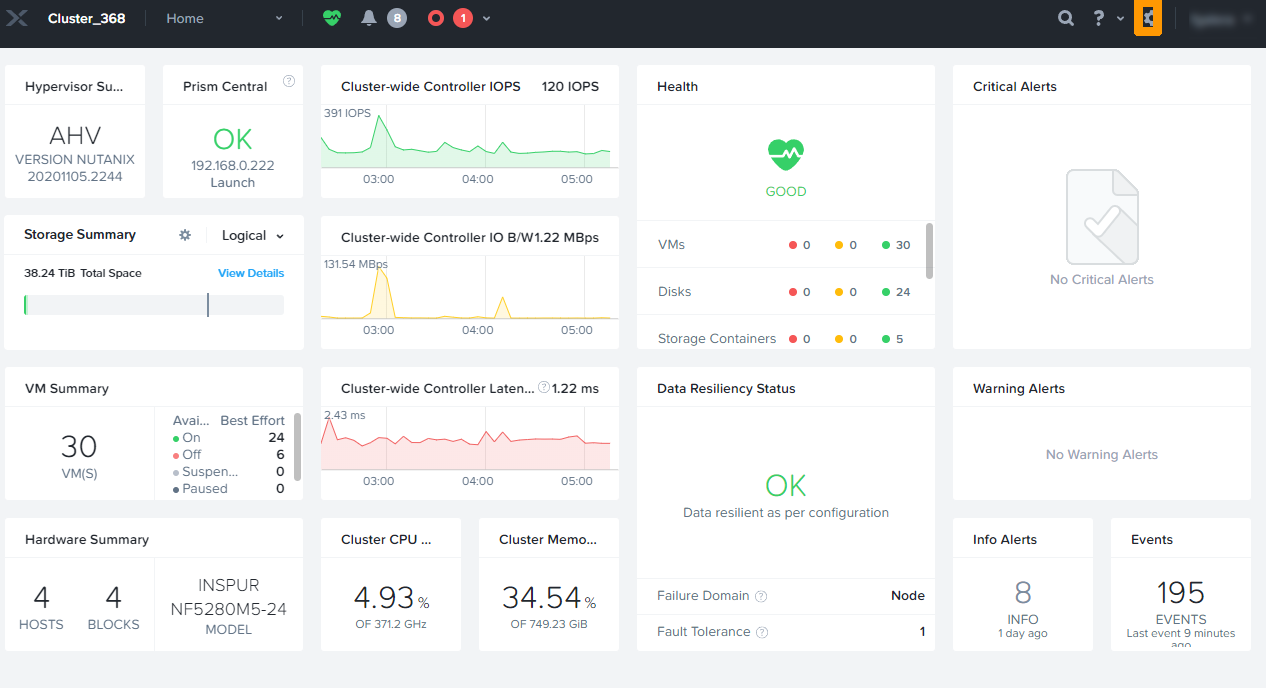
Go to the settings by clicking on the gear icon.
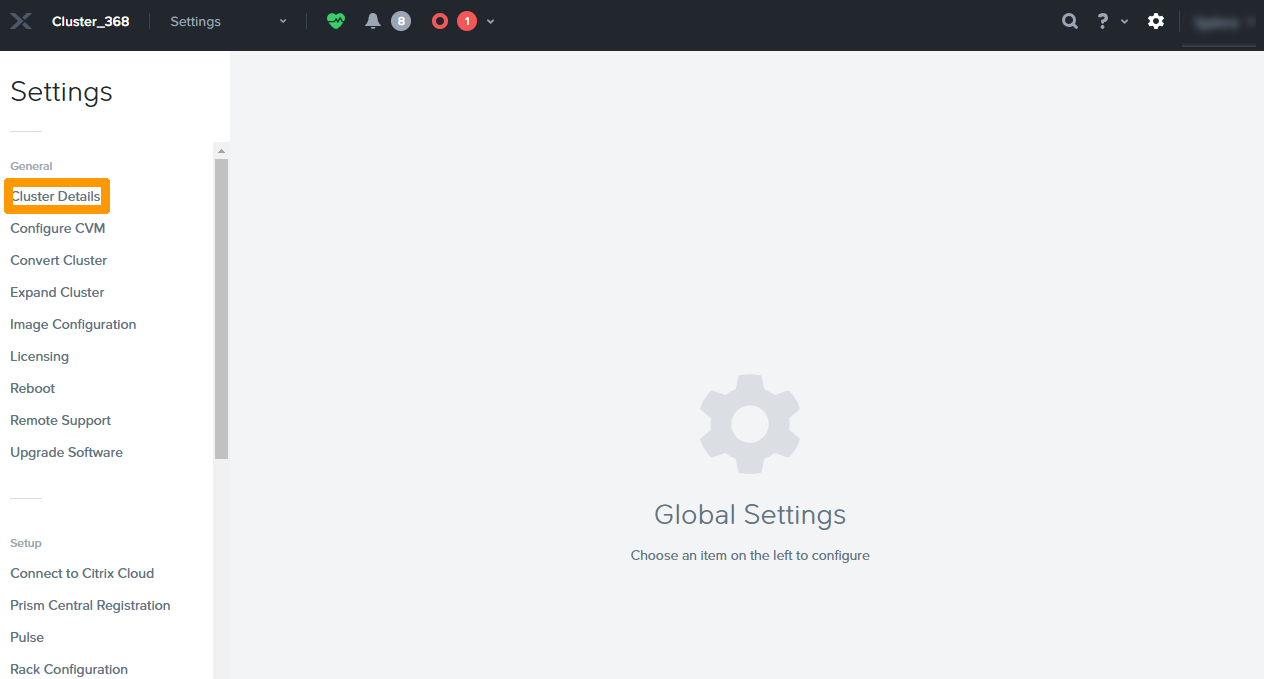
Click Cluster Details.
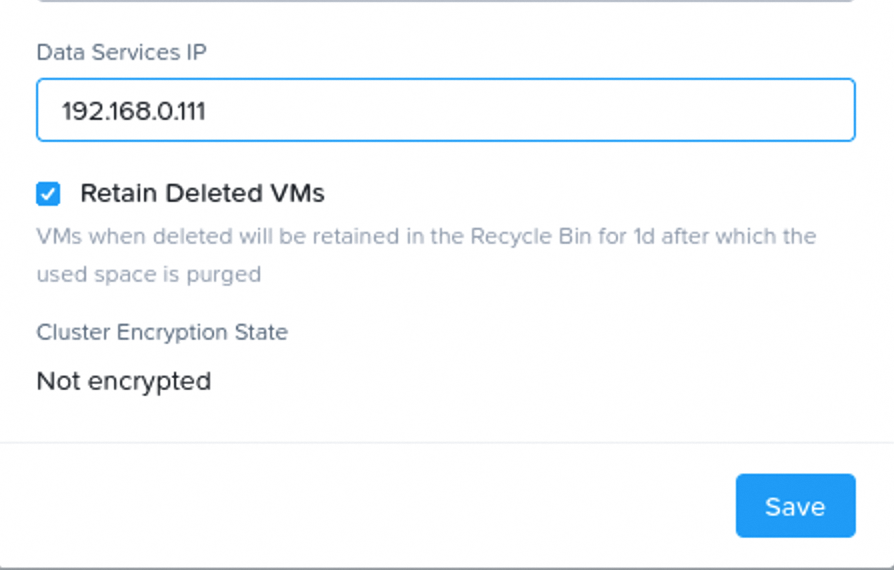
Enter an unused local IP address in the Data Services IP field and click Save.
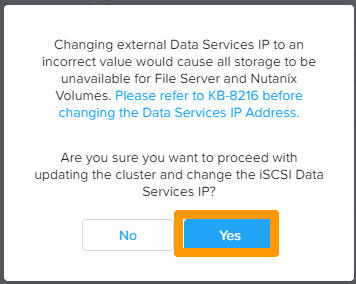
Check your choice and click Yes.
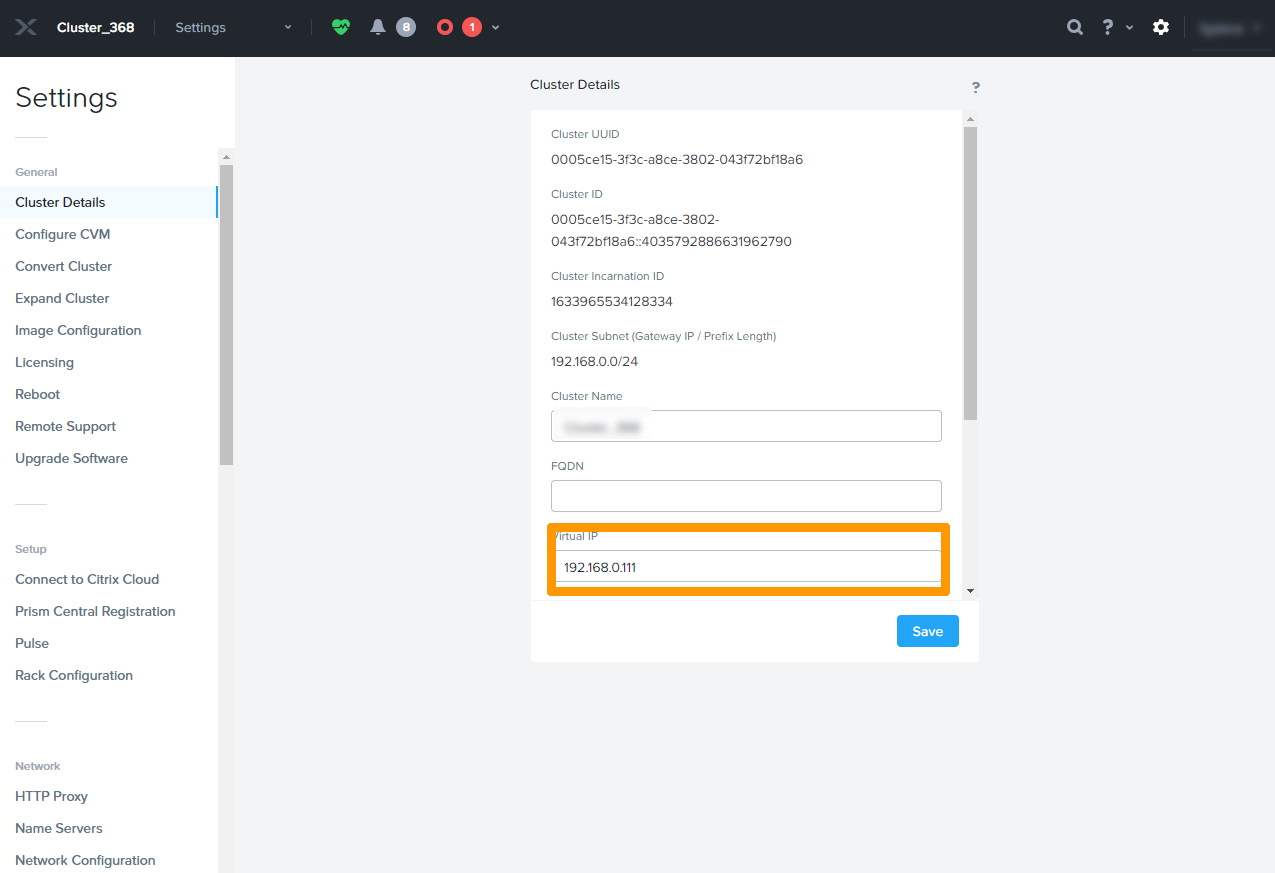
The IP address is displayed in virtual IP.
Adding a user account in Prism Element for HYCU
Click the gear to go to the Prism Element configuration.
Scroll down the menu and click Local User Management.
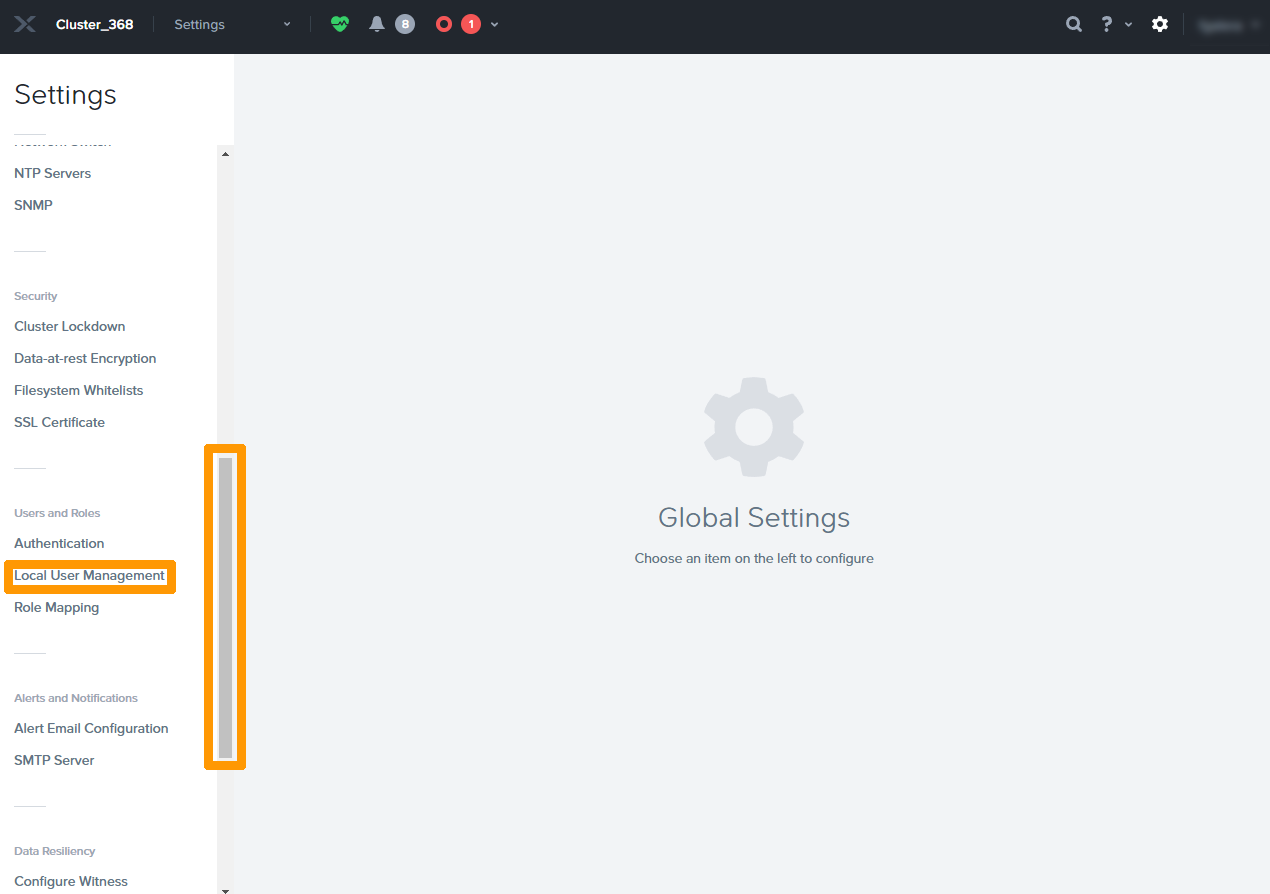
Click New User.
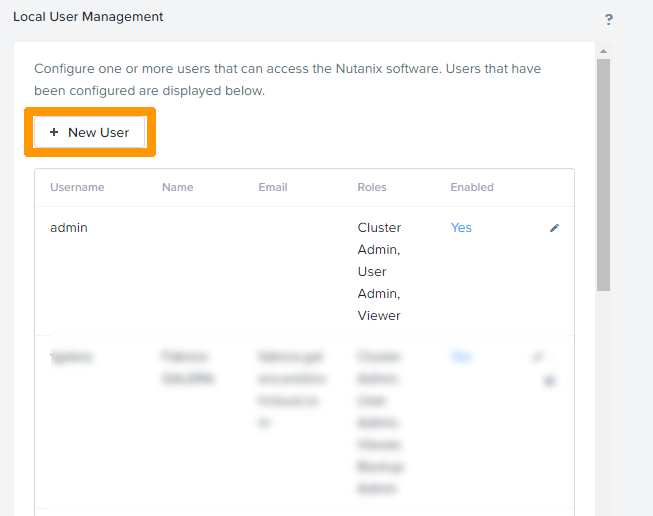
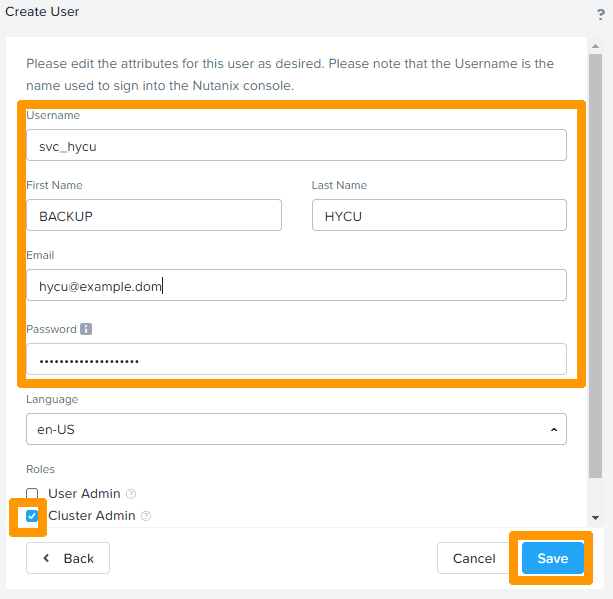
Enter these values:
- Username:
svc_hycu - First Name:
HYCU - Last Name:
HYCU - Email:
hycu@example.com - Password:
password
This information is provided as an example, the email address is mandatory but is not used.
Select the Cluster Admin checkbox and click Save.
The user is then created.
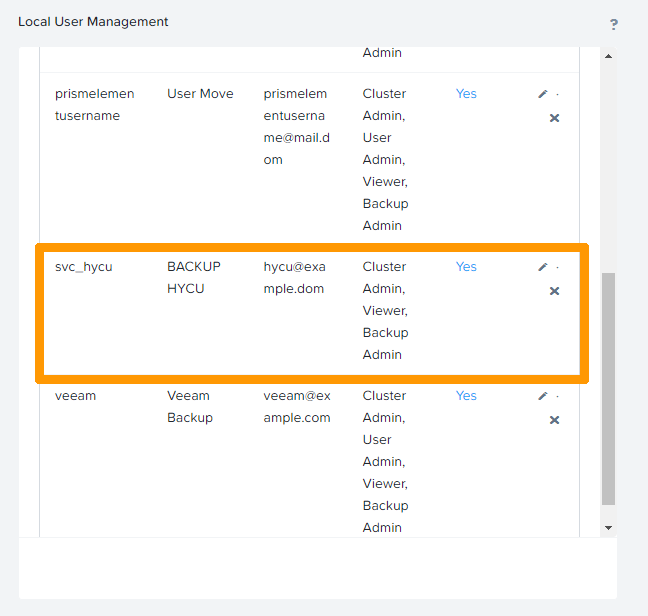
Creating the virtual machine for HYCU
Go to Prism Central.
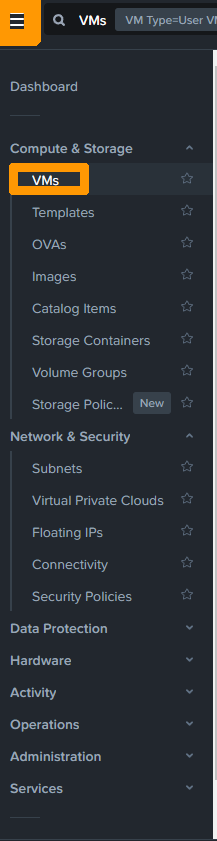
In the main menu, click VMs from the Compute & Storage menu.
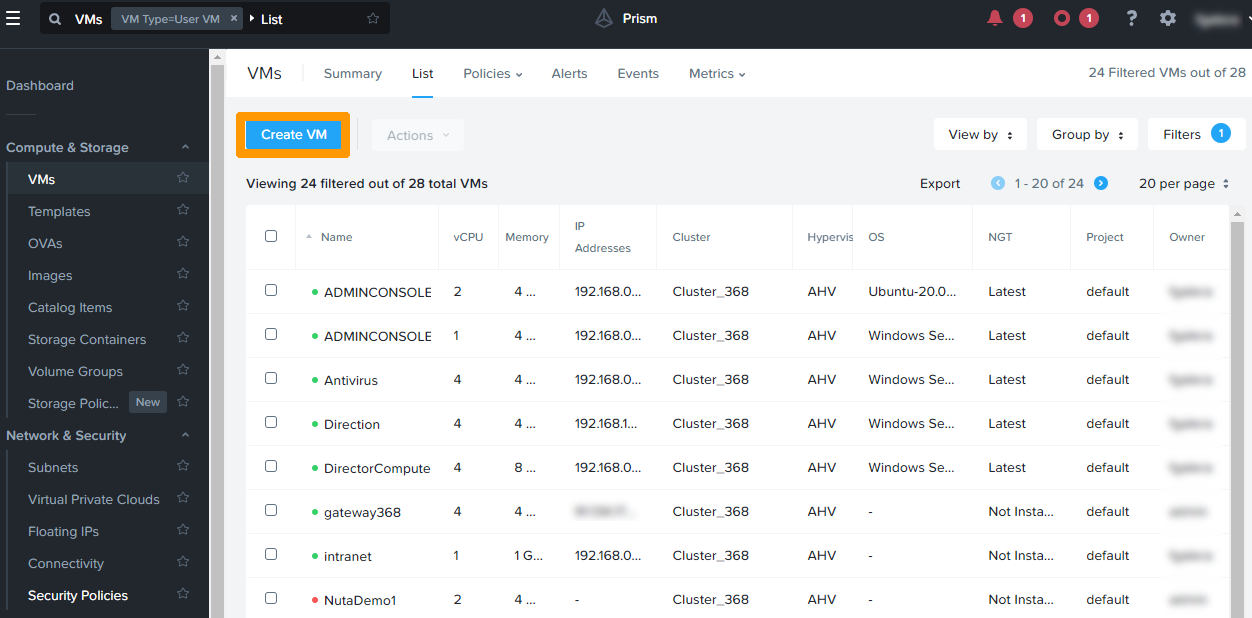
Click Create VM.
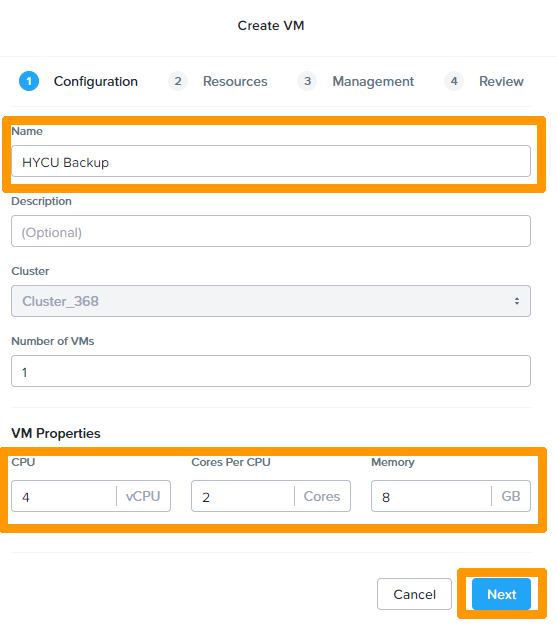
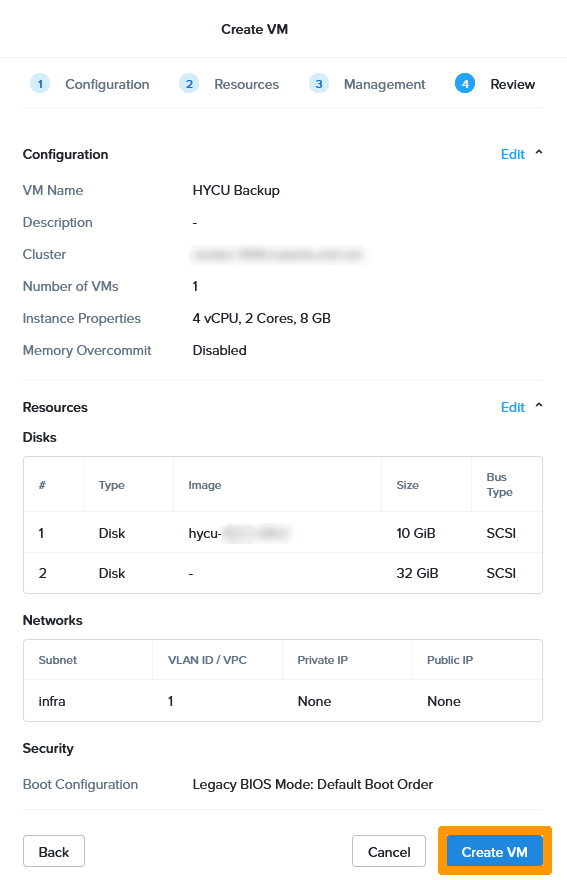
Name the virtual machine and change the properties of the virtual machine with these settings:
- CPU:
4 vCPU - Cores Per CPU:
2 Cores - Memory:
8GB
Click Next.
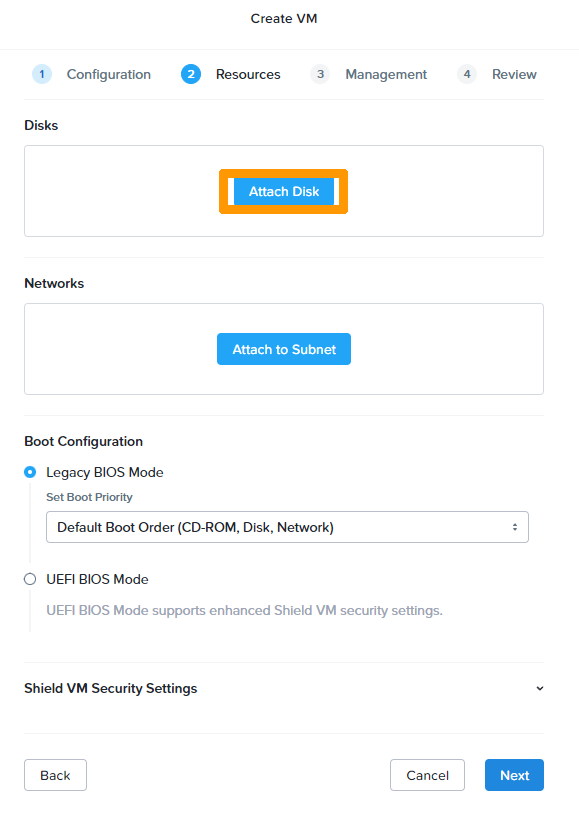
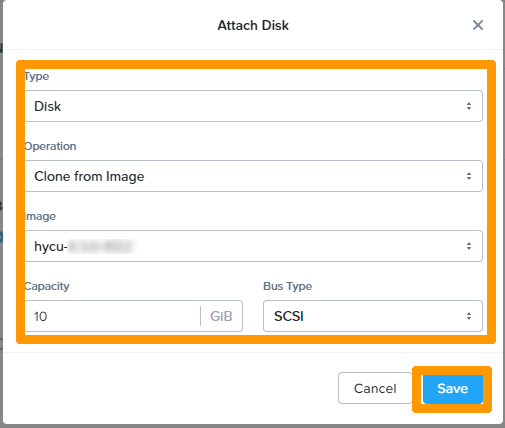
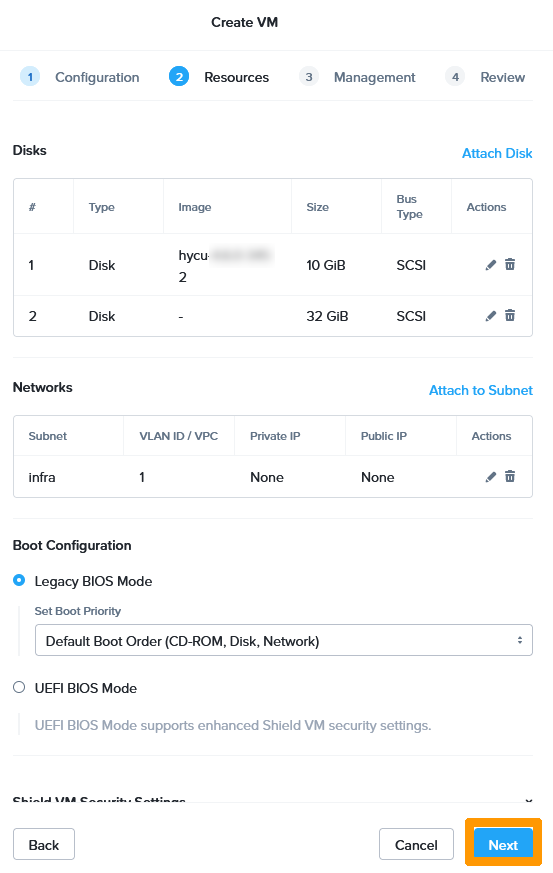
Click Attach Disk.
Enter these values:
- Type:
Disk - Operation:
Clone from Image - Image:
hycu-4.X.X-XXXX
Click Save.
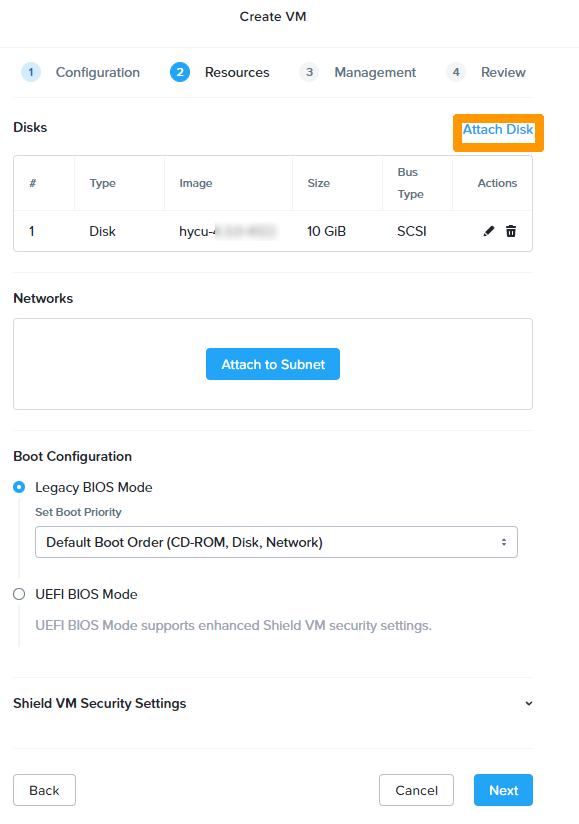
Click Attach Disk.
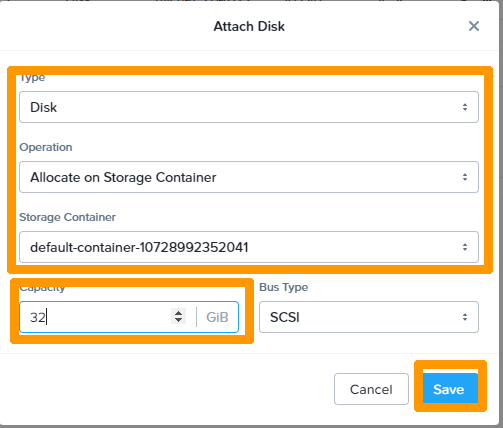
Choose these options:
- Type:
Disk - Operation:
Allocate on Storage Container - Image:
default-container - Capacity:
32Gib
Click Save.
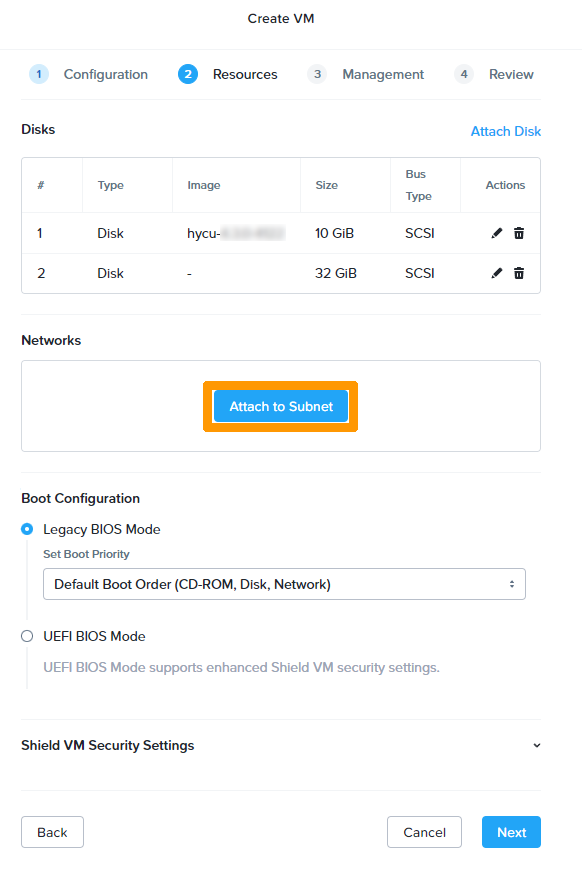
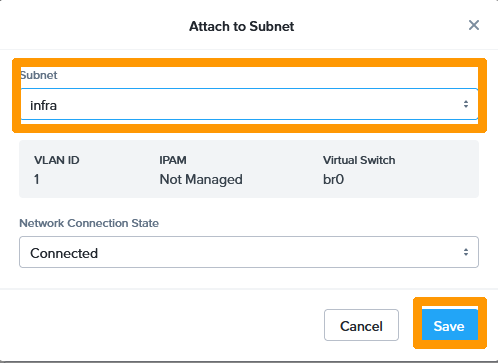
Click Attach to Subnet.
Select the infra network from the Subnet drop-down menu, select Connected in the Network Connection State drop-down menu. Then click Save.
Click Next.
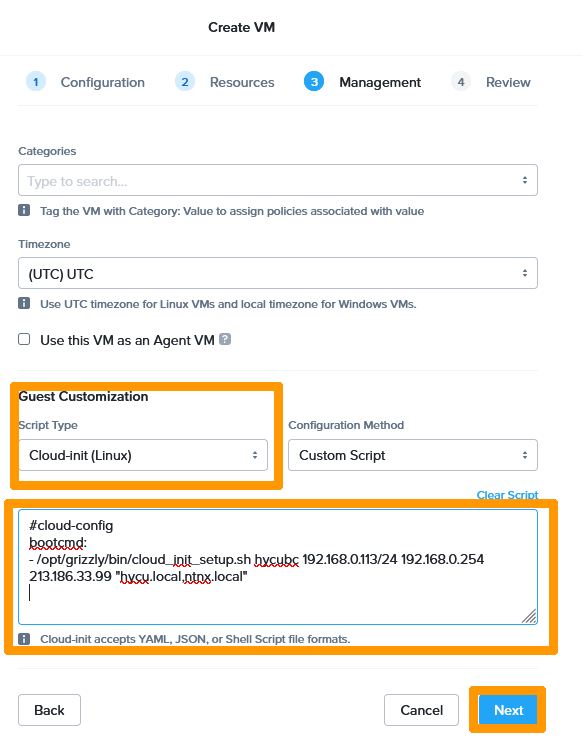
Create a yaml file by editing these values:
- < IP address >: The local IP address of the virtual machine with the subnet mask as XX.XX.XX.XX/XX.
- < GATEWAY >: Local gateway for the virtual machine to access the Internet.
- < DNS >: DNS used on the Internet.
Modify Guest Customisation options by selecting Cloud-init (Linux) in the Script Type drop-down menu. Select Custom Script in the Configuration Method drop-down menu.
Copy the contents of the yaml script and paste it to the field below Clear Script. Then click Next.
Click Create VM.
Select the virtual machine created by using the checkbox to the right of the virtual machine.
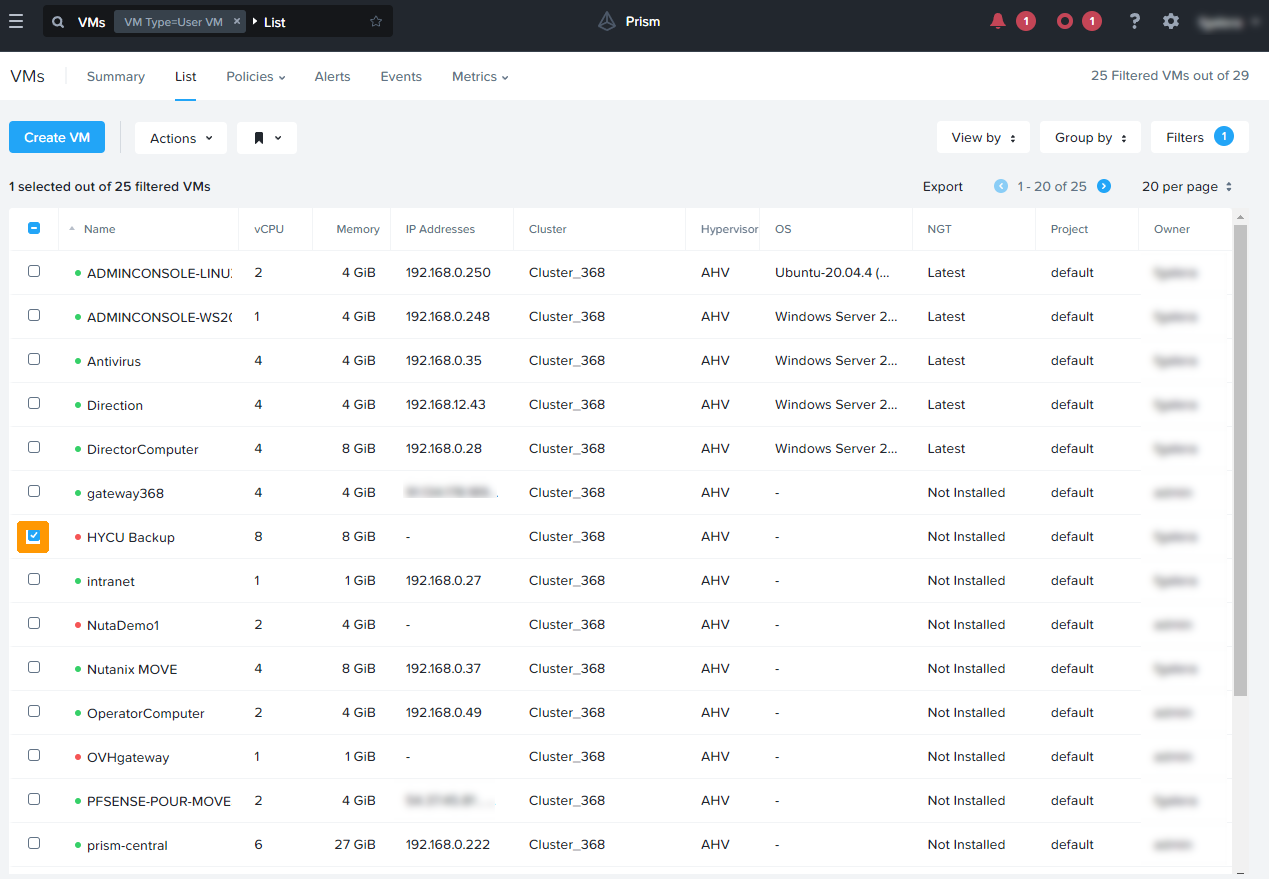
Click Power On in the Actions menu.
 .
.
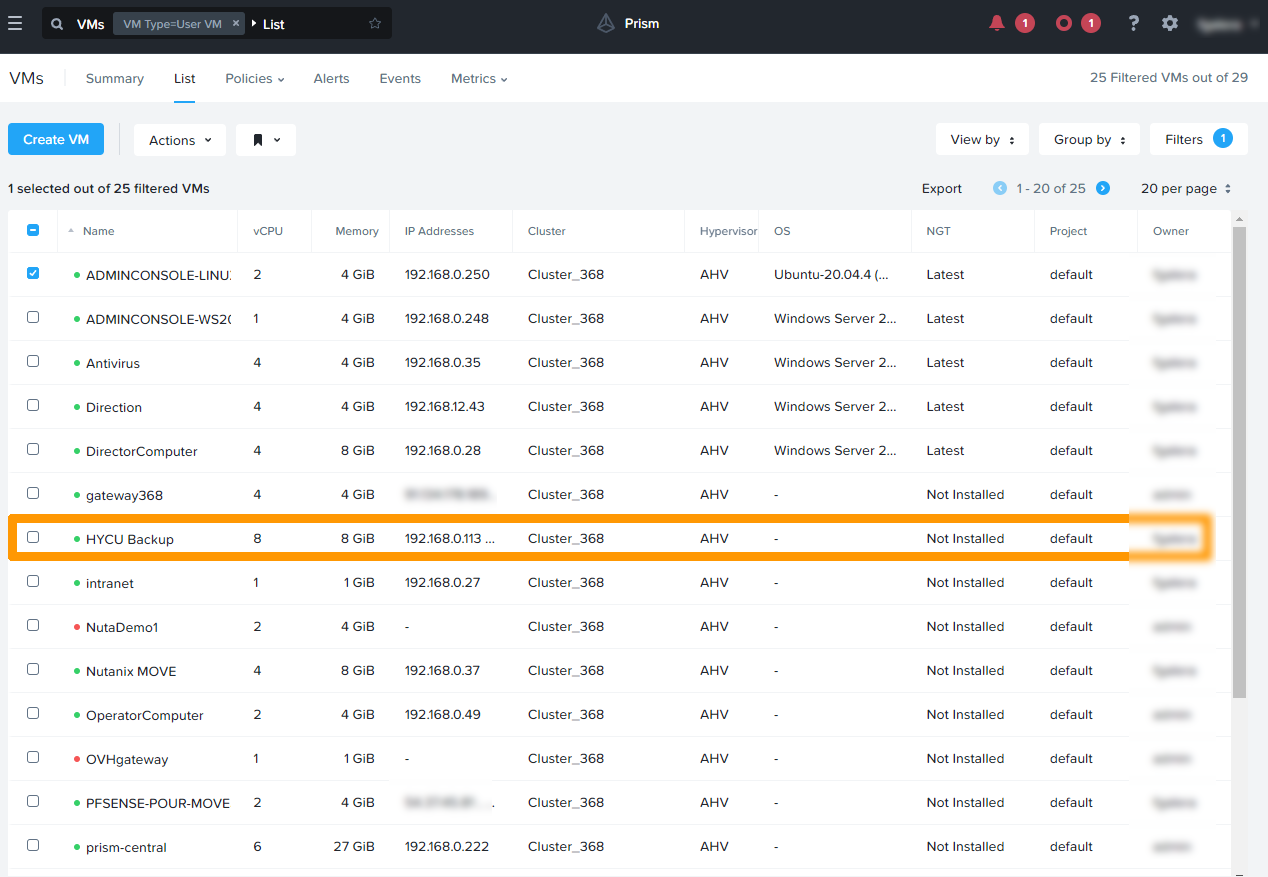
The virtual machine is started and has the IP address defined in cloud-init.
Configuring HYCU URL redirection to public network
In this section, we will configure a redirection so that you can configure HYCU using the web interface from outside your cluster.
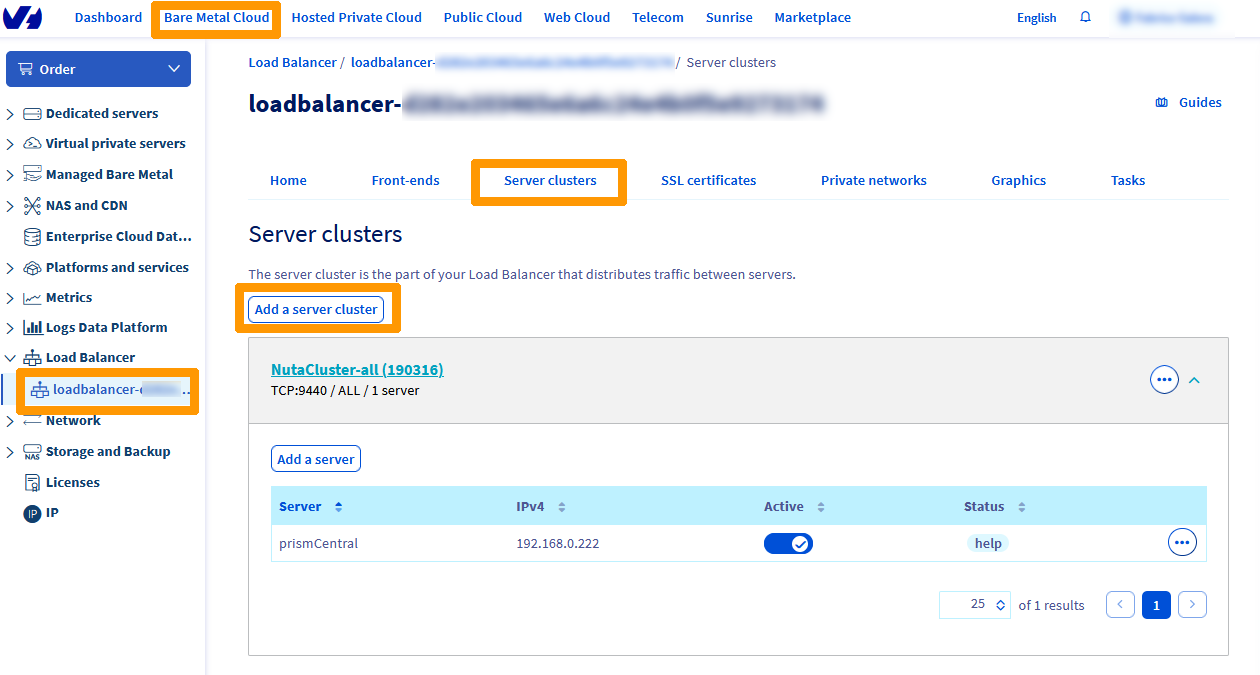
In the Network section, click on Load Balancer and select your service.
In the Server clusters tab, click Add a server cluster.
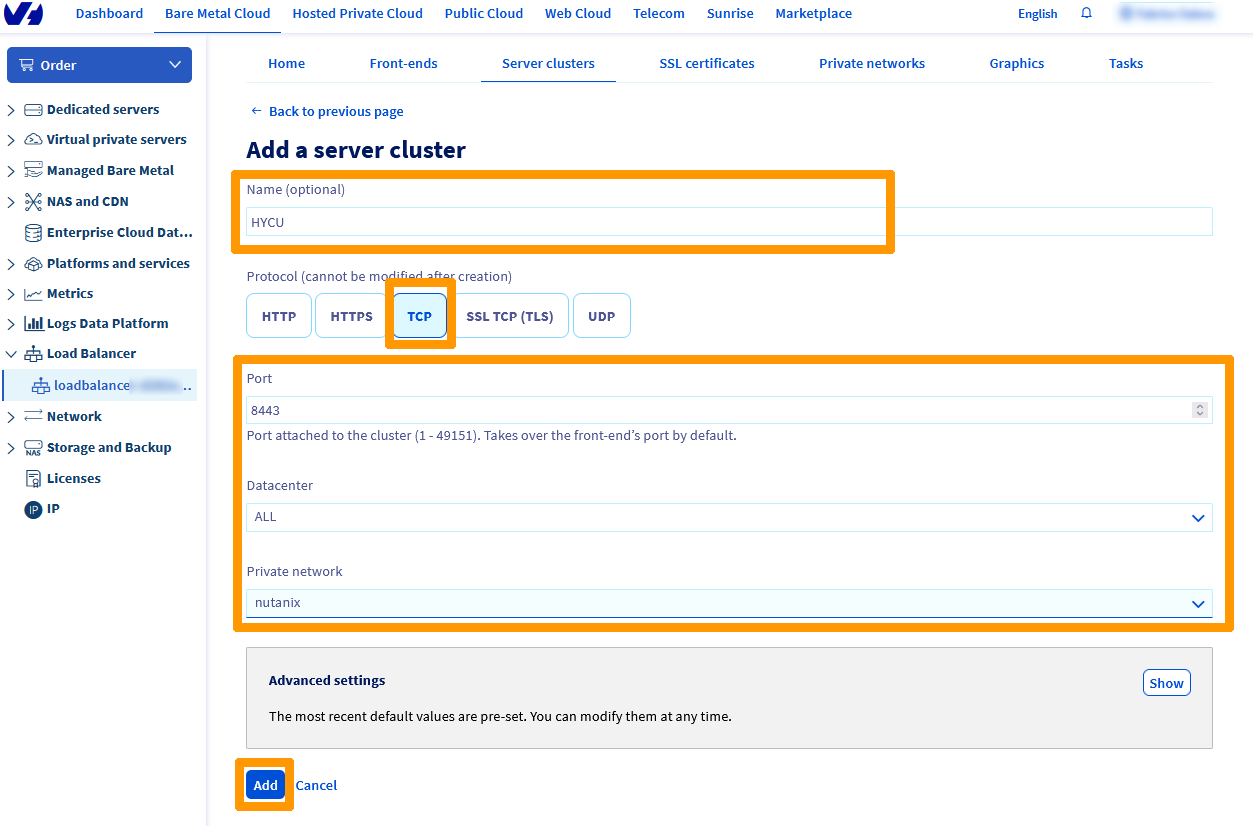
Name your server cluster, then select TCP and enter this information:
- Port:
8443 - Datacenter:
ALL - Private network:
nutanix
Click Add to confirm the server farm creation.
Click Add a server.
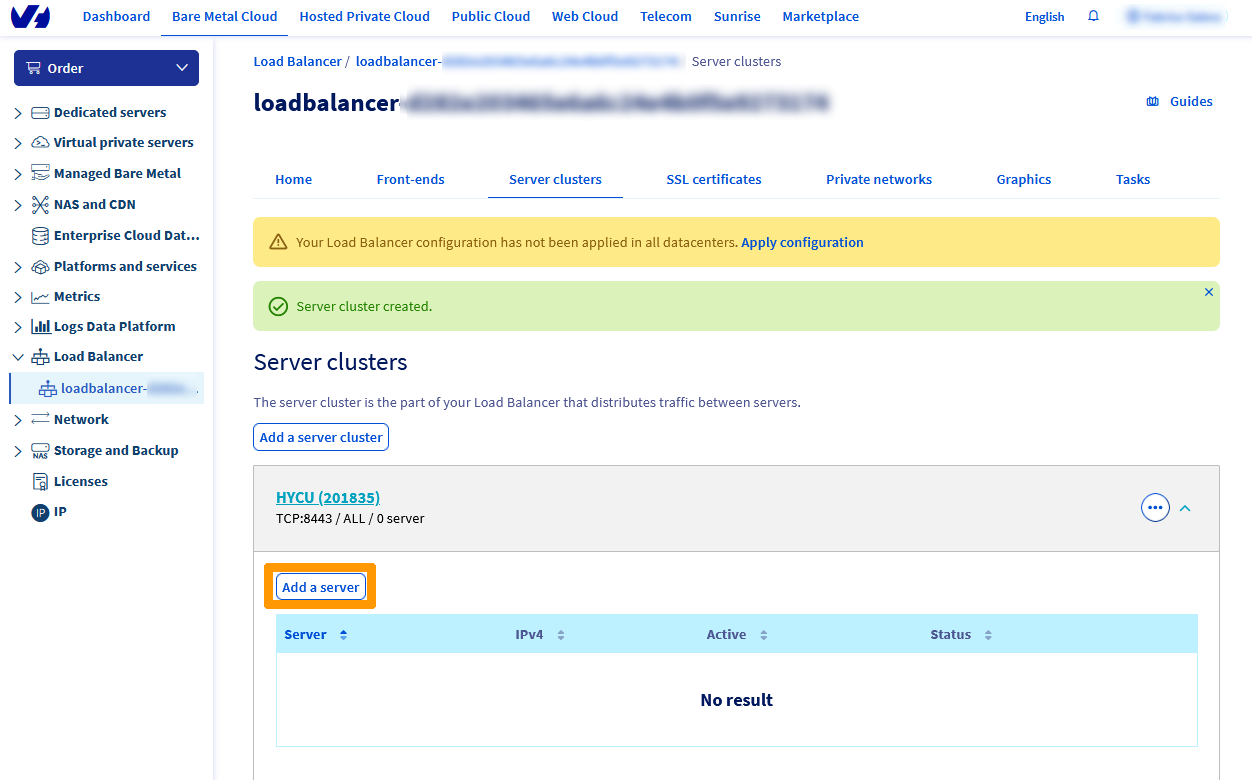
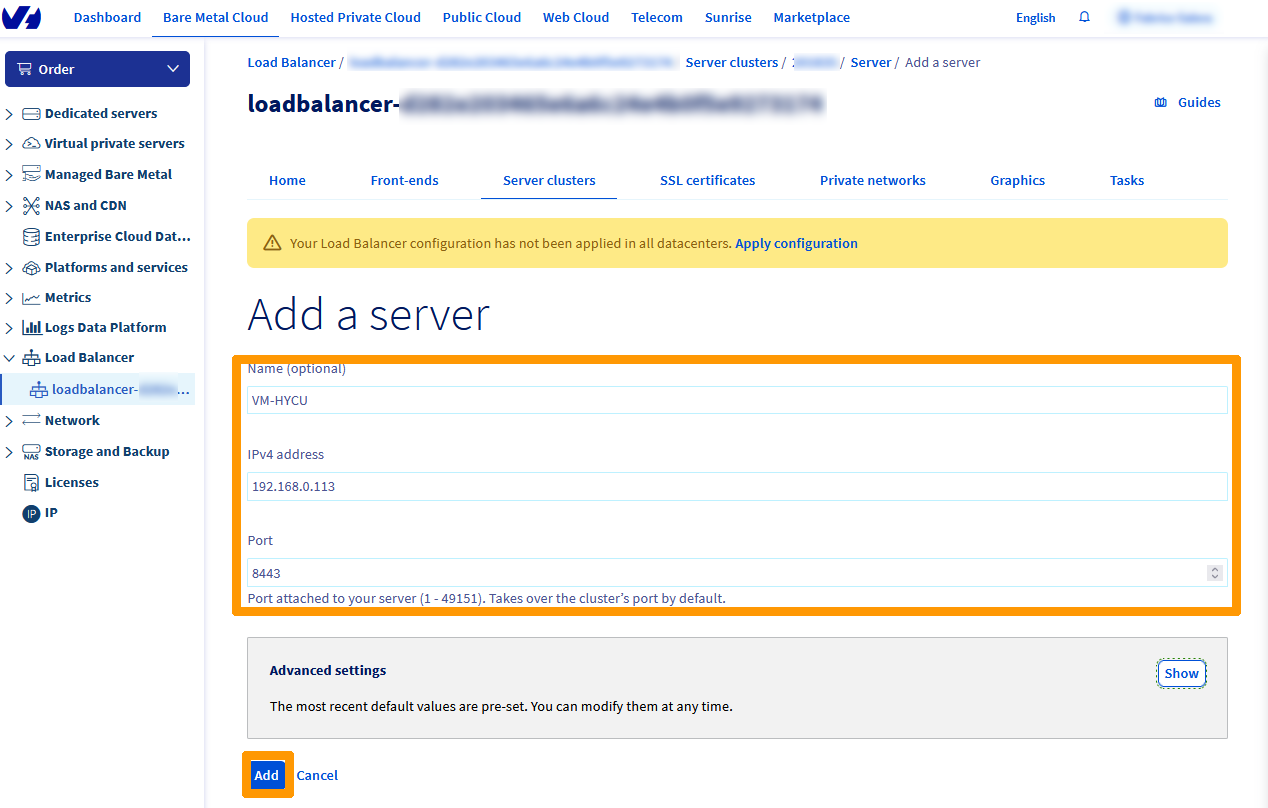
Enter these values:
- Name (optional):
VM-HYCU - IPv4 address:
ipaddresshycu - Port:
8443
Click Add to confirm the cluster creation.
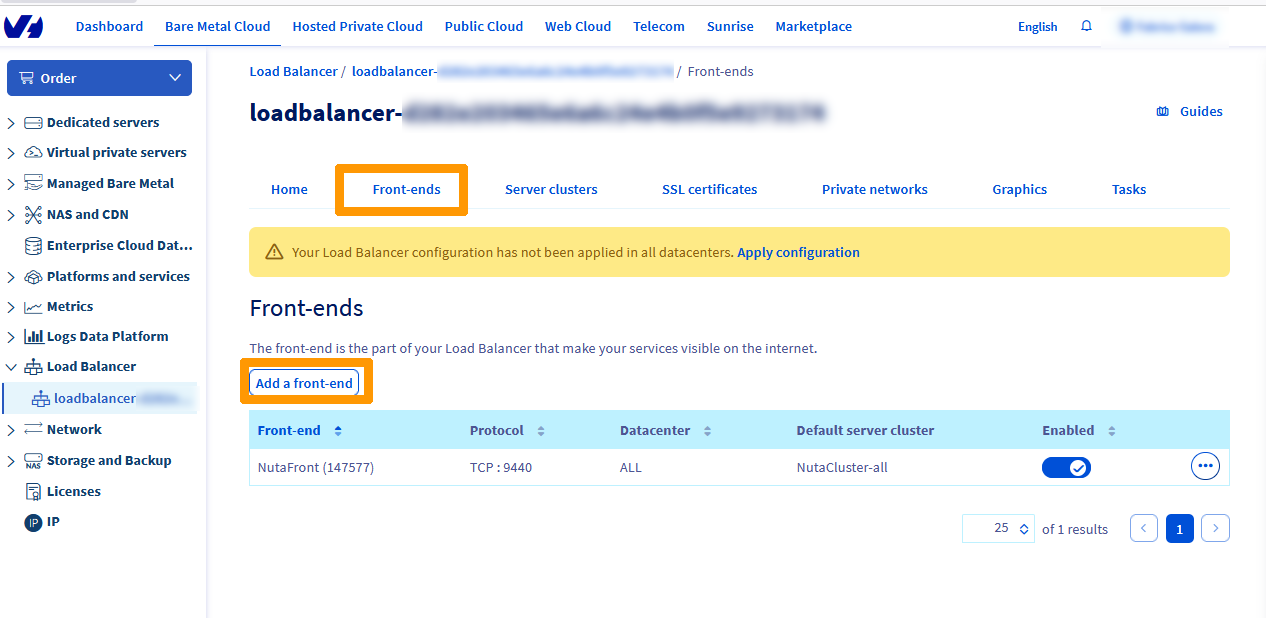
Next, click on the Front-ends tab, and Add a front-end.
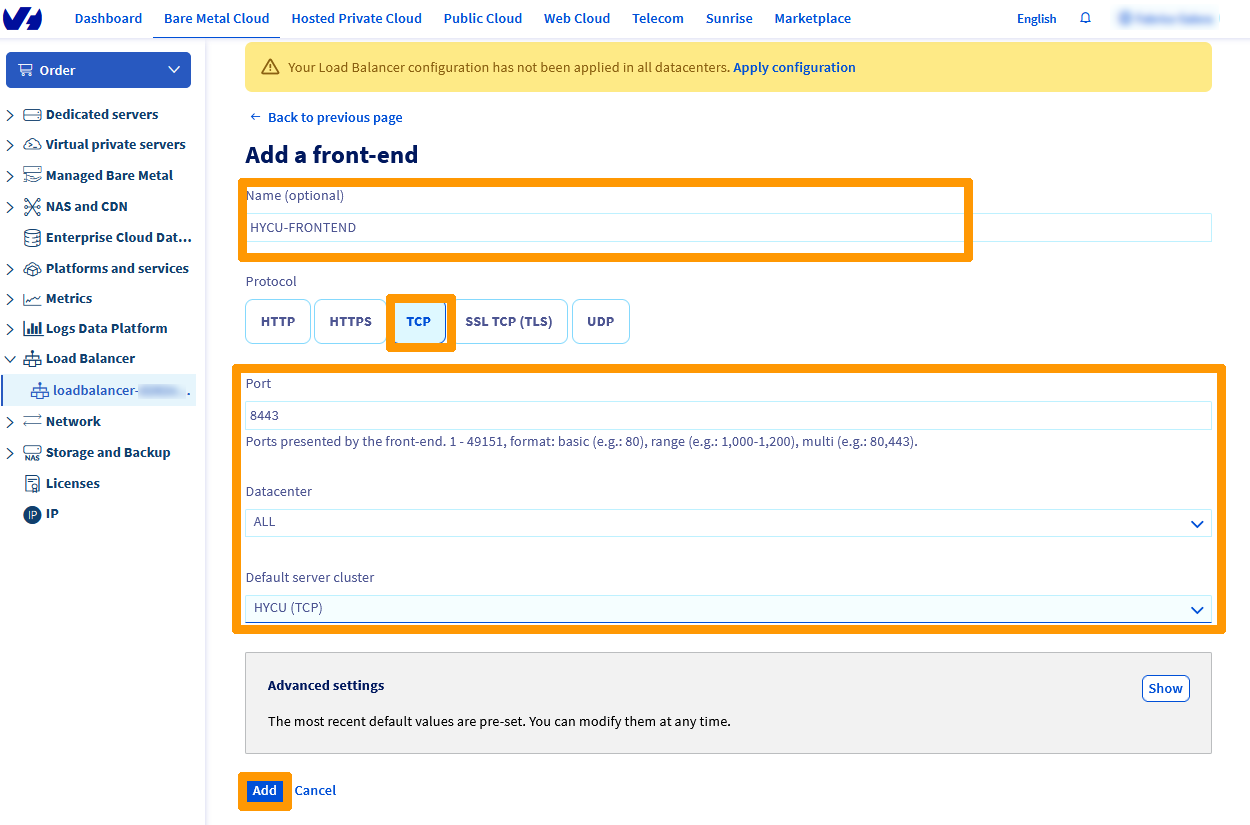
Name your front-end, choose the TCP protocol, and modify these values:
- Port:
8443 - Datacenter:
ALL - Default server cluster:
HYCU (TCP)
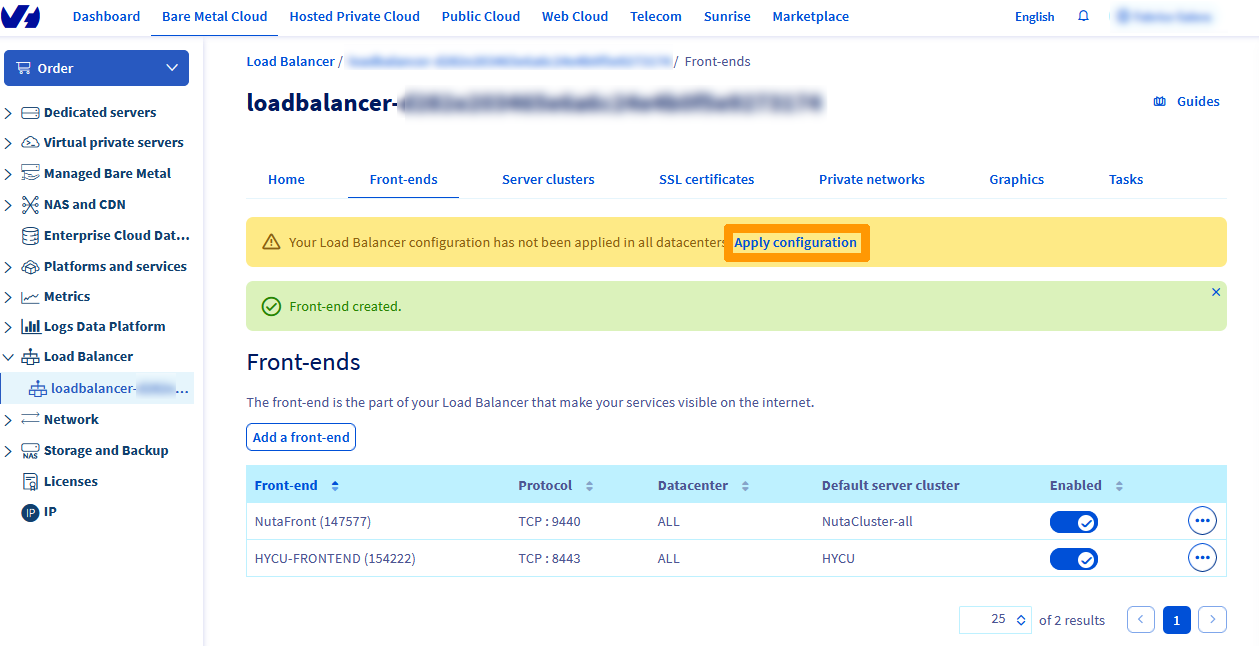
Click Add.
Click Apply configuration.
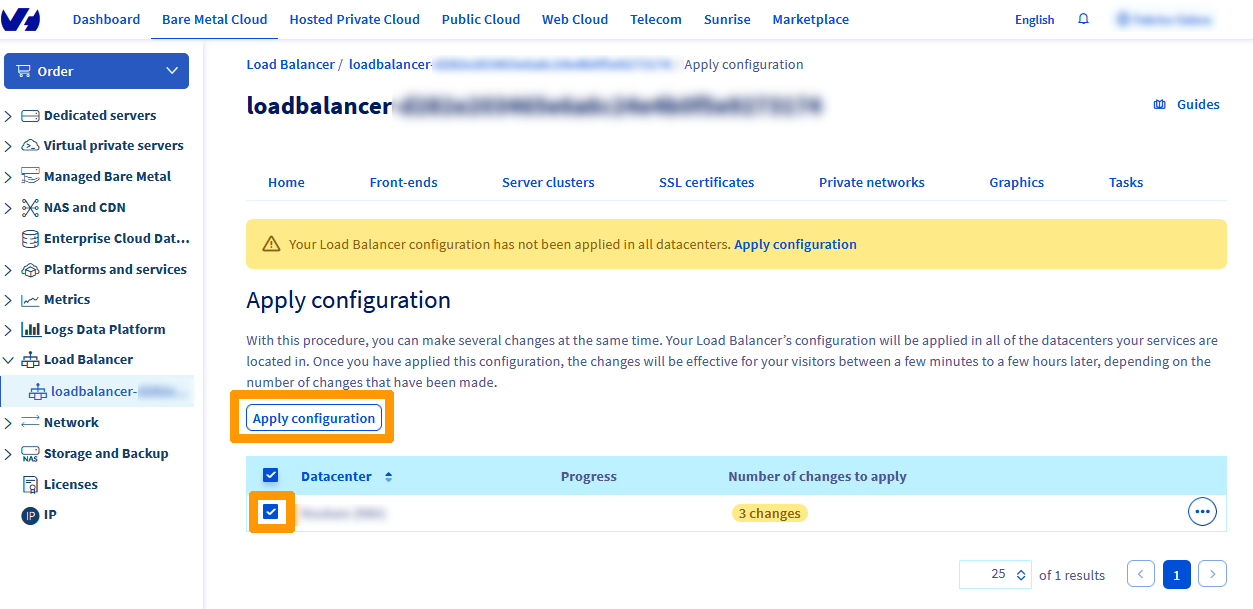
Select the Datacenter and click Apply configuration.
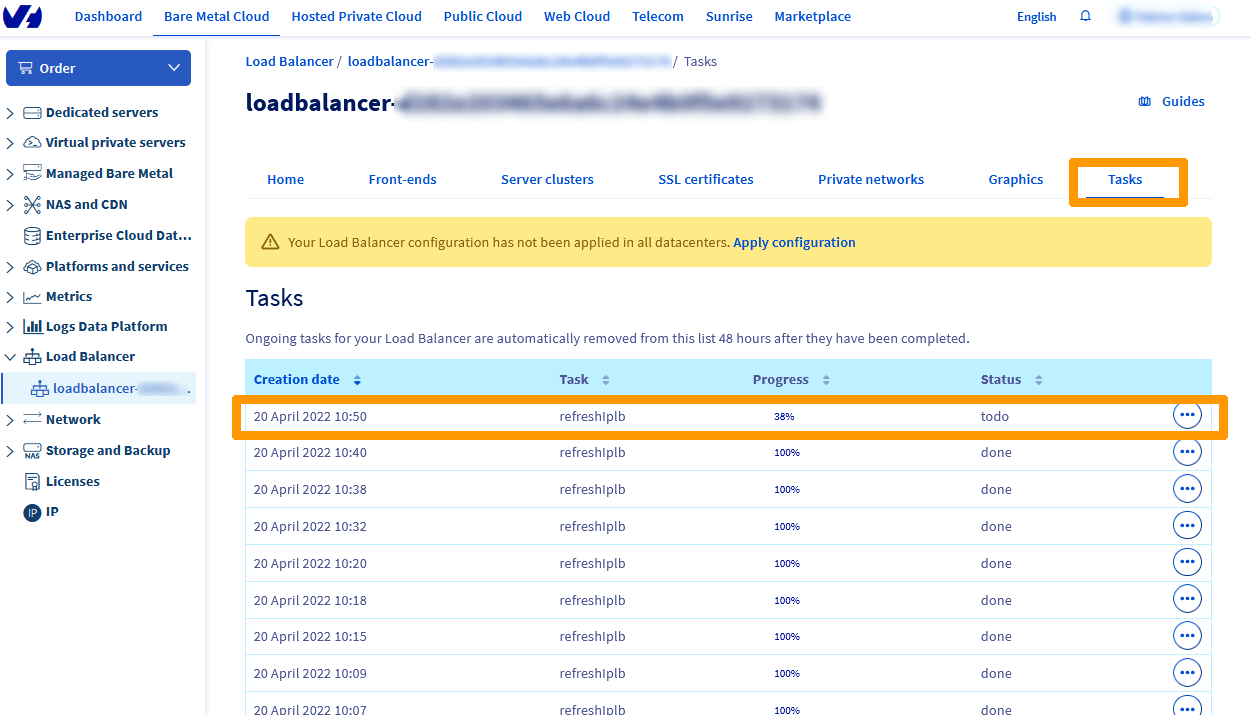
In the Tasks tab, you can track the progress of applying the changes.
For more information on the OVHcloud Load Balancer, please refer to the Go further section of this guide.
Configuring HYCU
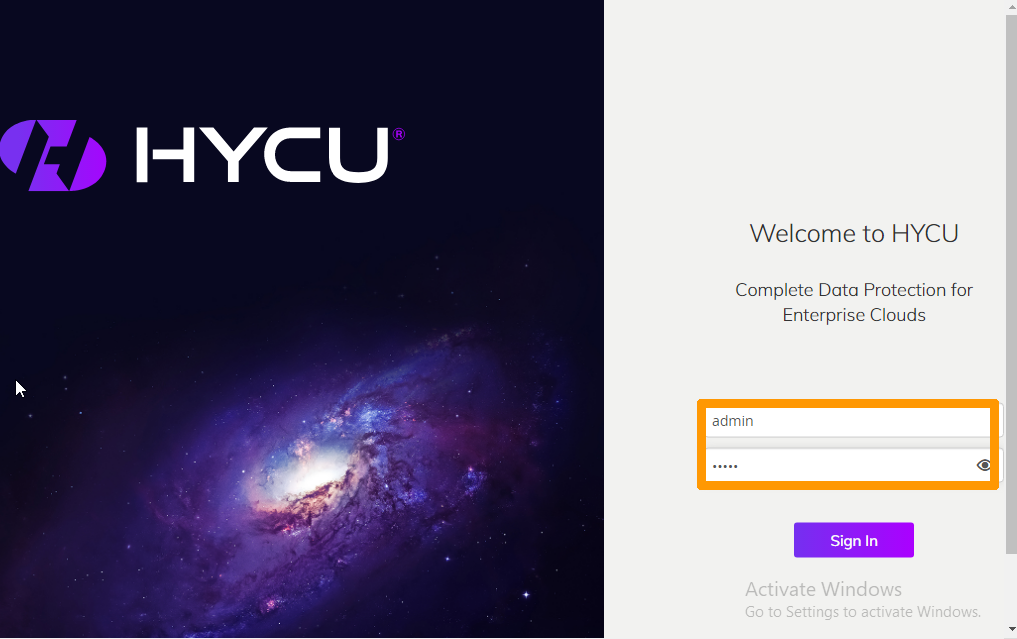
Connect with a web browser to the HYCU administration interface, which should be similar to https://nutanixfqdncluster:8443. The fqdn variable corresponds to the URL provided when the Nutanix cluster was created.
Enter the default password and click Sign In.
Change the login password for more security.
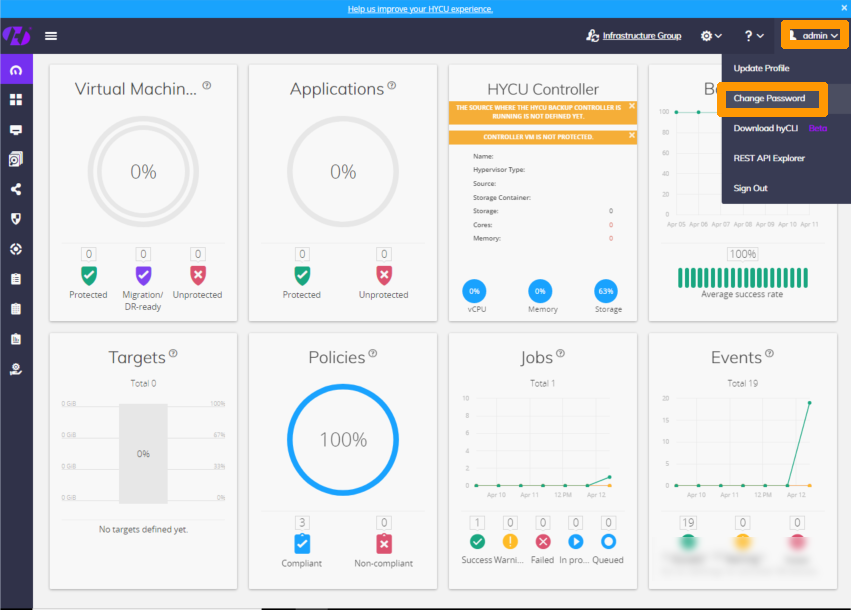
Click Change Password in the admin menu in the top right-hand corner of the interface.
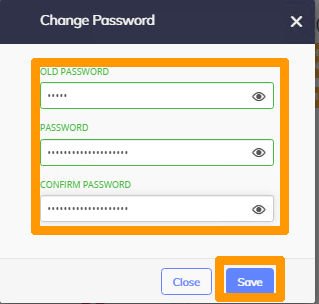
Enter the default password in the OLD PASSWORD field, the new password in the PASSWORD and CONFIRM PASSWORD fields.
Then click Save.
We will now connect HYCU to the Nutanix cluster.
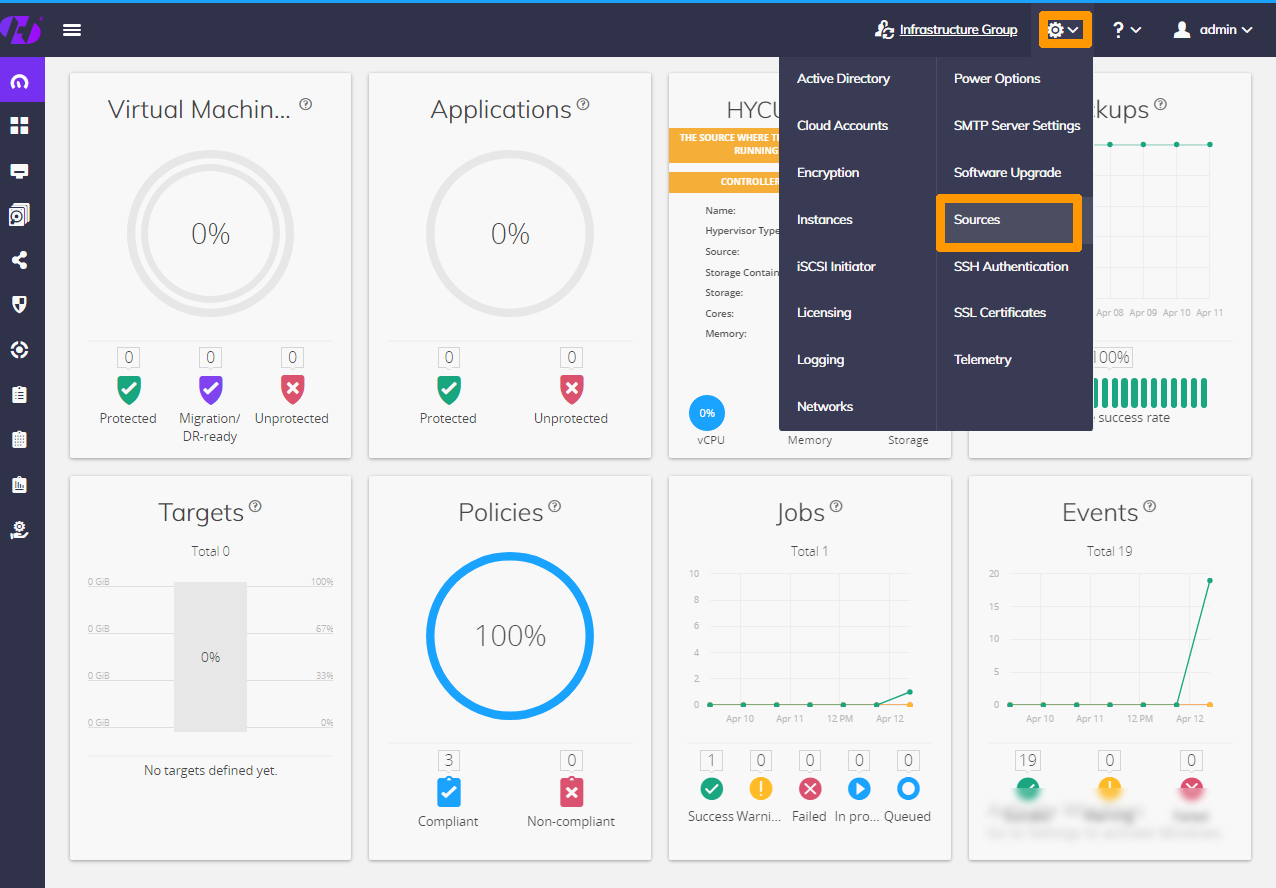
Click the Administration gear icon in the top right corner and choose Sources
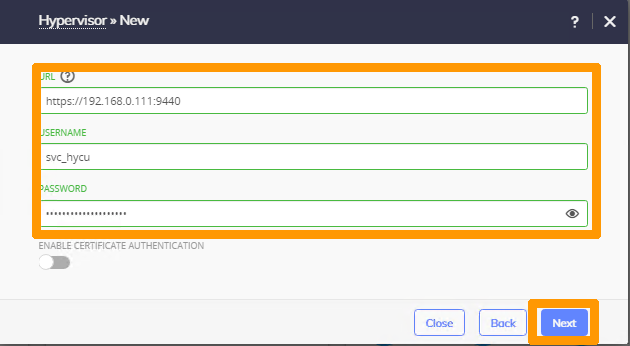
Enter information about Prism Element:
- URL:
https://url_prism_element_local:9440 - USERNAME:
Prism Element user - PASSWORD:
Prism Element user password
Click Next.
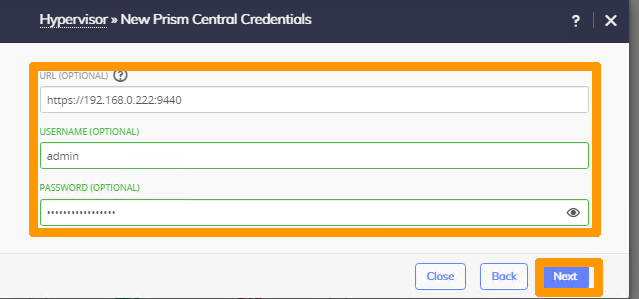
Enter this information about Prism Central:
- URL:
https://url_prism_central_local:9440 - USERNAME:
Prism Central user - PASSWORD:
Prism Central password
Click Next.
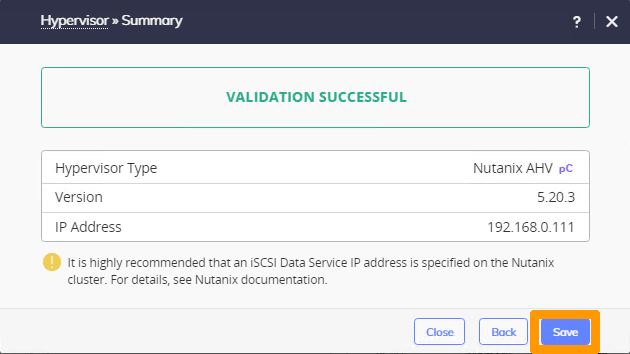
The VALIDATION SUCCESSFUL information appears to indicate that the entered information is correct. Click Save.
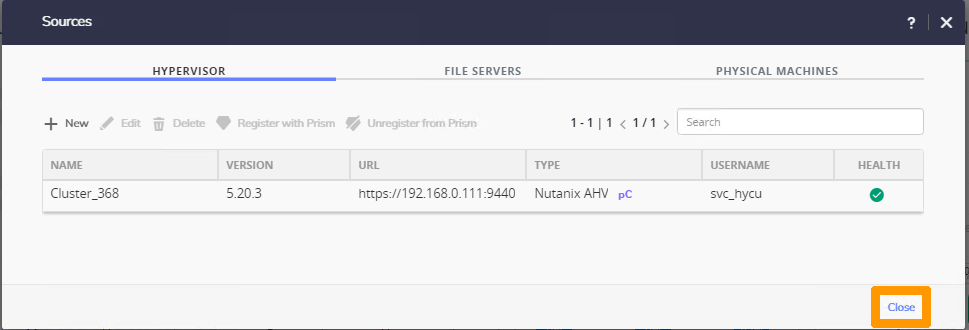
Click Close.
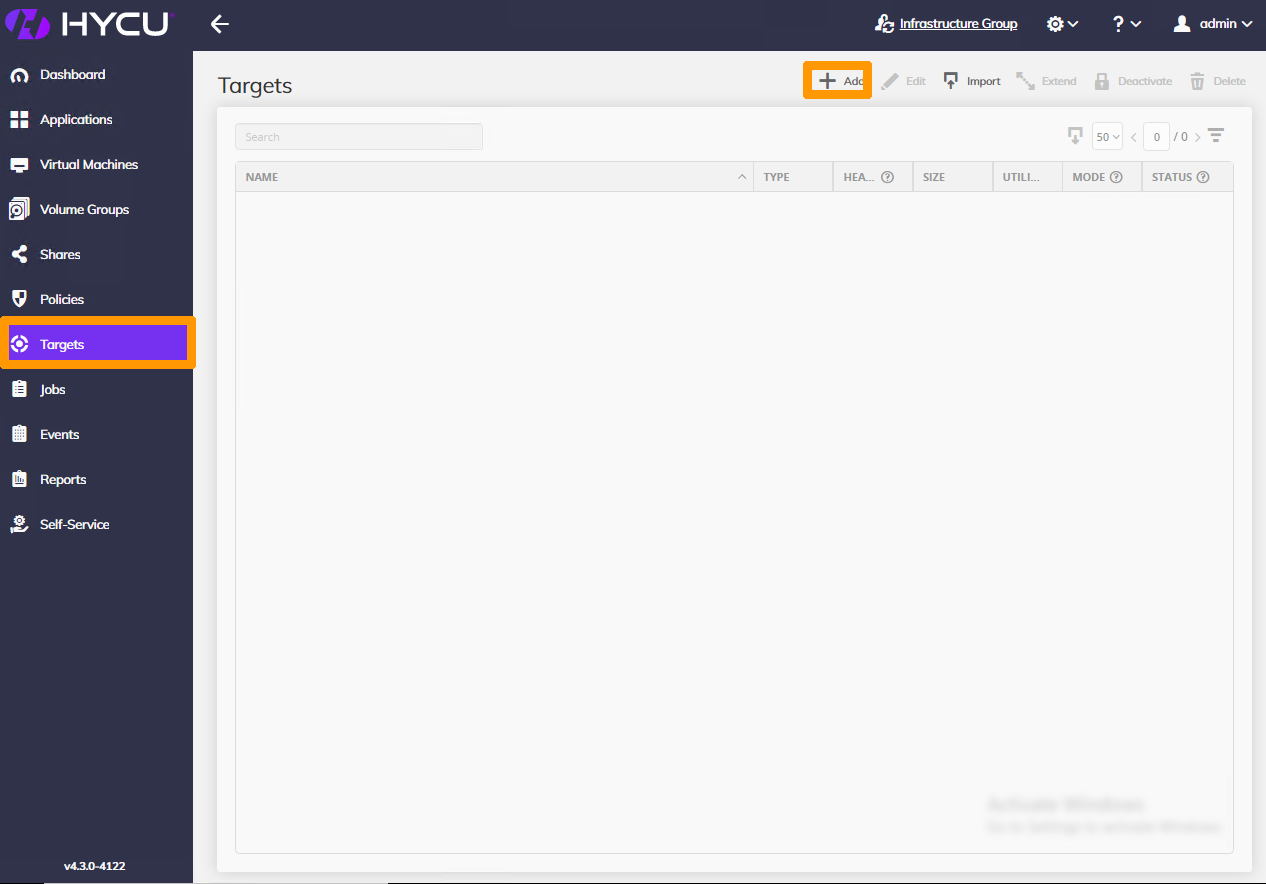
Select Targets in the menu on the left and click + Add in the top right of the interface.
Enter the configuration settings and authentication keys for your Object Storage user with read/write access to the Object Storage bucket used as explained below:
- name Name
- Size: Storage size
- Type:
AWS S3/Compatible
OVHcloud High Performance Object Storage service has no storage limits and is billed on a per-use basis. In the HYCU software configuration, it is necessary to set a size as in the example below. You can of course choose another value.
Enable ENABLE COMPRESSION and scroll down through the window.
 .
.
Complete the information:
- SERVICE ENDPOINT:
Object Storage URL - BUCKET NAME:
Bucket name - ACCESS KEY ID:
Object Storage User Access Key - SECRET ACCESS KEY:
Object Storage User Secret Key
Enable TARGET ENCRYPTION and click Save.
 .
.
The target is enabled for Nutanix cluster backups.
 .
.
Updating HYCU
HYCU regularly provides updates for which we detail the process below.
Adding sources for a new version of HYCU
From the Prism Central main menu, click Images from the Compute & Storage menu.
Click Add Image.
Select URL.
Enter the URL for the qcow2 image of the latest version of HYCU, such as:
https://download.hycu.com/ec/v4.X.X/hotfixes/4.X.X-XXXX/hycu-4.X.X-XXXX.qcow2
The URL used for the download is the latest version available on the HYCU website.
Click Upload file.
Remove the extension .qcow2 behind the name hycu-'4.X.X-XXXX, enter a description and click Next.
It is important to remove the extension in the name to facilitate the HYCU update process.
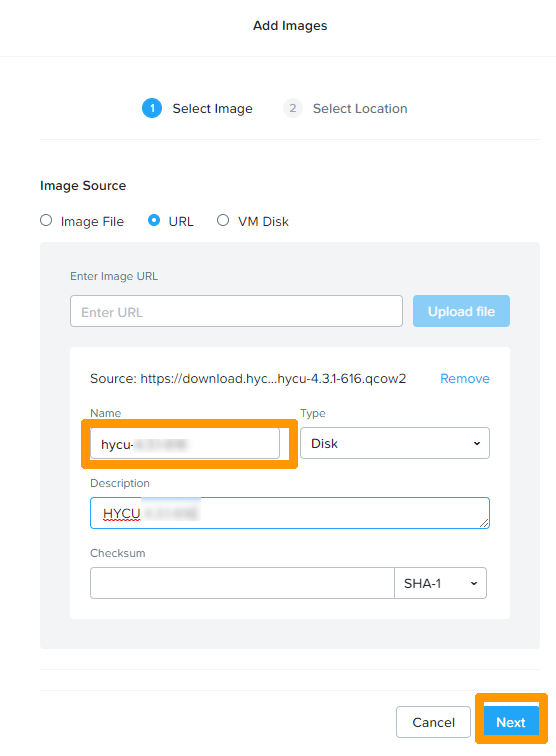
Click Save to import the image.
Runing the update from HYCU
Log in via the URL provided when you created the Nutanix cluster, replacing the port https://fqdnclusternutanix:8443.
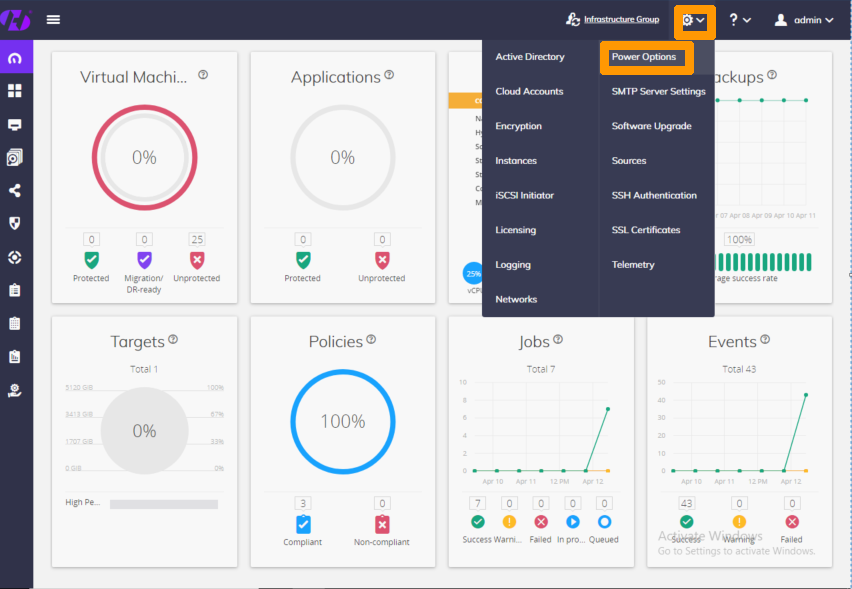
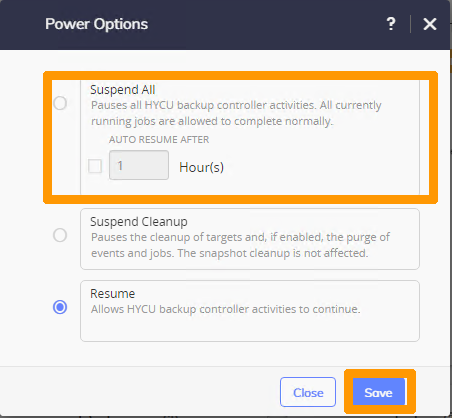
Go to the HYCU configuration by clicking the Administration gear icon and choose Power Options.
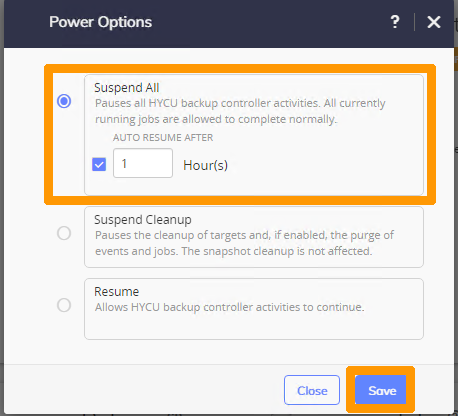
Select Suspend All, check AUTO RESUME AFTER and leave the Hours field at 1, then click Save.
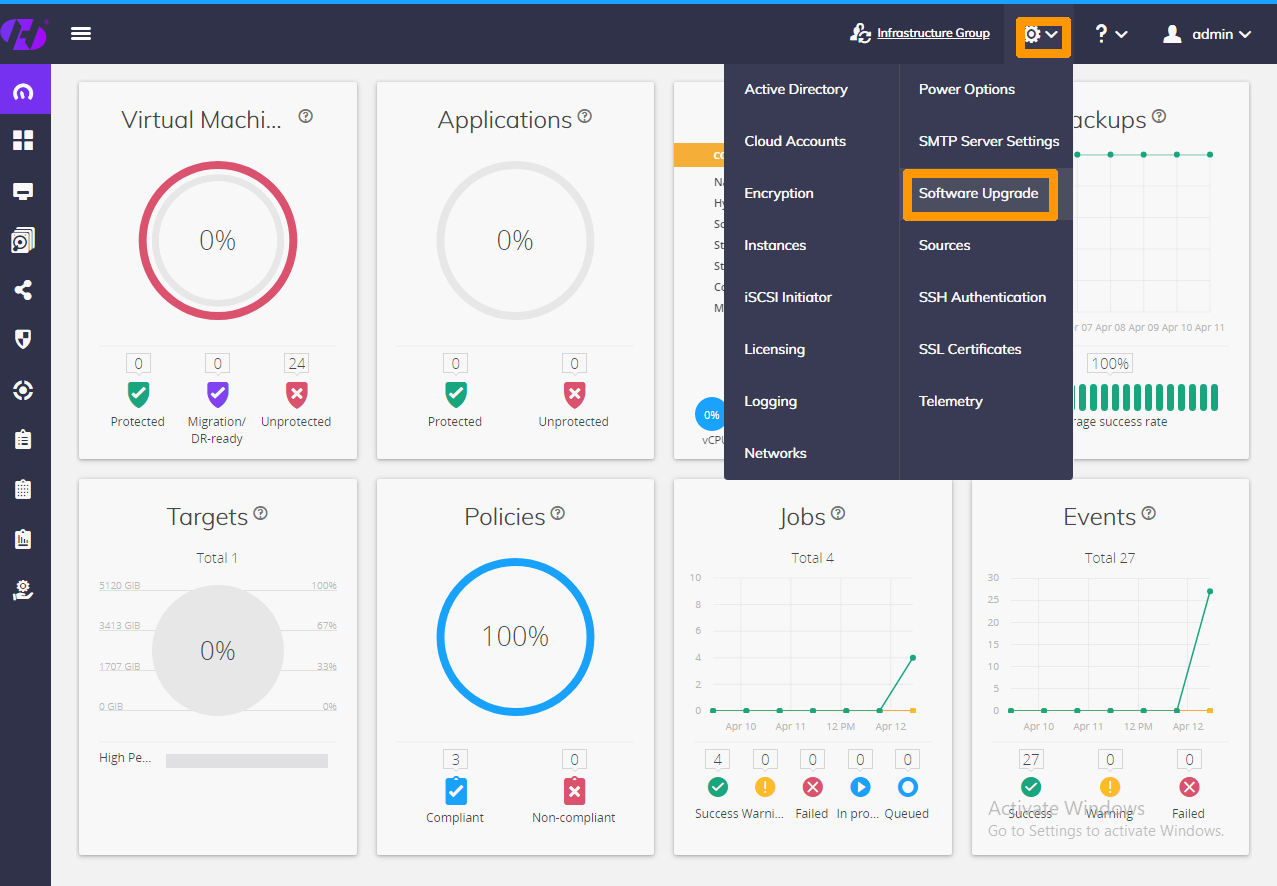
Click Software Upgrade from the Administration gear menu.
Choose the latest version from the AVAILABLE VERSIONS drop-down menu and click Software Upgrade.
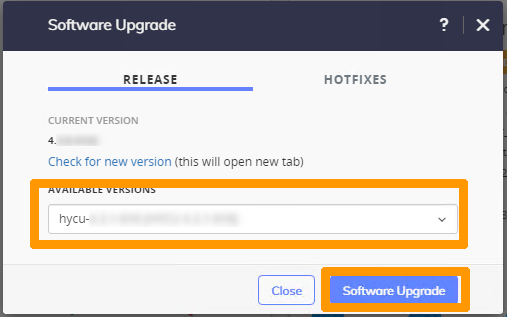
Click Yes to start the update process.
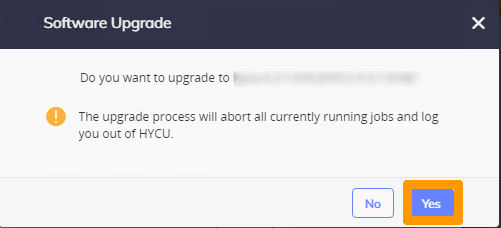
A backup copy is made during the update process so that it can be restored if there are any issues.
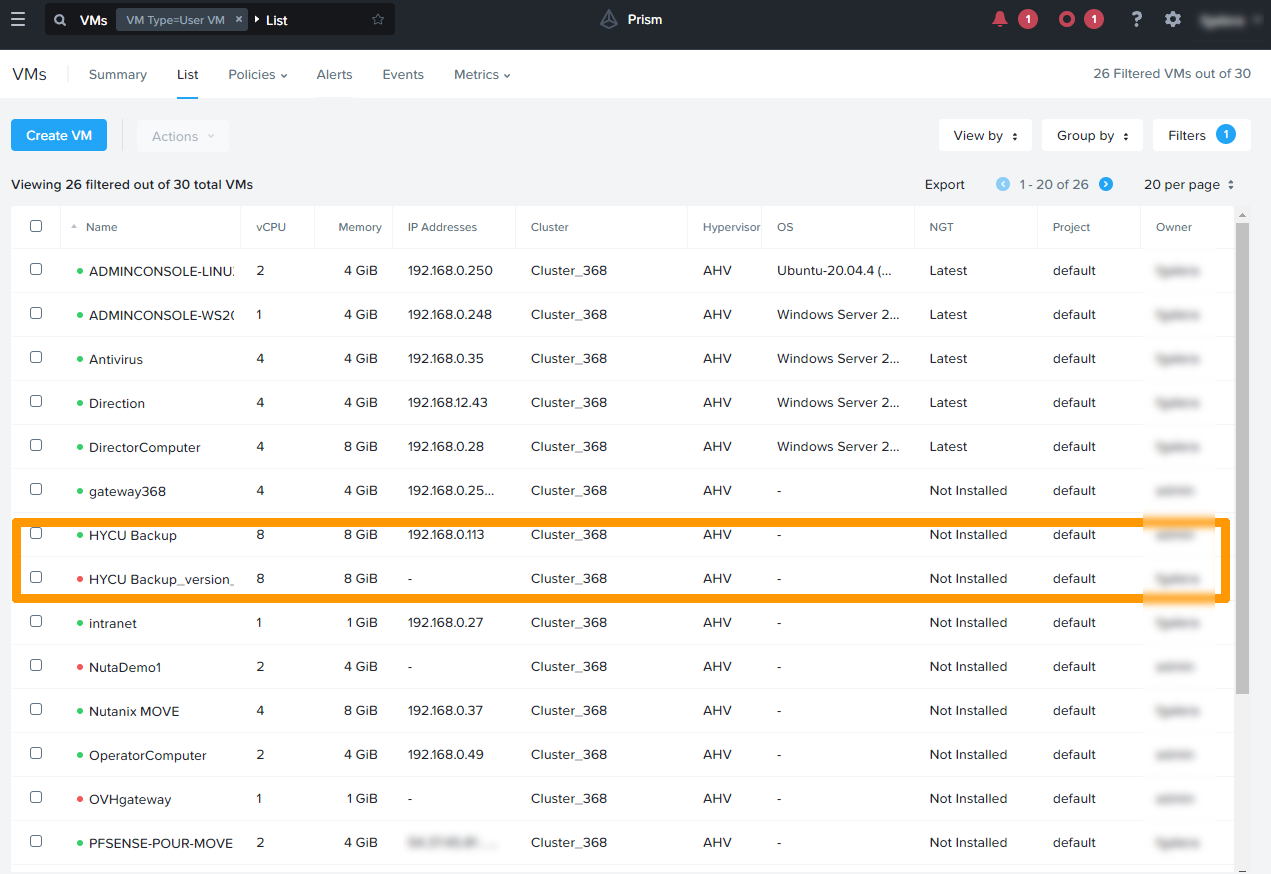
Log in to the HYCU administration interface.
Click the gear icon and click Power Options.
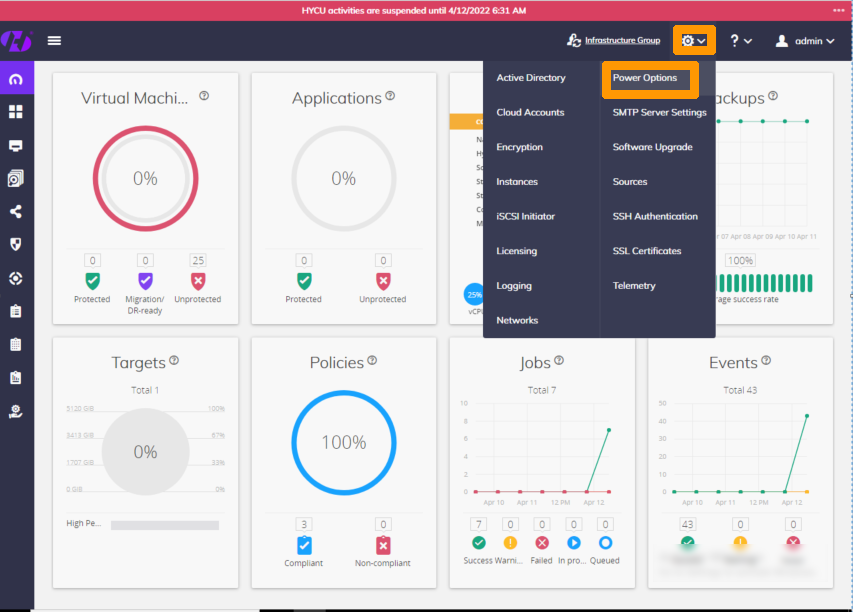
Uncheck Suspend All and click Save.
Configuring backup in HYCU
Setting up VM login passwords
Virtual machine login passwords enable backup of applications such as a Microsoft SQL database or Exchange server.
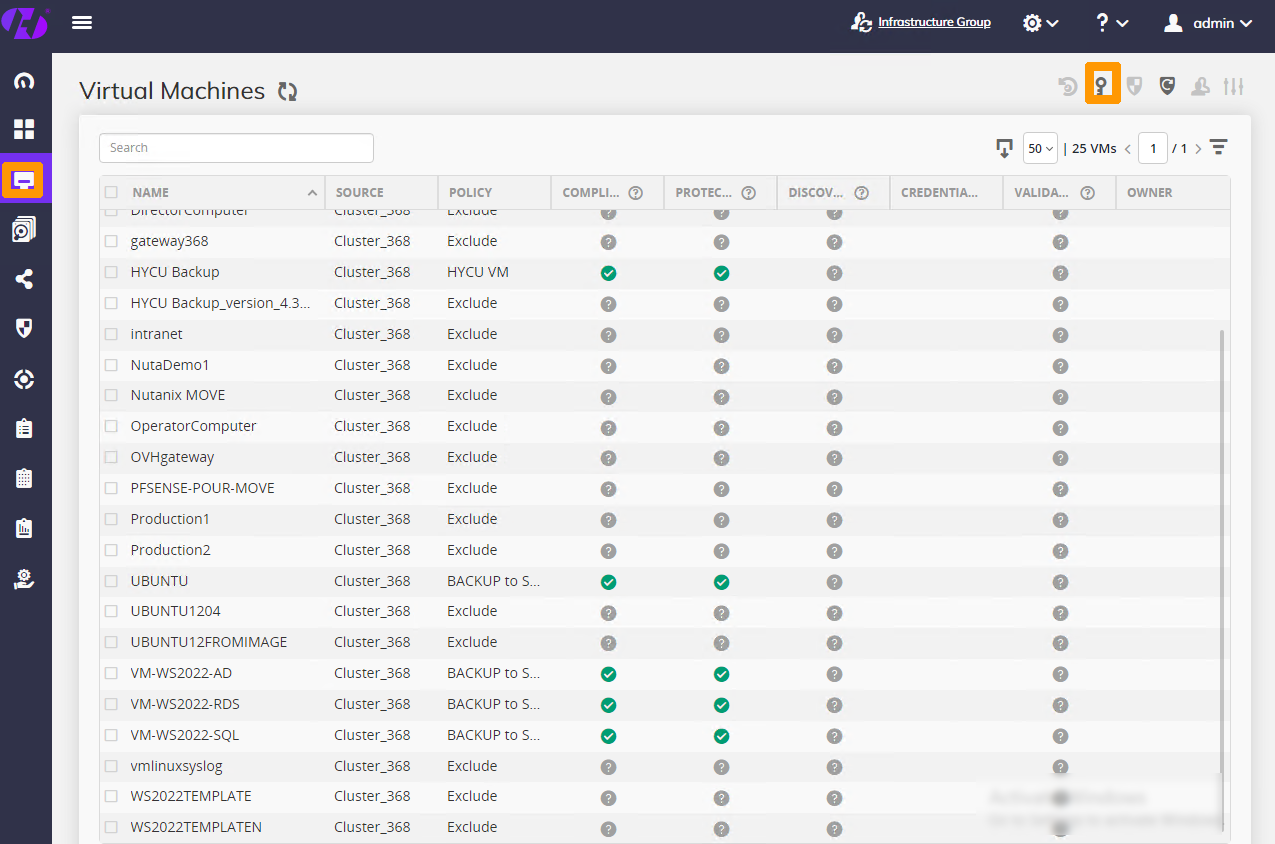
Log in via the Virtual Machines menu on the left and click the key-shaped Credentials button at the top right of the interface.
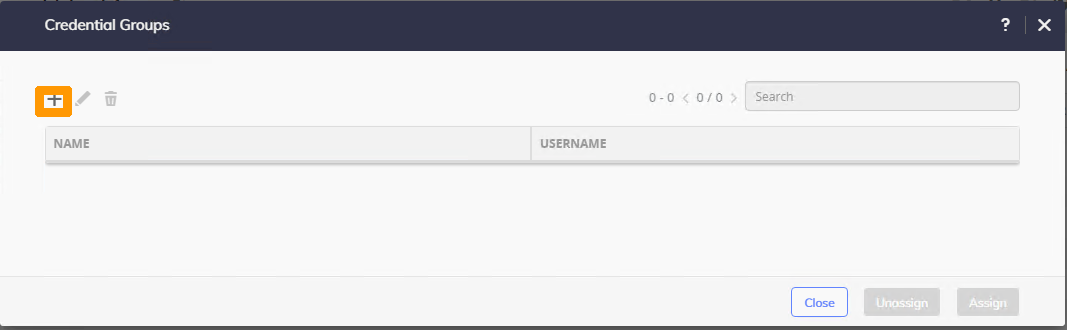
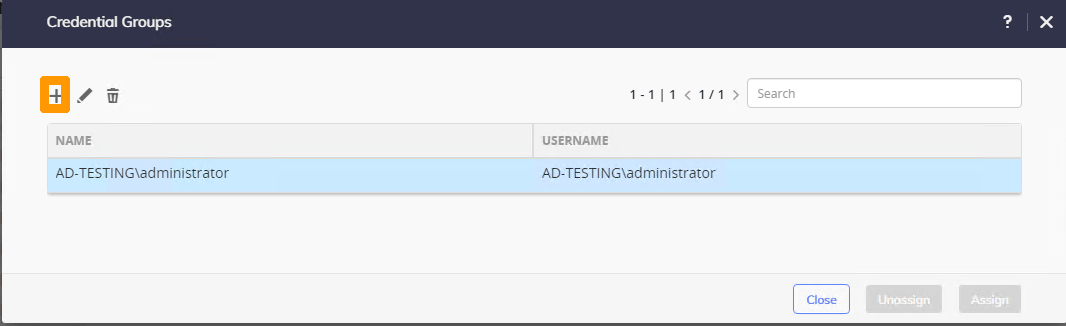
Click the + sign.
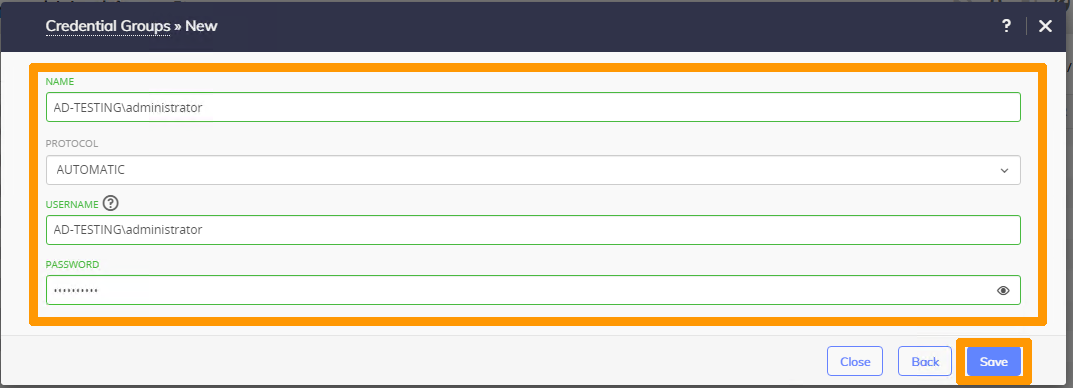
Enter these values:
- NAME: password storage name
- PROTOCOL:
AUTOMATIC - USERNAME: virtual machine user account
- PASSWORD: password
Click Save.
Click the + sign to add another account.
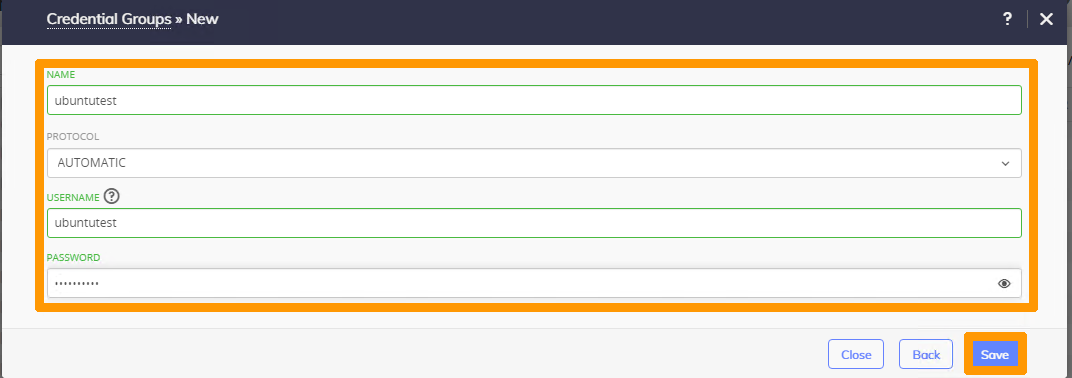
Enter these values:
- NAME: password storage name
- PROTOCOL:
AUTOMATIC - USERNAME: virtual machine user account
- PASSWORD: password
Click Save.
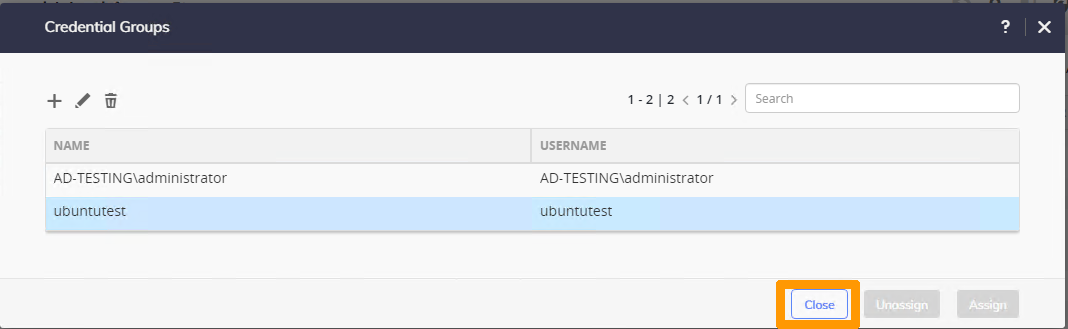
Click Close.
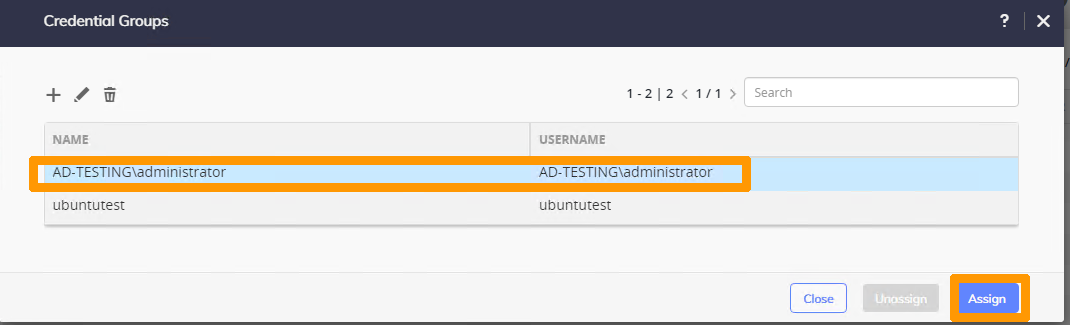
Select the virtual machines that will use a password by ticking the box to the right of the virtual machine, then click the credentials key button.
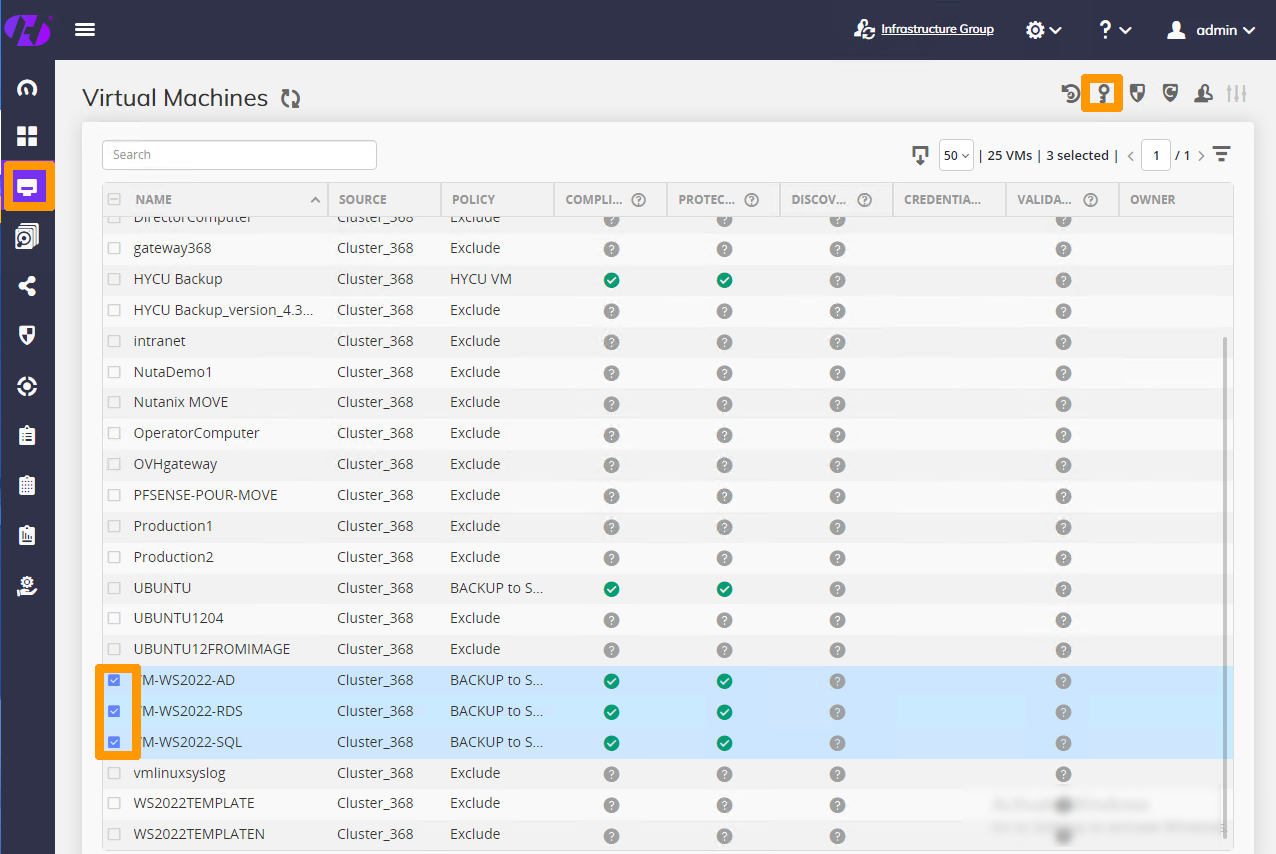
Select the password you want to use and click Assign.
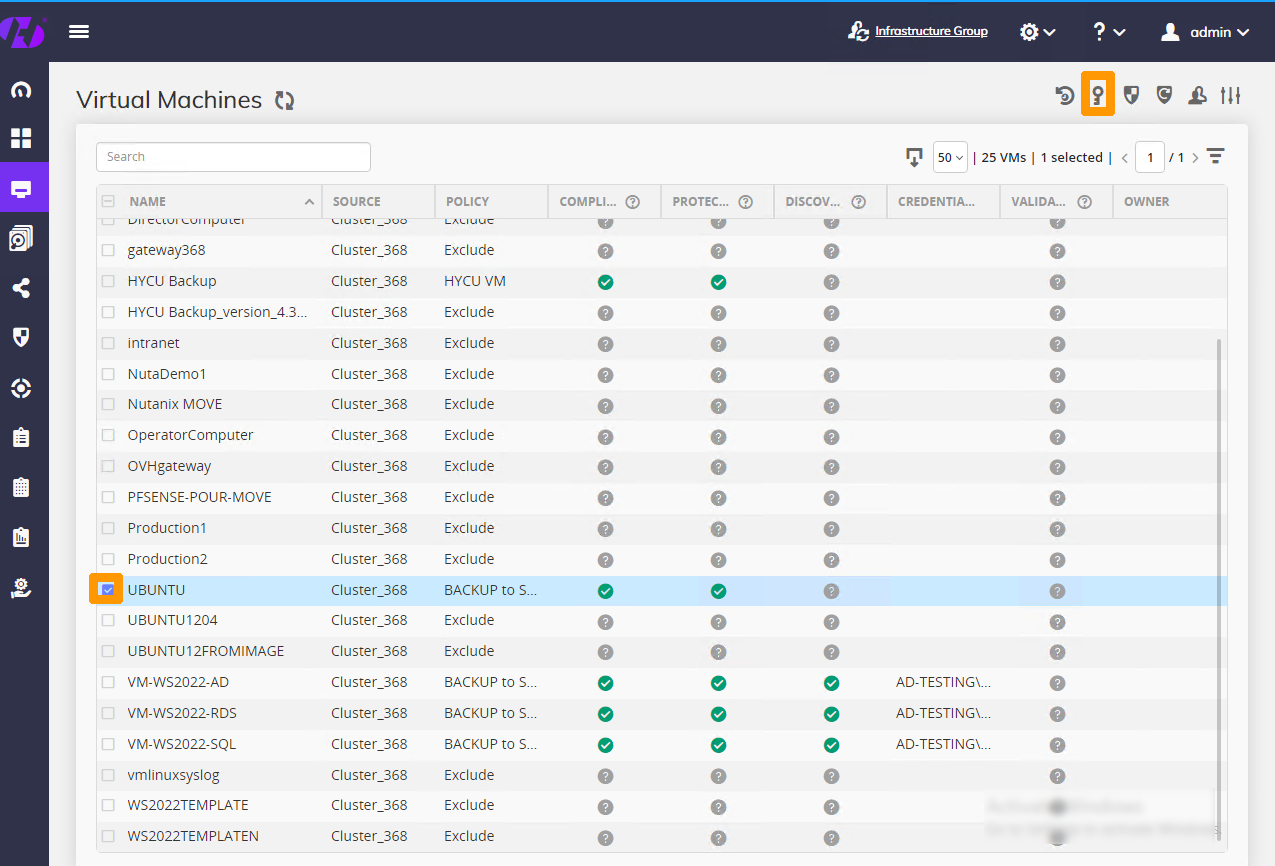
Select another virtual machine that will use a password by ticking the box to the right of the virtual machine, then click the credentials key button.
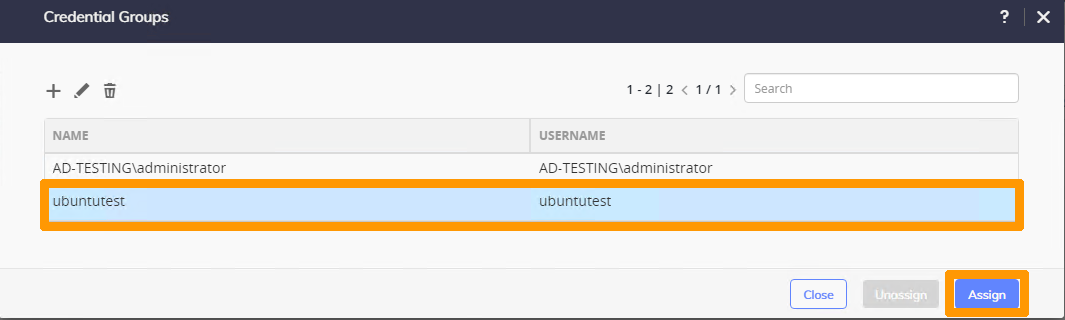
Select the password you want to use and click Assign.
Creating backup policies
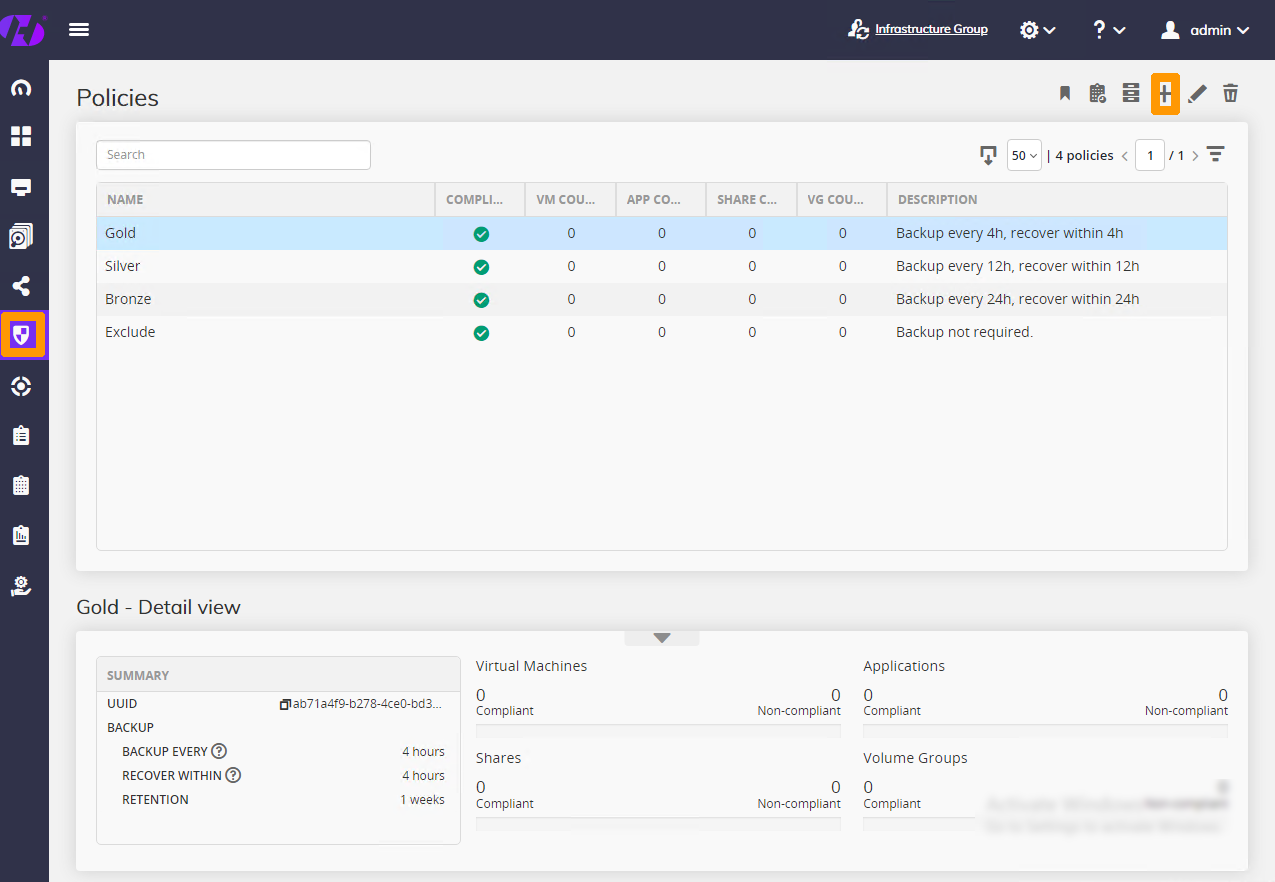
Go to the policies menu on the left and click the + button in the top right corner.
Enter this information:
- NAME:
HYCU VM - BACKUP EVERY:
4 hours - BACKUP THRESHOLD:
42
Leave the BACKUP option checked and use the scroll bar on the right.
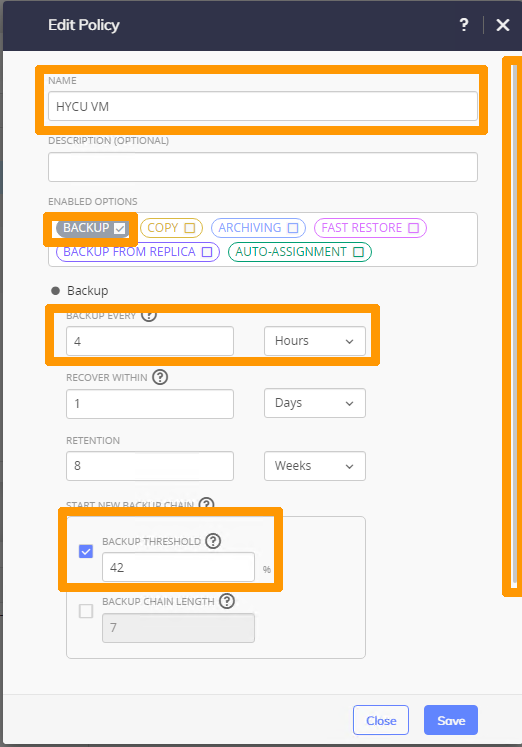
Click Save.
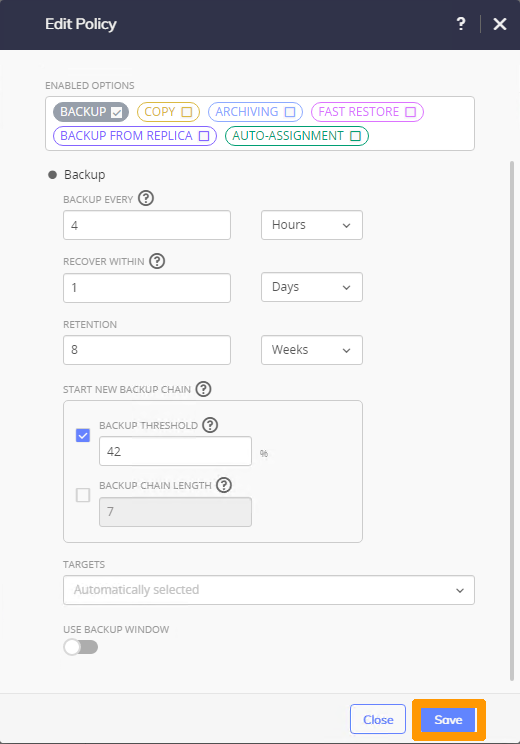
This policy is created for the HYCU virtual machine.
In the policies menu, click the + button in the top right corner.
Set the policy name BACKUP to Object Storage OVHcloud and local SNAPSHOTS in the NAME field.
Check the FAST RESTORE option, leave the BACKUP option checked.
Change the backup options in Backup and change the BACKUP THREESHOLD value to 25. Then scroll down the page.
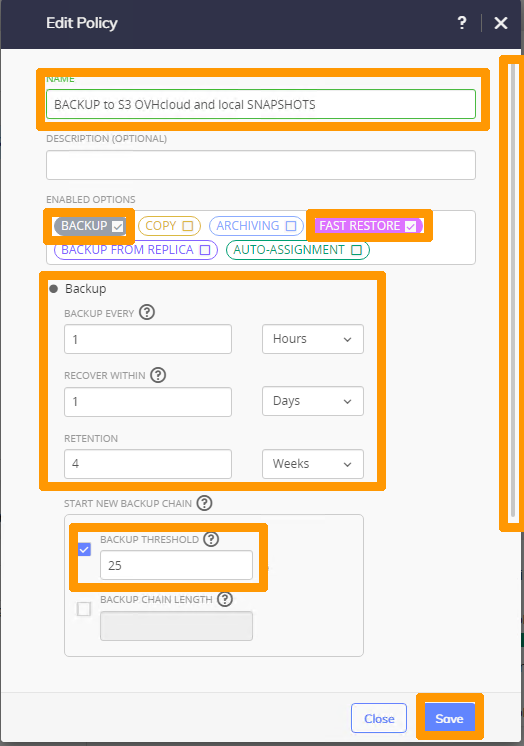
Edit the Fast restore option with your settings and click Save.
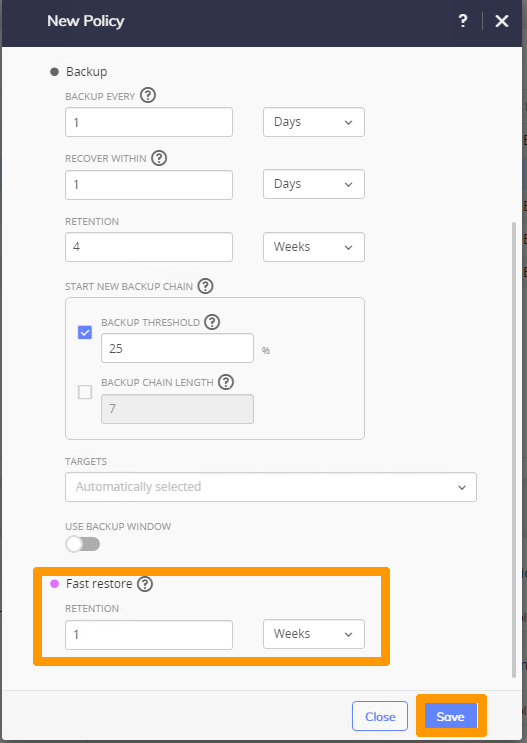
This strategy makes a backup on OVHcloud Object Storage and also takes snapshots inside the Nutanix cluster, allowing for faster recovery.
Assigning backup policies
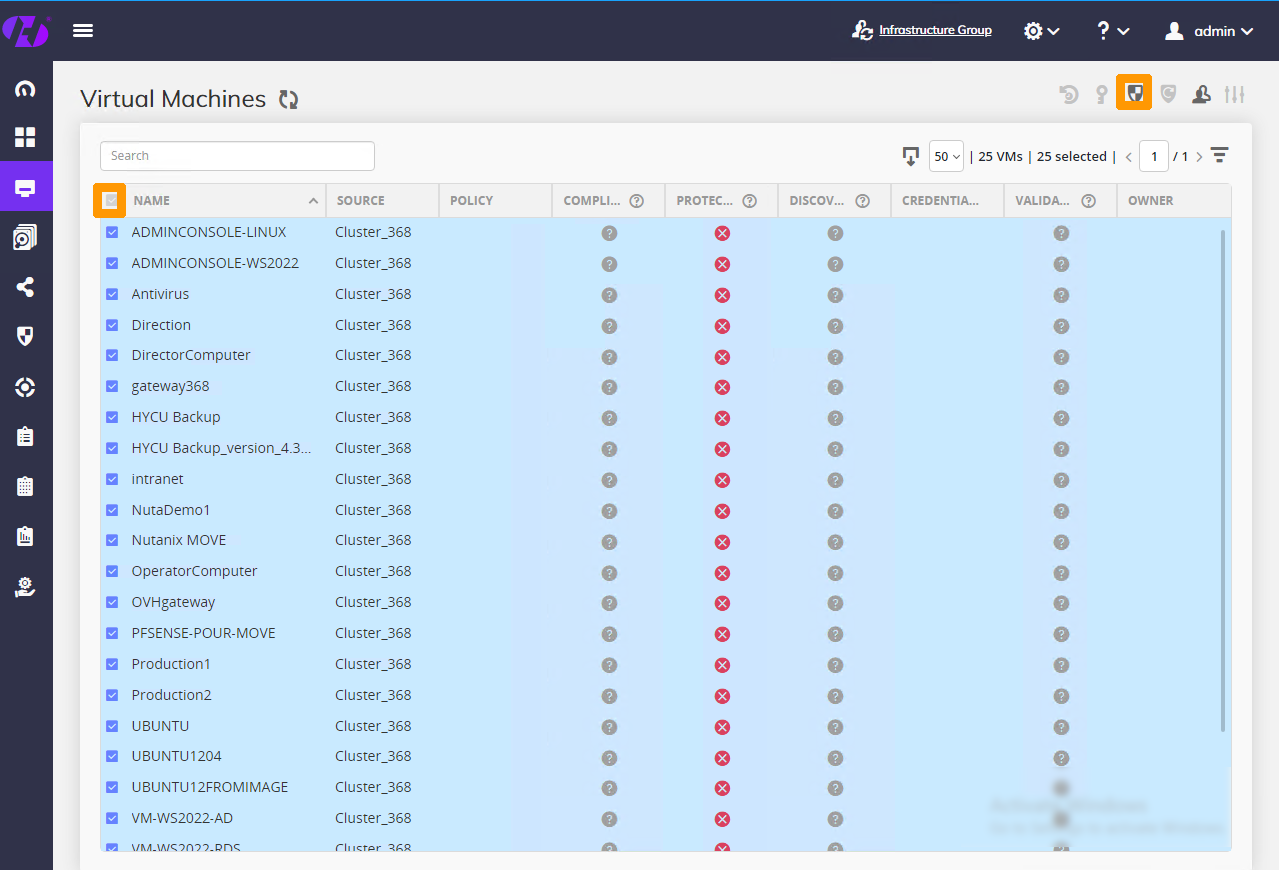
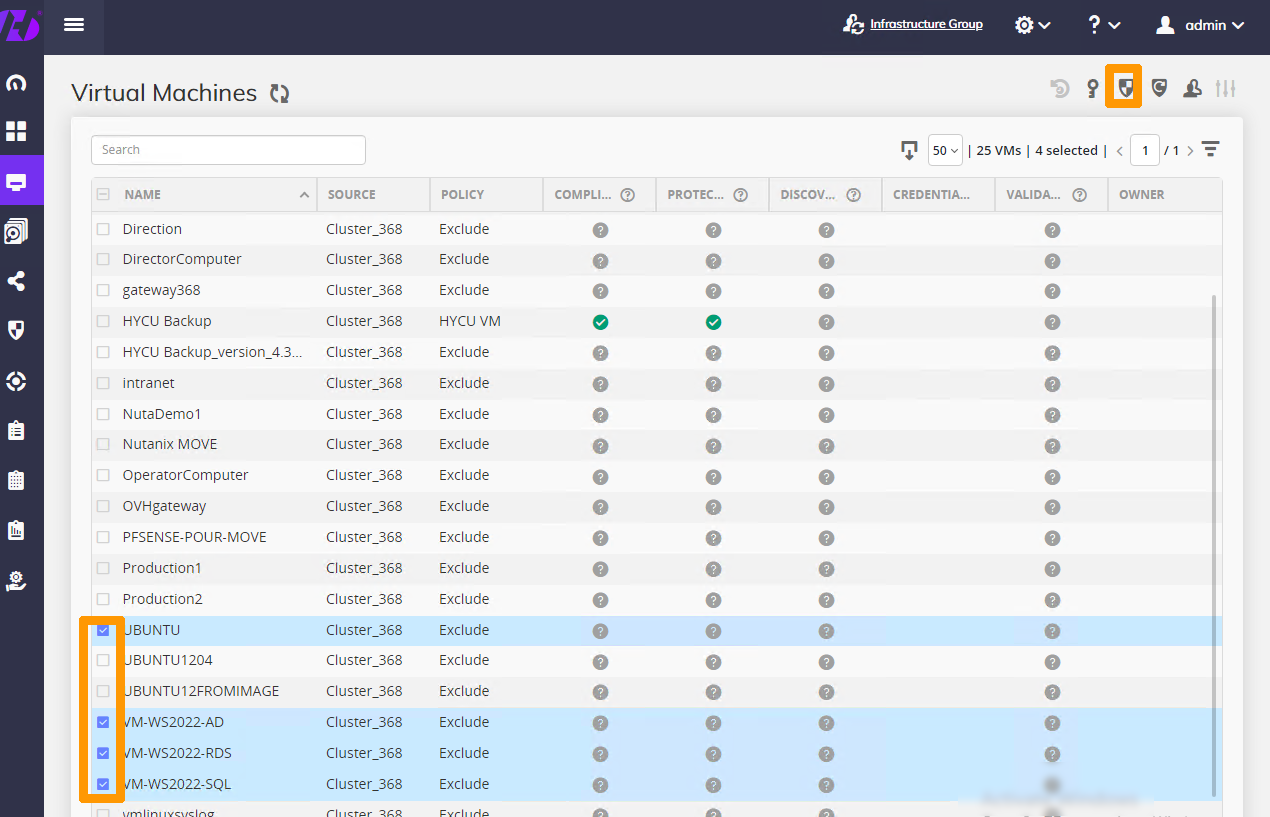
Select all VMs via the check box next to NAME, then click the shield-shaped Policies button in the top right to assign a policy to all VMs.
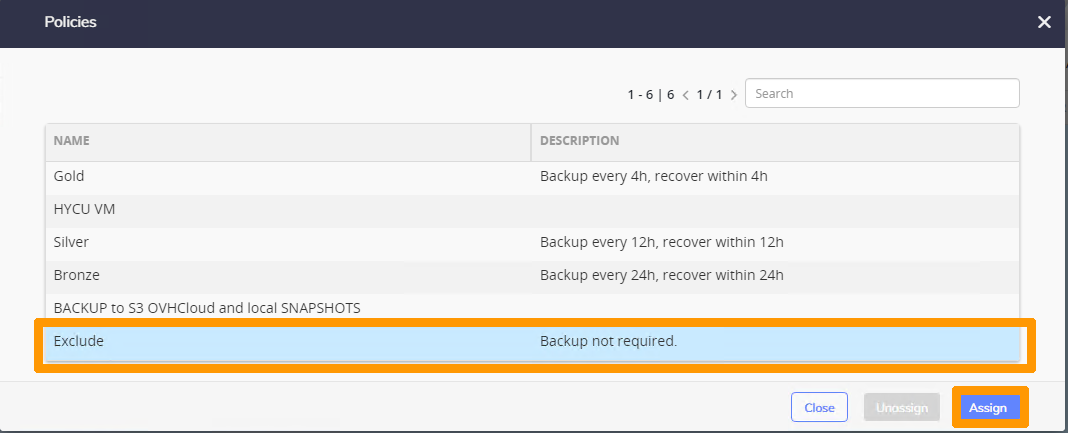
Choose the Exclude policy and click Assign.
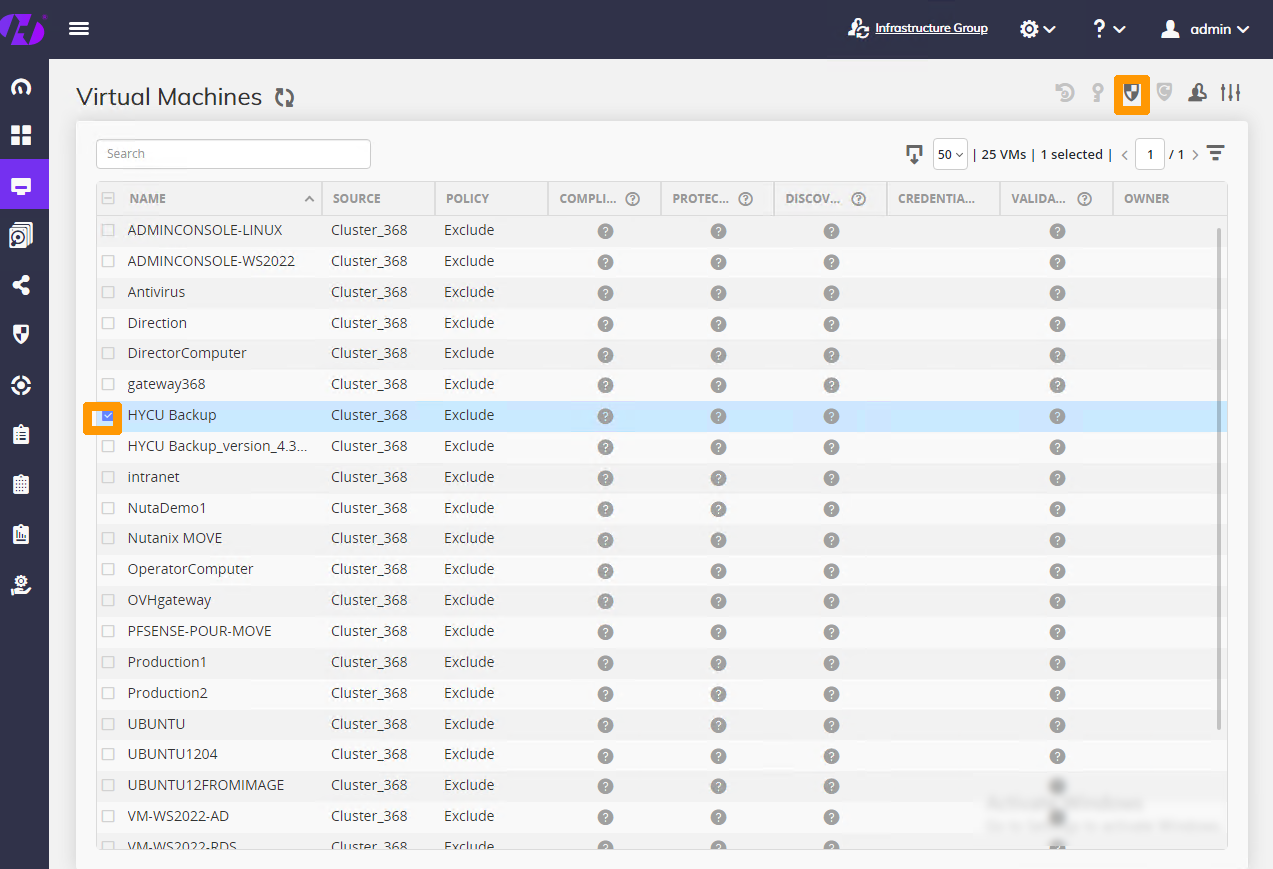
Select the HYCU virtual machine by selecting the check box next to it, then click the Policies button to assign a policy to this virtual machine.
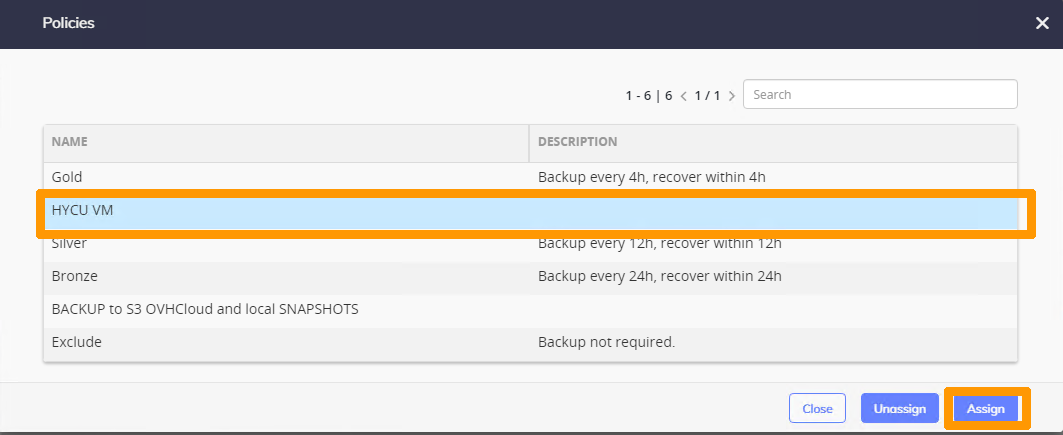
Choose the HYCU VM policy and click Assign.
Select four virtual machines and click the Policies button to assign a policy.
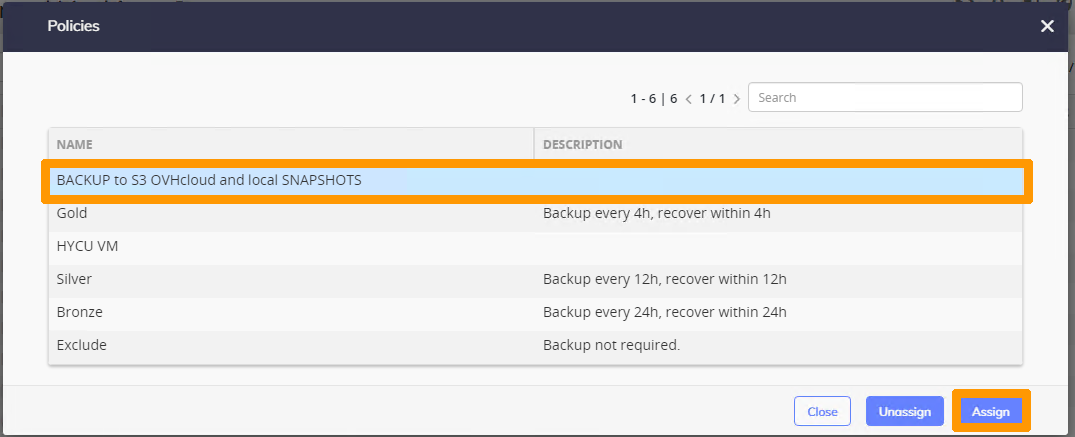
Choose the BACKUP to Object Storage and local SNAPSHOTS policy and click Assign.
Monitoring backup status
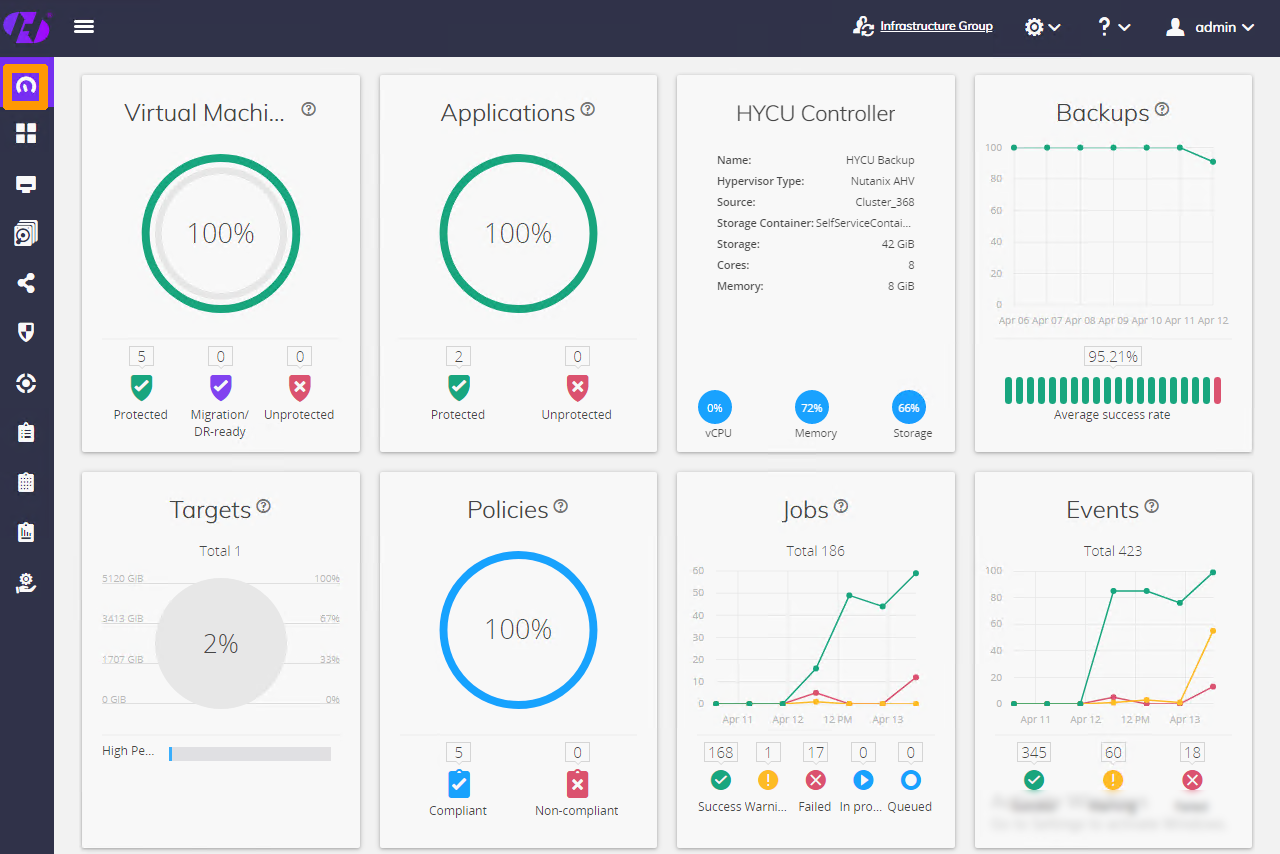
Go to the Dashboard menu on the left to view the dashboard and view the backup status.
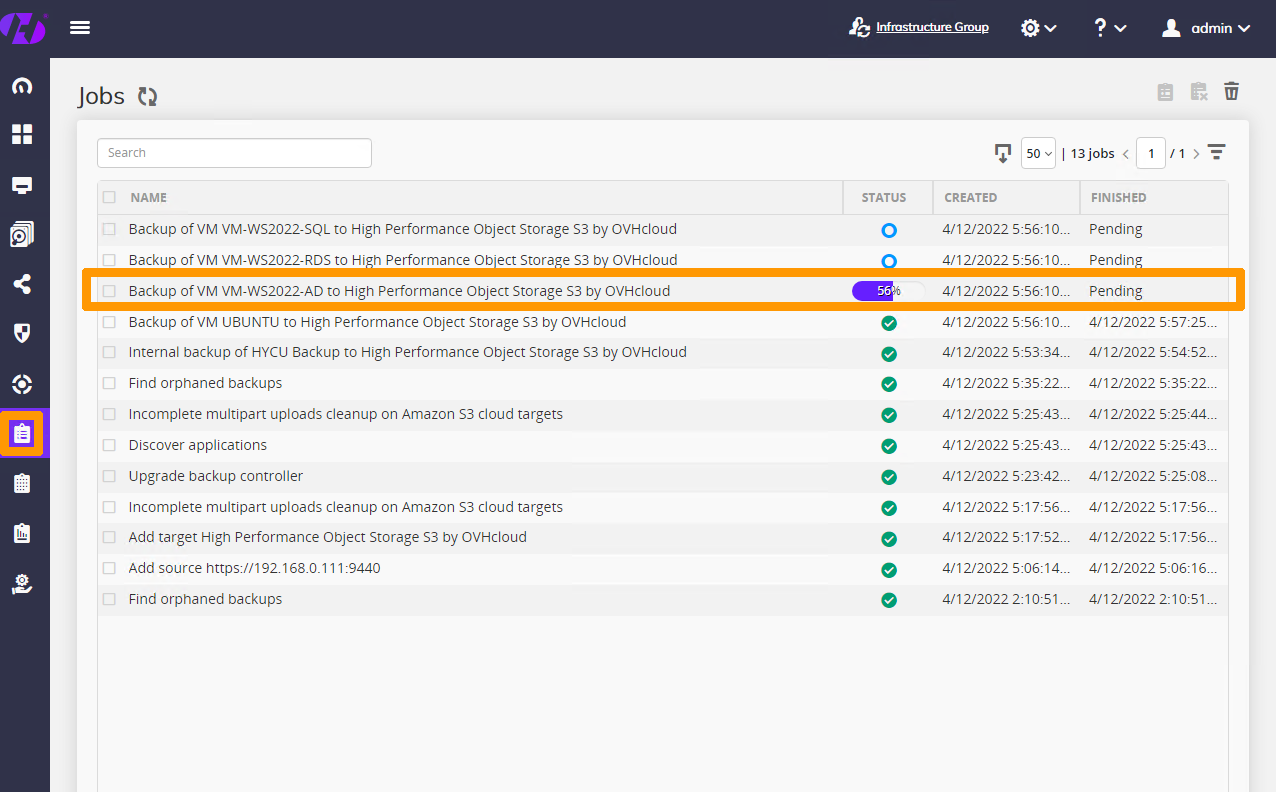
Open the Jobs menu on the left to view the job status.
Restoring from HYCU
Use the Virtual Machines menu and click a backed up virtual machine.
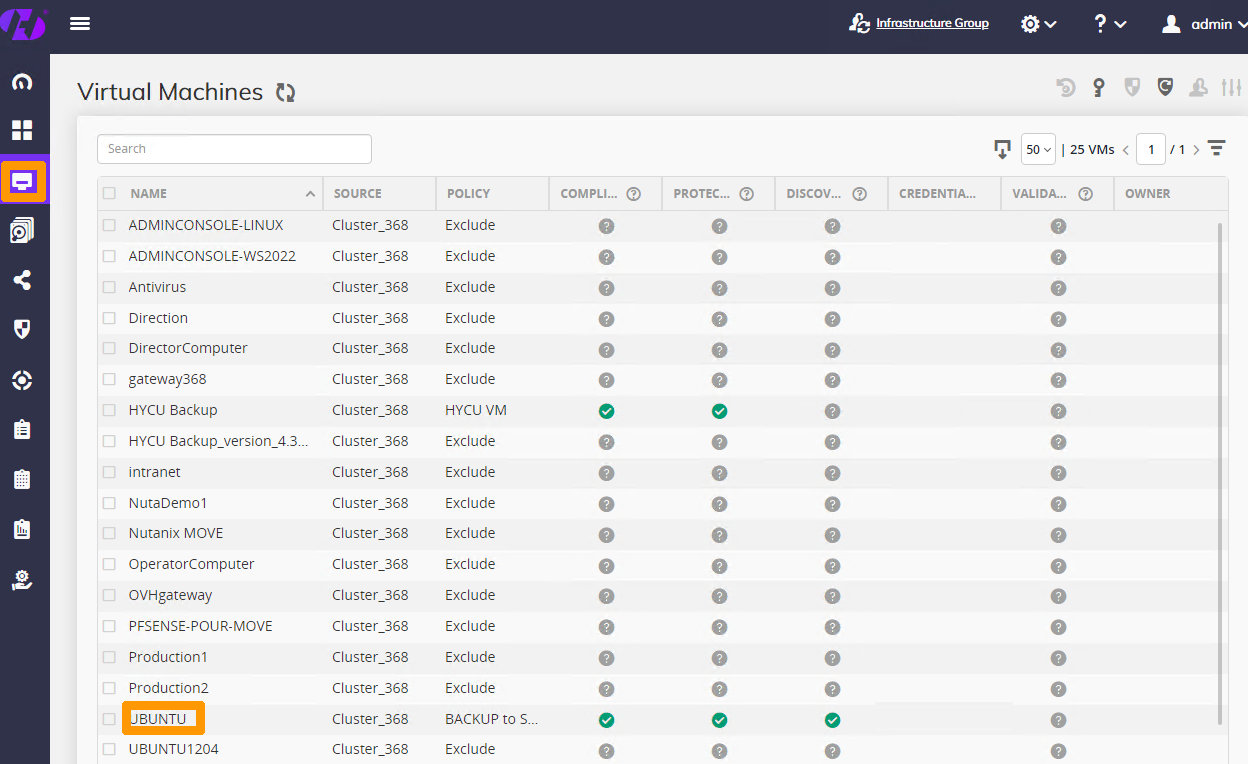
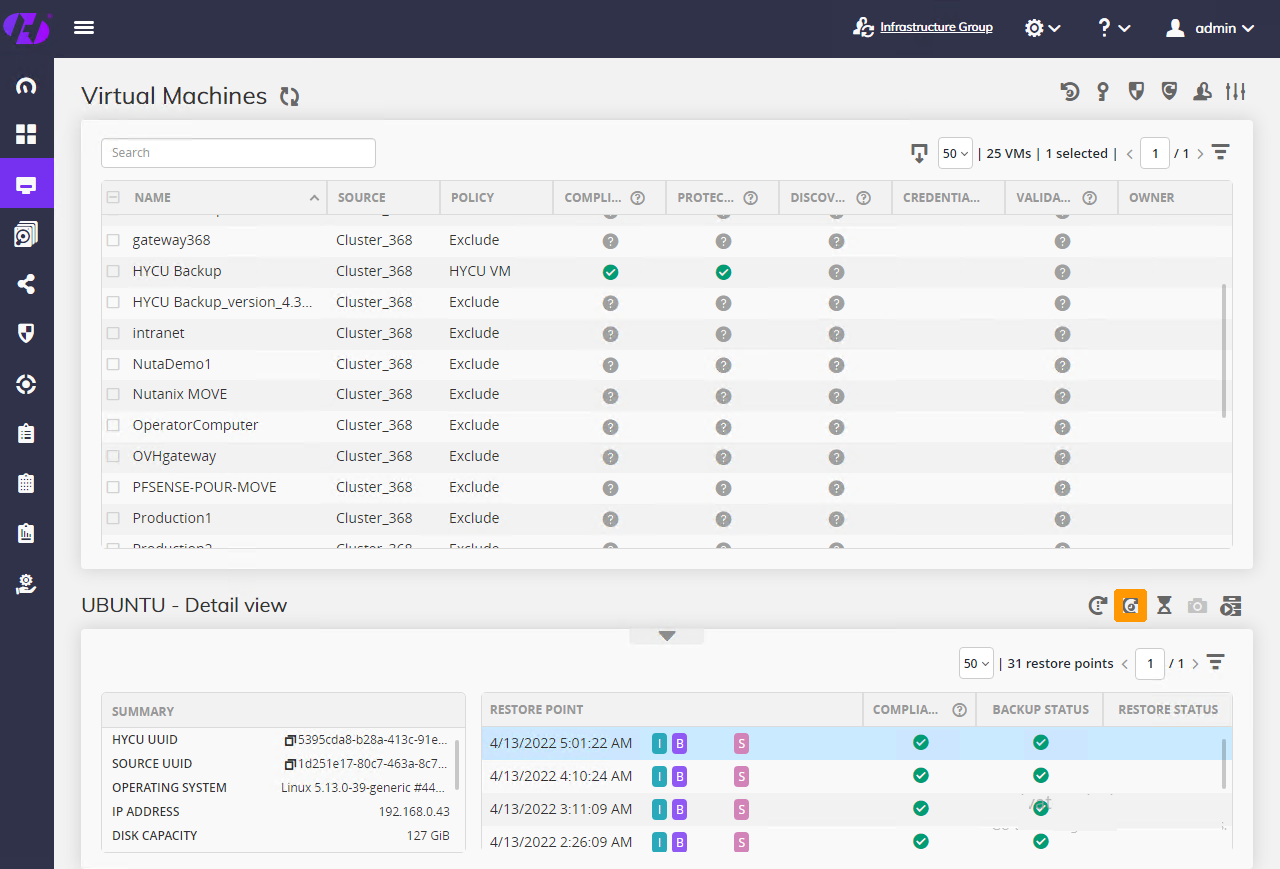
Restoring a virtual machine
Click the Restore VM button in the bottom right-hand corner.
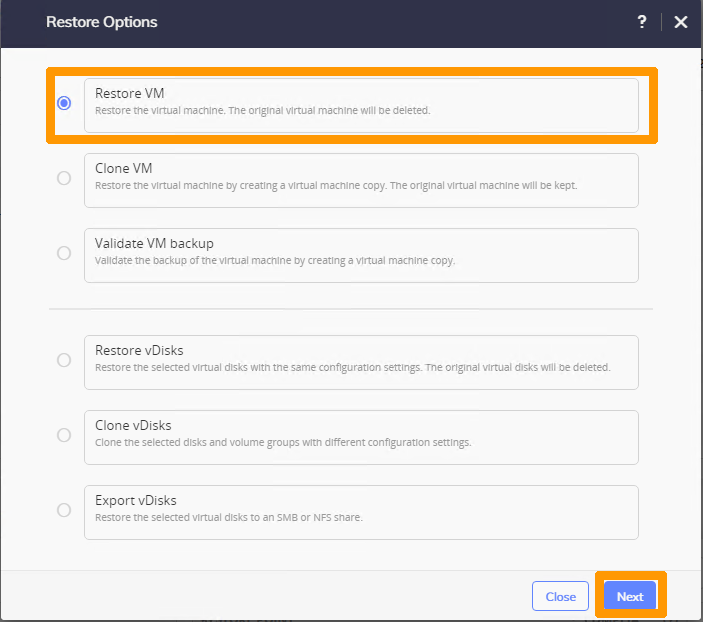
Select Restore VM and click Next.
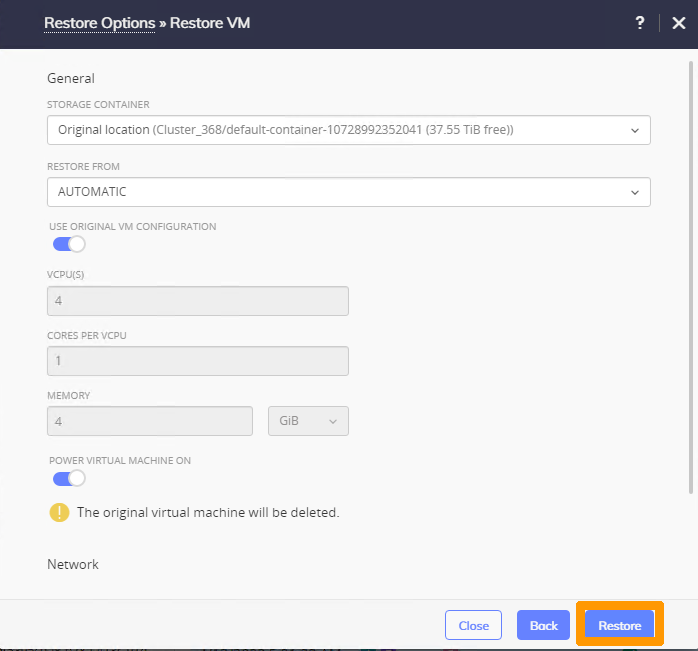
Leave the default options and click Restore.
The virtual machine is fully restored.
Retrieving a file
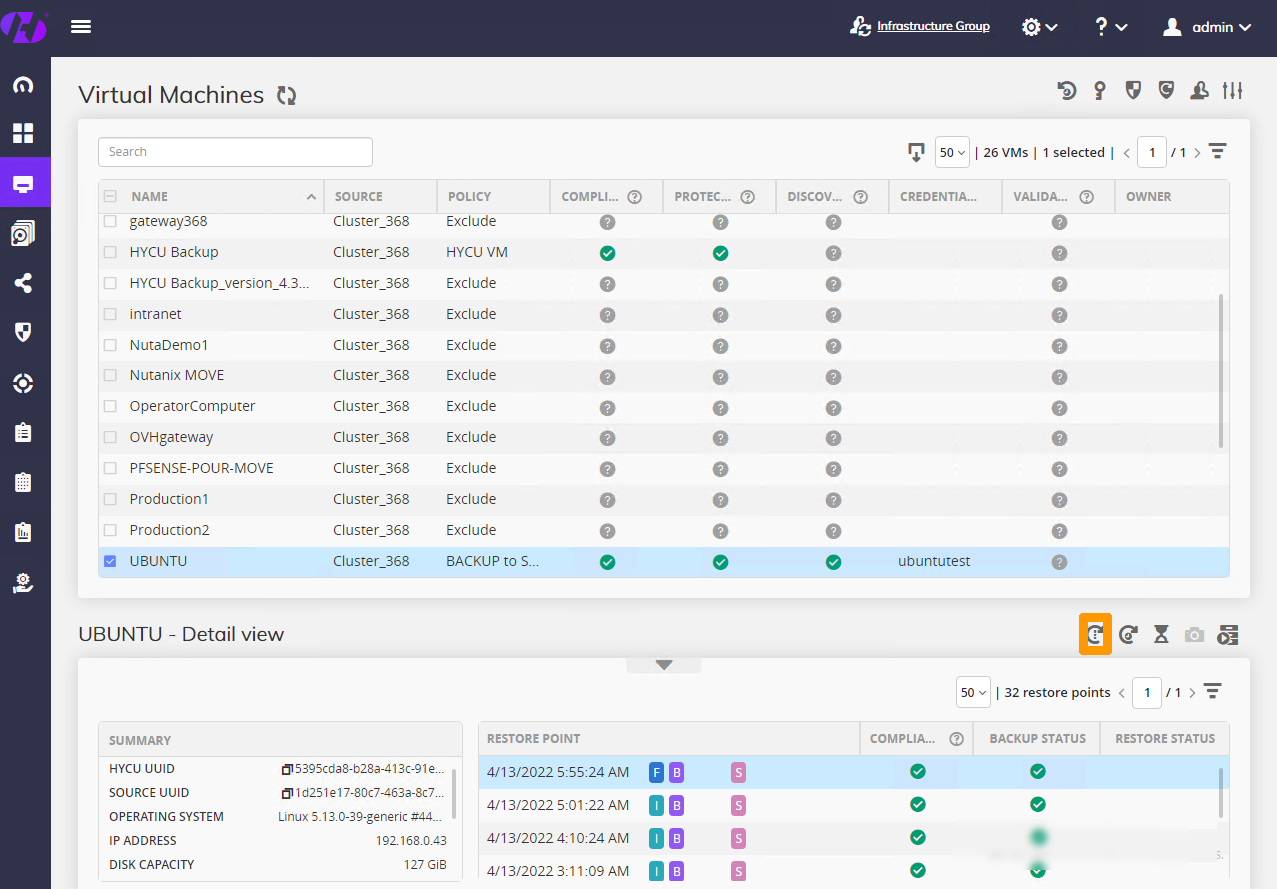
Click the Restore files button in the bottom right-hand corner.
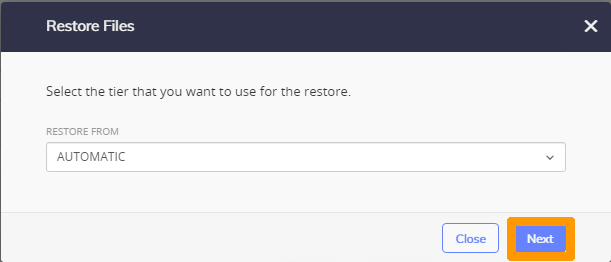
Leave AUTOMATIC in the RESTORE FROM drop-down menu and click Next.
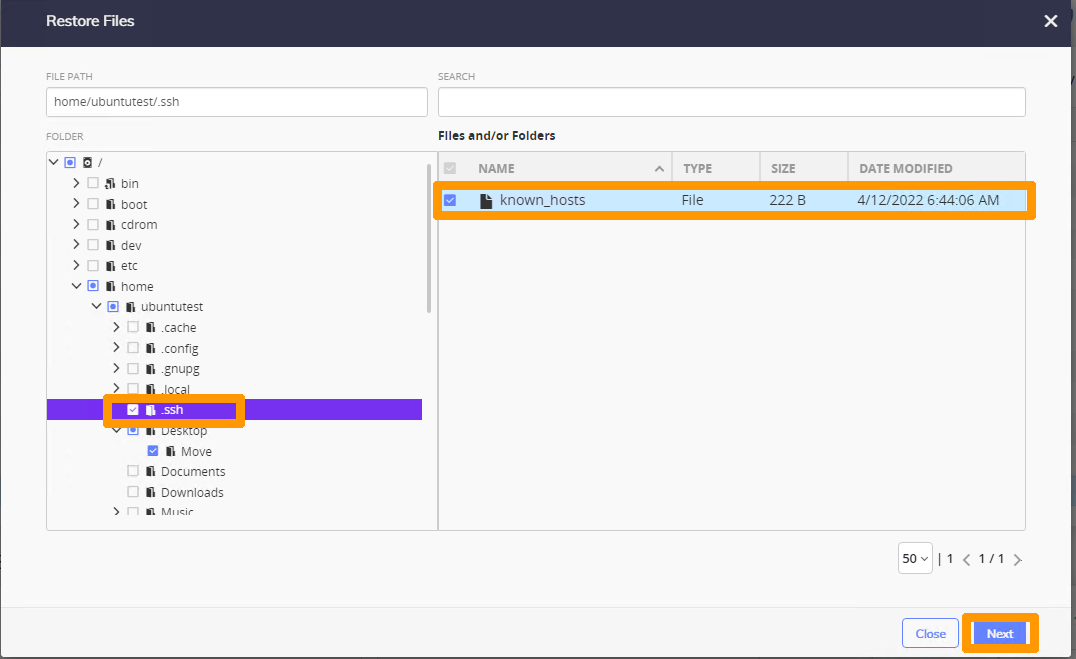
Select the file to restore and click Next.
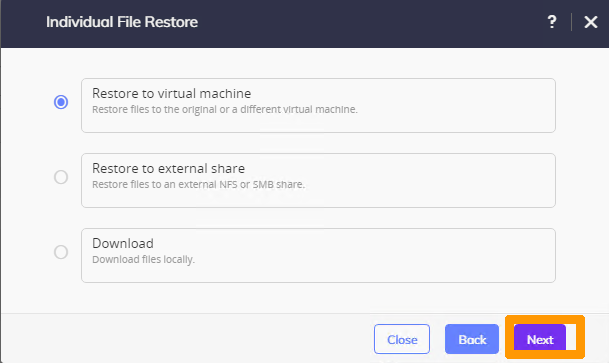
Leave the default options and click Next.
Choose Rename restored and click Restore.
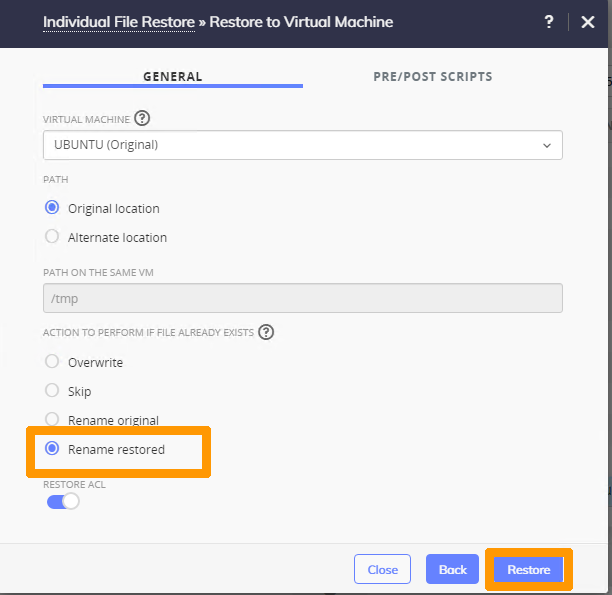
The restored file is located inside the virtual machine with a new name so as not to delete the old file.
Restoring an application
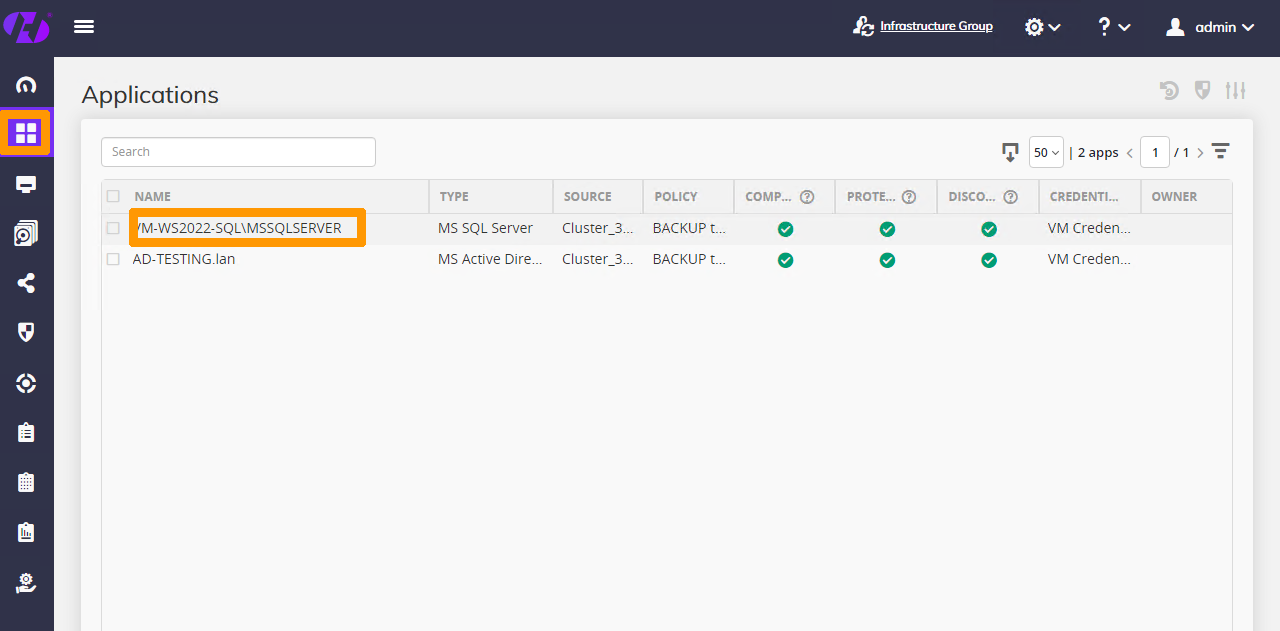
Click the Applications menu and then choose an application to restore by clicking an application below Name.
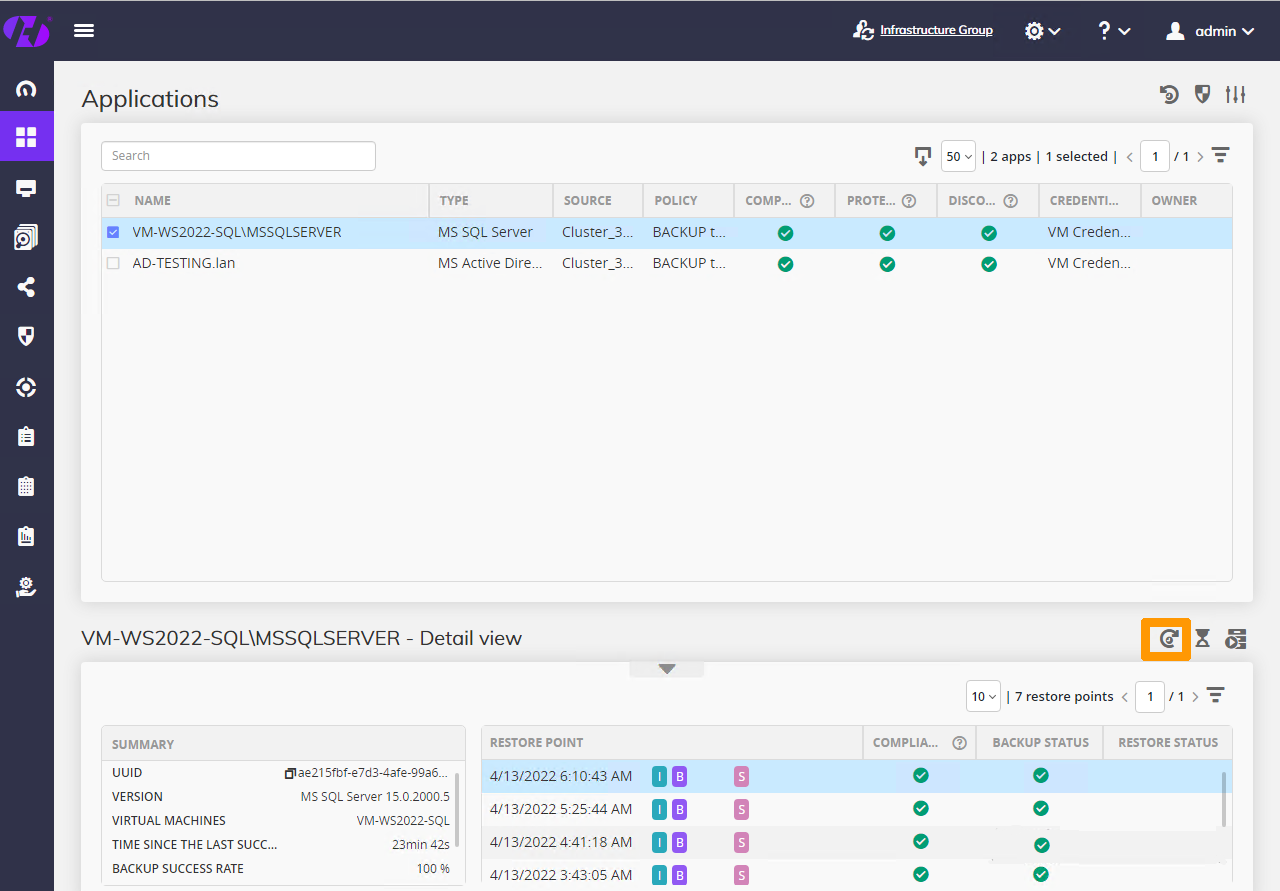
Click the Restore button in the bottom right-hand corner.
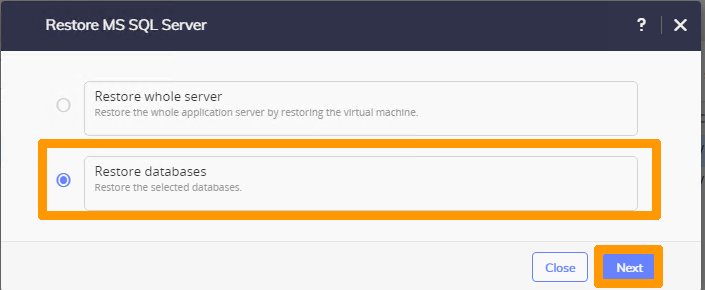
Select Restore Databases and click Next.
Choose a database and click Next.
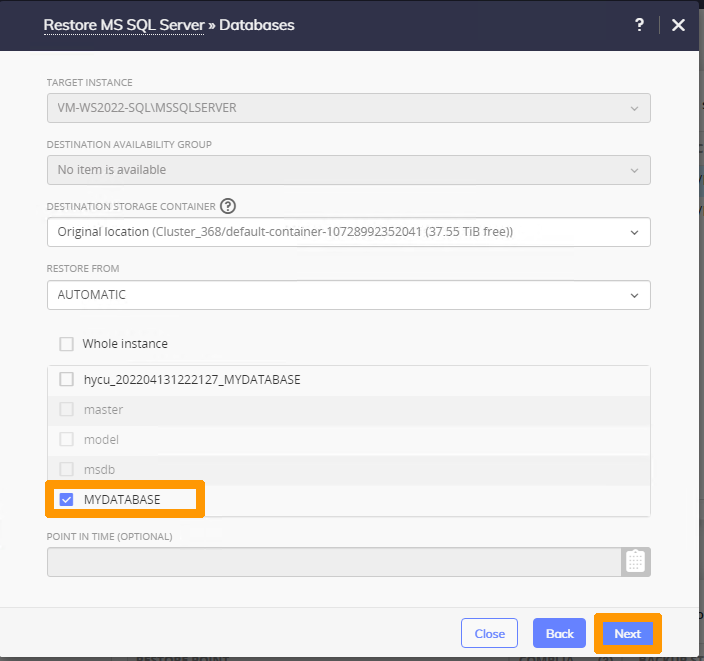
Disable OVERWRITE EXISTING DATABASES and click Restore.
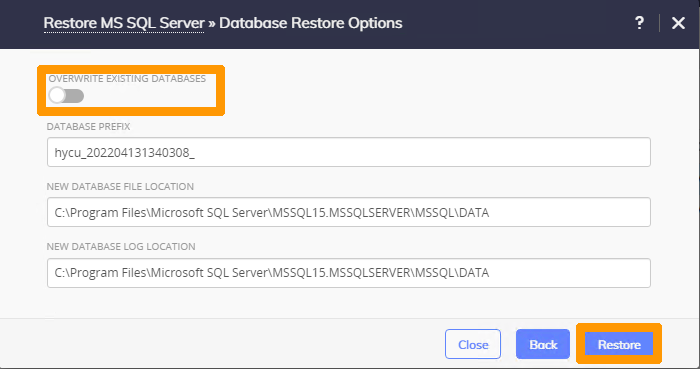
The database is restored into a new database.
Go further
Nutanix on OVHcloud - High-level documentation
Object Storage - Managing object immutability with Object Lock (WORM)
OVHcloud Load Balancer documentation
Our OVHcloud Object Storage solutions
If you need training or technical assistance for implementing our solutions, contact your sales representative or click this link to get a quote and request a personalized analysis of your project from our Professional Services team experts.
Join our community of users.


 Replacing OVHgateway
 633
633